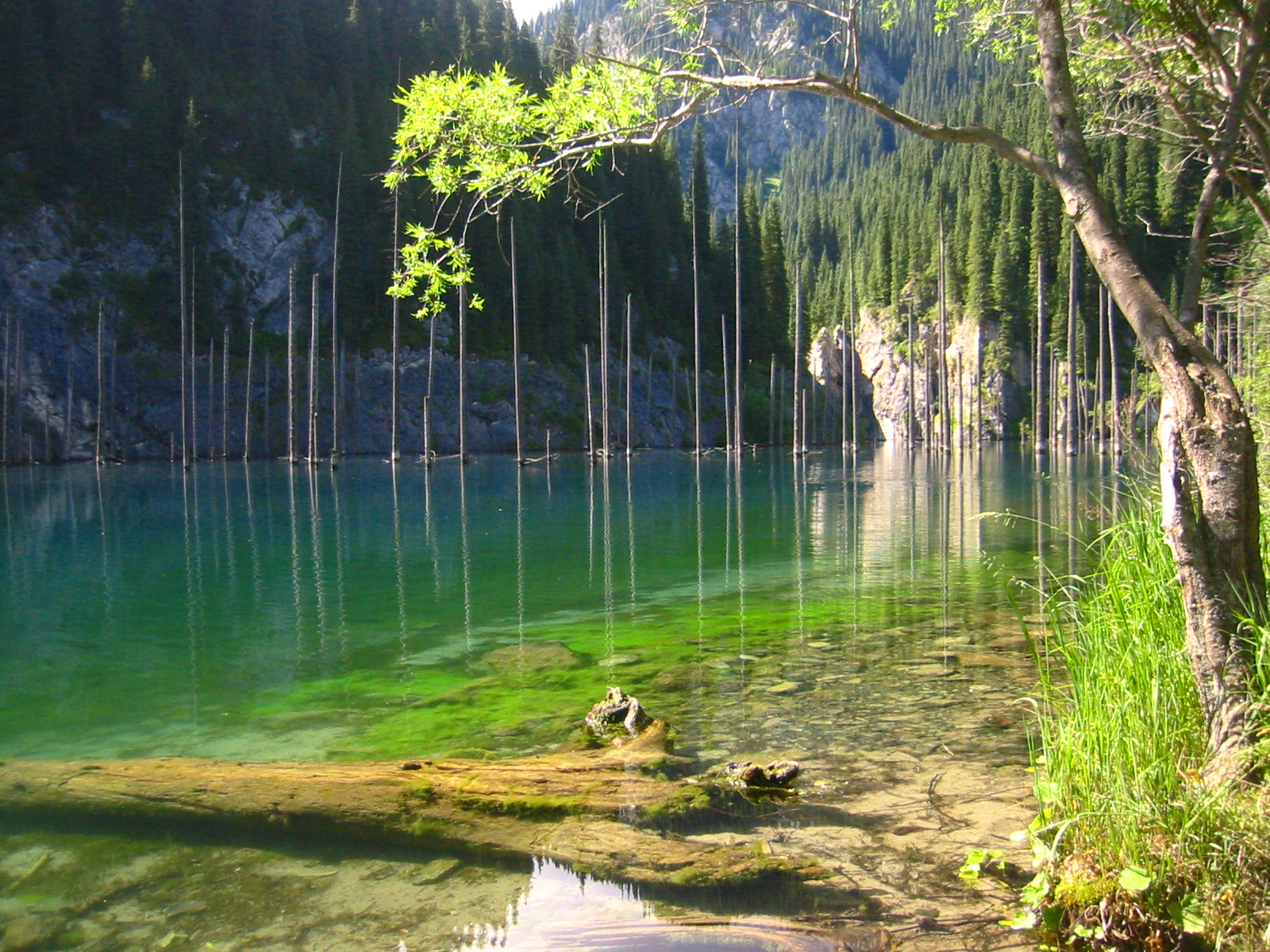
A forest lies beneath the surface of Lake Kaindy, its spruce trunks rising from the water like the masts of sunken ships. The trees have stood there since 1911, when a landslide dammed the valley and slowly drowned them. The cold water preserved them, turning the forest into something between a memory and a monument.
The water shifts between emerald, gray, and pale blue, depending on the light. It’s startlingly clear—you can see the bottom where the depth reaches ten meters. In summer, the water stays cold, but on hot days, you might wade in for a few minutes before the chill sets in. Winter freezes the submerged trees, their branches encased in ice, turning the lake into a glittering forest.
Getting there
The journey begins in Saty, where the road climbs into the mountains. It winds through narrow gorges and past sheer rock faces. The last stretch is rough, often muddy after rain, and only sturdy vehicles or local drivers can navigate it. Even in good weather, the drive demands attention—mountain roads here are unpredictable. Guided tours or hired drivers are a sensible choice if you’d rather not risk it.
The landscape
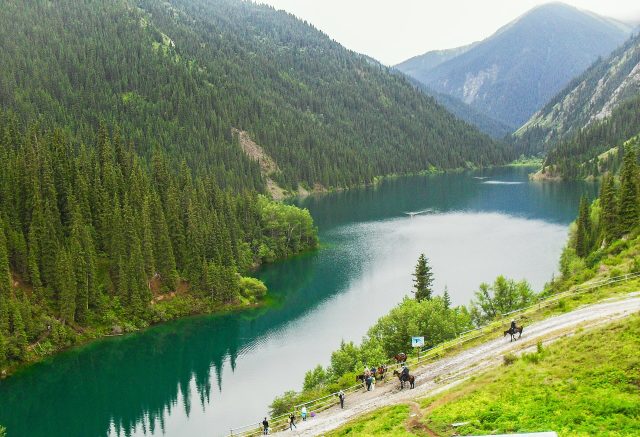
Dense pine forest surrounds the lake, the trees growing right up to the water’s edge. The silence is broken only by the wind in the branches and the occasional call of a bird. On clear days, the snow-capped peaks of the Zailiysky Alatau reflect in the still water. There are no cafes, no souvenir stalls—just the raw landscape.
Locals say ibex, marmots, and snow leopards still roam these mountains, though sightings are rare.
Legends
One legend says the lake formed as punishment for the villagers’ greed, angering the mountain spirits. Another tells of a young shepherd who loved a khan’s daughter but was forbidden to marry her. In despair, he threw himself into the gorge, and where he fell, the lake appeared. These stories linger when you stand at the water’s edge, staring at the drowned trees.
Walking trails
The most popular trail follows the shore to a small waterfall, where cold water tumbles down a short cliff. Wild berries and flowers grow along the path. More challenging routes lead into the gorges, but these require experience and proper gear. Even a simple stroll along the lake leaves a lasting impression.
Kaindy wasn’t always a destination. Twenty years ago, only locals and a few adventurous travelers knew of it. Today, it sees more visitors, especially on weekends, but it’s still far from crowded. There are no restaurants, no guided activities—just the chance to sit by the water and listen to the wind.
When to visit
The best time is between May and September, when the roads are passable. Autumn is striking, with the forest turning gold and crimson. Winter transforms the lake into a frozen wonderland, but the journey becomes difficult. Spring is beautiful, but melting snow makes the roads treacherous.
Kaindy doesn’t shout for recognition. It doesn’t try to impress. Yet once you’ve been there, it’s hard to forget. Maybe it’s the way the lake seems to hold time still. Or maybe it’s simpler—just the quiet understanding that places like this still exist.