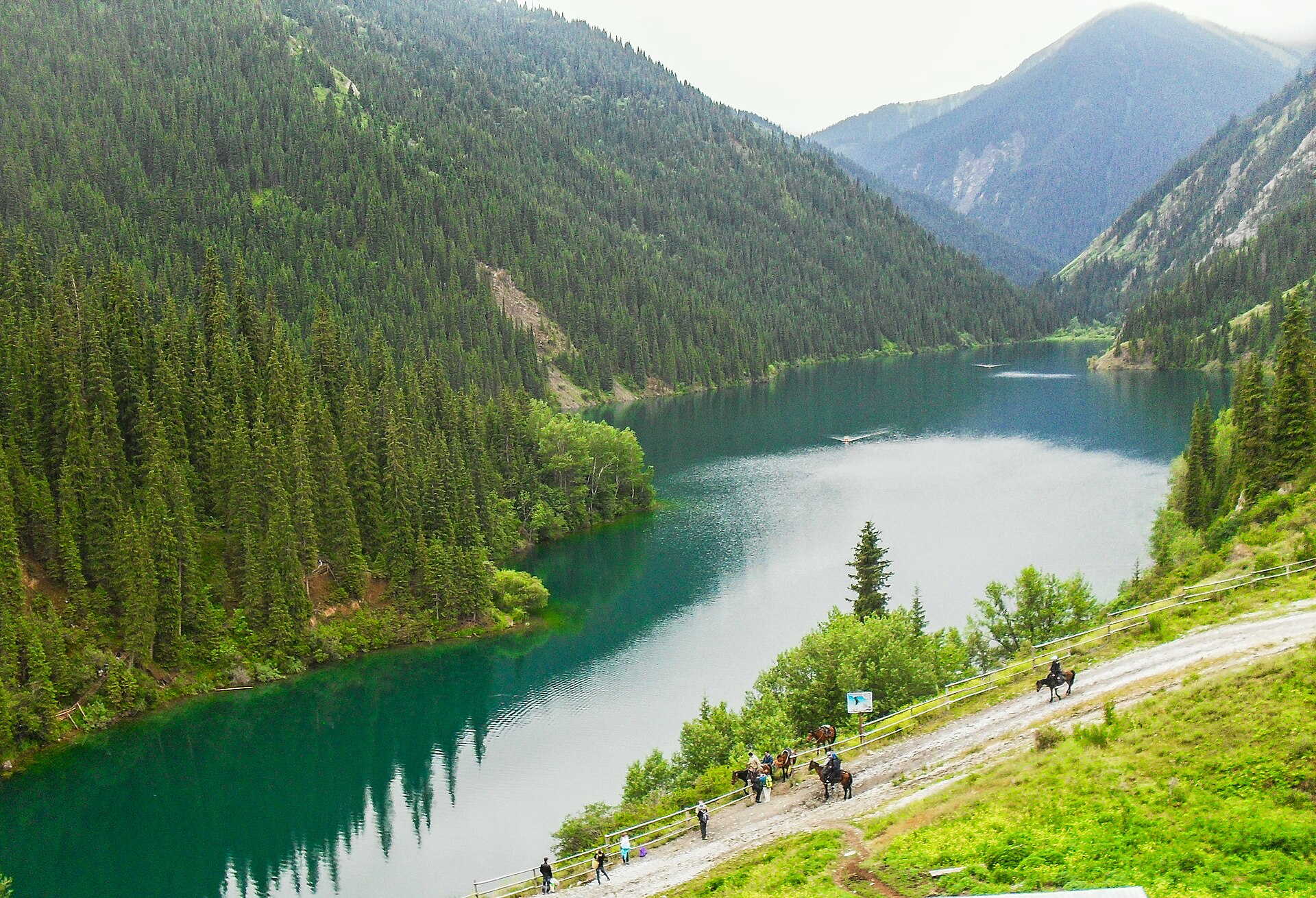
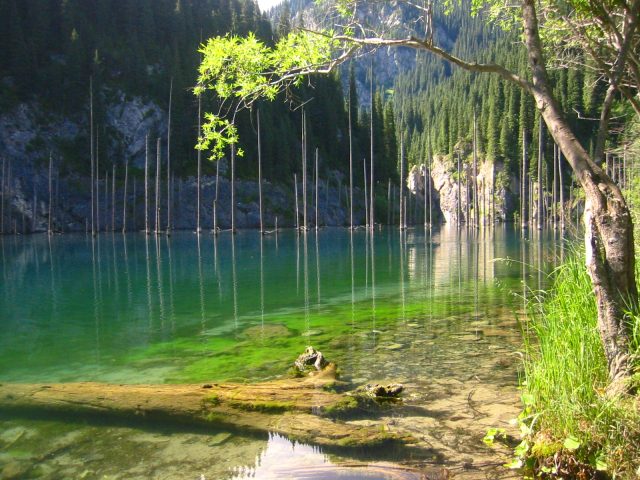
The Kolsai Lakes are one of those rare places where nature seems to have gathered its finest work in one spot, as if to prove just how breathtaking it can be. Tucked away in the Tien Shan mountains of southeastern Kazakhstan, not far from the Kyrgyz border, these three alpine lakes stretch along the Kolsai River valley, each with its own distinct character. The Lower Kolsai Lake greets visitors first, its bright turquoise waters framed by dense spruce forests. A little higher lies the Middle Lake, nestled among rocky cliffs and alpine meadows, while the Upper Lake sits nearly three thousand meters above sea level, a quiet, almost forgotten world where the air is thin and the silence so deep you can hear snow falling from the branches.
The lakes weren’t formed by chance. Thousands of years ago, a massive landslide dammed the river, and over time, the water pooled behind this natural barrier, creating the three mirror-like surfaces that reflect the sky and surrounding peaks. For generations, the area was known mostly to local herders and the occasional traveler brave enough to cross the mountain passes. It’s only in recent decades that the wider world has discovered the Kolsai Lakes, turning them into a sought-after destination for those who want to experience Kazakhstan’s wild beauty without venturing too far from civilization.
Getting here is part of the journey. Most travelers start in Almaty, making the several-hour drive to the village of Saty, where the hiking trail begins. The route unfolds like a slow reveal of the landscape: first the rolling foothills, covered in steppe grass, then the dark green of spruce forests, and finally the rocky meadows where horses graze near the lakes. Many choose to stay in yurts by the Lower Lake, spending the night under a sky so clear the stars feel almost within reach. There are no grand hotels or crowded resorts here—just the quiet, the scent of pine, and the sound of the river cutting through the valley.
The Lower Lake is the most accessible and perhaps the most striking. Its shores are lined with Tien Shan spruce, and the water is so clear you can see the bottom even several meters down. In summer, the lake is cool but swimmable, while autumn turns the surrounding forest into a blaze of gold. Winter blankets everything in snow, transforming the valley into something out of a fairy tale. The Middle Lake lies higher up, reached by a winding trail through rocky terrain. The air here is crisper, the sky closer, and the sense of isolation more pronounced. The Upper Lake is the most remote, surrounded by sheer cliffs, its waters appearing almost black from the depth and the shadows of the mountains.
Beyond their beauty, the Kolsai Lakes are part of a larger, untamed ecosystem. The surrounding area is home to a variety of wildlife—argali sheep, ibex, marmots, and birds of prey like eagles and vultures circling overhead. The vegetation shifts with the altitude, from steppe grasses to delicate alpine flowers that bloom briefly in the short mountain summer. Locals speak of snow leopards still roaming these parts, though sightings are rare. For hikers, the region offers trails of varying difficulty, from gentle walks along the lakeshores to challenging multi-day treks over mountain passes.
What makes the Kolsai Lakes special is their sense of untouched solitude. Unlike more famous mountain destinations, they haven’t been overrun by tourists, and that’s part of their charm. You can spend hours sitting by the water, fishing or simply watching the light play across the surface. As evening falls, the air cools, and the stars emerge with a brilliance that makes them feel almost tangible. At night, the only sounds are the river’s murmur and the occasional rustle of wind through the trees. Morning brings the lakes to life again, the water shimmering under the first rays of sunlight, ready to reflect another day.
For many, the Kolsai Lakes become a place to return to. There’s no rush here, no need to prove anything or keep up with anyone. Just the mountains, the water, and the sky—things that remain constant despite the world’s changes. Some come for a weekend, others stay for a week, exploring the trails, climbing passes, or simply sitting by a fire with a cup of tea. However long you visit, the lakes leave you with the feeling that you’ve stepped into a place where time moves differently—slower, quieter, closer to the rhythm of nature.