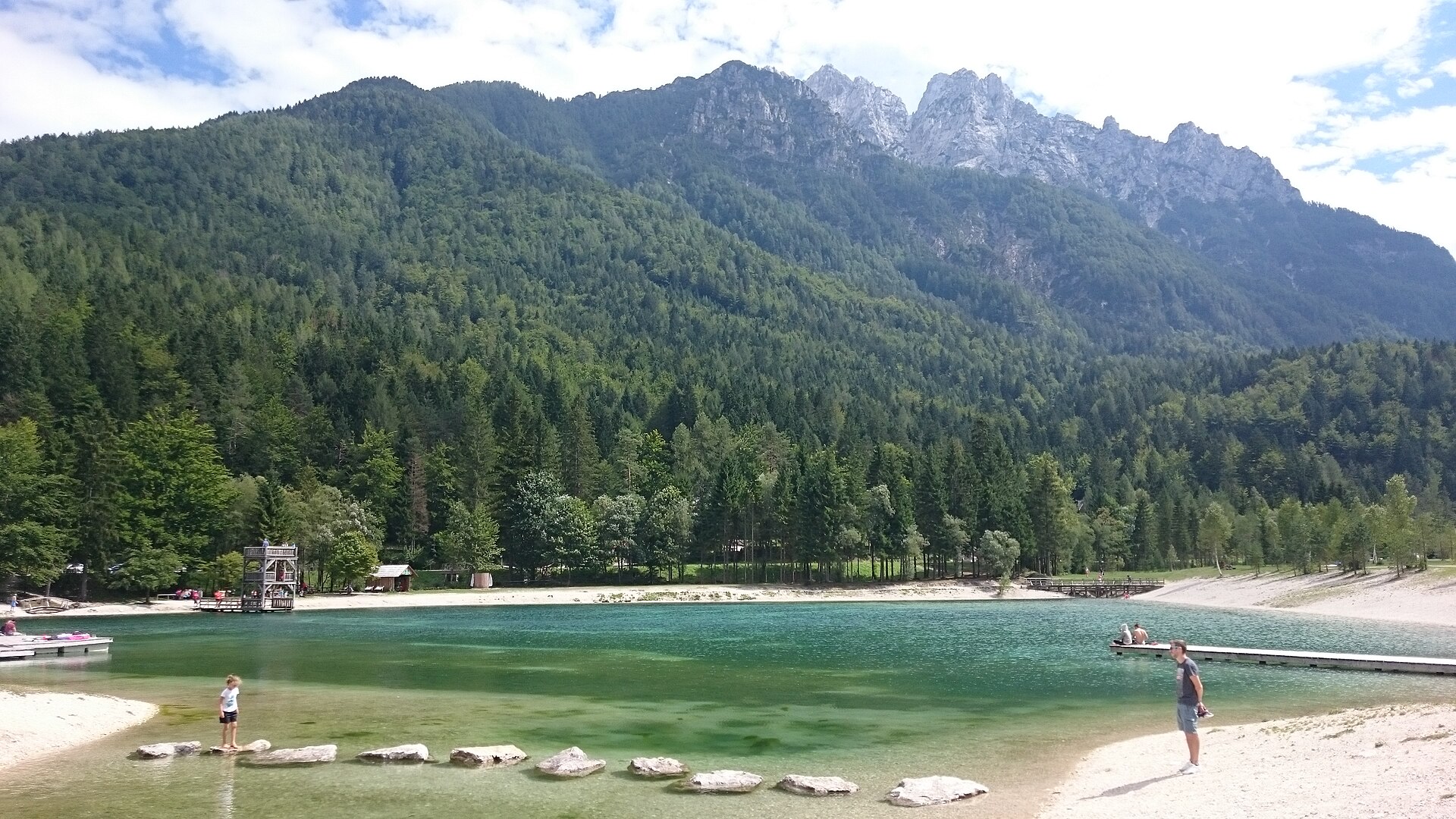
Lake Jasna sits quietly in the Julian Alps, where the rugged peaks of Slovenia’s highlands soften into the gentle valleys around Kranjska Gora. It’s a place that feels almost too perfect, as if someone had taken the best parts of a mountain landscape—clear water, dense forests, and towering cliffs—and arranged them just so. The lake itself is small, but its surroundings give it a sense of grandeur. On one side, sheer rock faces rise sharply, while on the other, rolling hills slope down to the water’s edge, their slopes thick with pine and beech. The water changes with the light, shifting from emerald green in the morning to deep blue by afternoon, always reflecting the sky above.
The name Jasna likely comes from the Slovene word for clear, and it suits the place well. On still mornings, when mist hovers just above the surface and the first sunlight filters through the trees, the lake lives up to its name. It’s the kind of clarity that feels almost spiritual, as if the water isn’t just reflecting the sky but something deeper. Locals say that in the past, shepherds would bring their flocks here to drink, and in winter, when the lake froze over, children would skate on its surface. There’s a sense of timelessness to it, as if the same scenes have played out here for centuries.
This part of Slovenia has always been a crossroads. For hundreds of years, the valley around Kranjska Gora served as a natural passage between Austria and the Slovenian heartland, a route for merchants, pilgrims, and armies moving between northern and southern Europe. The lake itself isn’t far from old trade paths, and if you look closely, you can still find traces of that history—stone bridges worn smooth by time, narrow trails that generations of travelers have followed, and the faint outlines of fortifications that once guarded the valley. Today, the area is peaceful, but the past lingers in the landscape.
The buildings around Lake Jasna are simple, built to serve rather than impress. Nearby stands a small chapel, its wooden roof and unadorned interior typical of the region’s alpine style. It’s not a place that draws crowds, but for those who seek quiet, it offers a moment of stillness. A few guesthouses dot the shoreline, their interiors warm and unpretentious—wooden beams, crackling fireplaces, and views of the mountains from every window. They’re the kind of places where you might stay for a night or a week, waking up to the sound of birds and the scent of pine.
The lake isn’t just a place to look at; it’s a starting point for exploring. From here, trails lead upward to peaks, waterfalls, and highland pastures. In summer, hikers, cyclists, and picnickers fill the paths, while in winter, skiers and snowboarders head to the nearby slopes. But you don’t have to venture far to feel the pull of the landscape. A walk along the shore or a short climb to a nearby hill can be enough to leave you feeling both grounded and free. The water is cold even in summer, but that doesn’t stop a few hardy swimmers from taking the plunge. Most people, though, come for the fishing—trout thrive in the lake, and those with patience and a fishing permit can often reel in a decent catch.
Autumn is when the area around Lake Jasna is at its most striking. The forests erupt in shades of red, orange, and gold, and the crowds thin out, leaving the trails quiet. The only sounds are the rustle of leaves underfoot and the occasional call of a bird. Winter transforms the lake into a vast, frozen mirror, its surface reflecting the snow-covered peaks above. On clear days, the silence is so complete that it feels as if time itself has paused. You can stand on the shore, breathing in the crisp air, and forget for a moment that the rest of the world exists.
Kranjska Gora and Lake Jasna aren’t places you visit for excitement or noise. There are no grand attractions here, no bustling streets or flashy entertainment. Instead, the appeal lies in the small things—the way the light shifts over the mountains, the warmth of a fire in the evening, the quiet conversations that stretch late into the night. It’s a place for those who appreciate simplicity: fresh air, open space, and the chance to step away from the rush of everyday life. That’s what makes it special. Not the things you do here, but the way the place makes you feel.