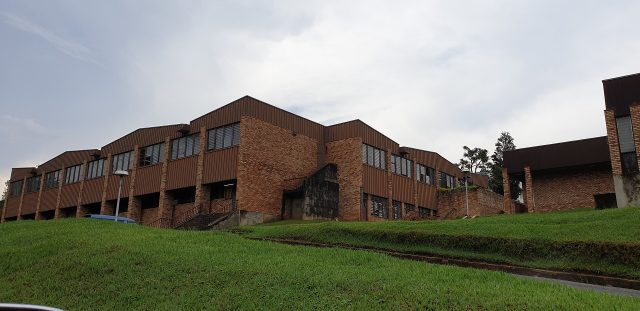
Our Lady of Wisdom Cathedral in Butare is the kind of place that doesn’t demand attention at first glance, yet lingers in the mind long after you’ve left. Perched on a hill overlooking the city, its unassuming facade stands in quiet contrast to the grand cathedrals of Europe. There are no gilded domes or intricate stained-glass windows here, but something else entirely—a sense of authenticity, a connection to the people and history that have shaped this place over decades.
Built in the mid-20th century, when Rwanda was still under Belgian administration, the cathedral emerged during a time when Butare was the intellectual heart of the country. Home to Rwanda’s only university at the time, the city drew missionaries, scholars, and officials, and the cathedral became more than just a religious site. It was a cultural landmark, a meeting point for different layers of society. The architecture reflects the spirit of its era: clean lines, minimal ornamentation, yet a deliberate harmony with the surrounding landscape. Constructed from local stone, the building feels rooted in its environment, as if it grew naturally from the hills rather than being imposed upon them.
Inside, the cathedral is airy and bright. High ceilings, wooden pews, and a few rows of columns supporting the vaults create a sense of openness. The altar is simple, free of excess, and it’s this very restraint that gives the space its quiet dignity. On weekdays, the cathedral is often empty, the silence broken only by the echo of footsteps. But on Sundays, it comes alive with the voices of worshippers, the sound of hymns filling the air. In those moments, it’s impossible not to feel the pulse of the place, the way it remains woven into the fabric of daily life.
For Rwandans, the cathedral is more than just a building—it’s a part of the country’s collective memory. During the 1994 genocide, many churches became places of refuge, though not all could protect those who sought shelter within their walls. Our Lady of Wisdom was no exception, and while the events of that time are rarely spoken of openly, their shadow lingers. In the years since, life has slowly returned to normal here, and the cathedral has once again become a gathering place—not just for prayer, but for conversation, for shared moments, for the quiet rhythms of community.
A small garden surrounds the cathedral, filled with trees and flowers that offer shade from the midday sun. From a nearby hill, the view stretches over Butare and the rolling countryside beyond. The city itself is far from a tourist hub, and the cathedral rarely appears in guidebooks. That’s part of what makes it special: it exists for the people who live here, not for visitors. Students from the university sometimes wander in, elderly women with baskets balanced on their heads pause for a moment, and passersby stop to catch their breath. There’s no agenda, no rush—just the quiet presence of a place that has seen generations come and go.
The cathedral is more than a religious site; it’s a witness to Rwanda’s history. It has stood through change, hope, tragedy, and renewal. Within its walls, the unhurried pace of Butare is palpable, a counterpoint to the bustle of the capital. There’s no need to hurry here, no pressure to move on. You can stand at the entrance, look out over the city, and reflect on the countless lives that have passed through these doors—the stories left untold, the moments of joy and sorrow that have unfolded within these stone walls.
If you find yourself in Butare, it’s worth stopping by, even if just for a few minutes. Not for the sake of photographs or ticking off a list of sights, but to experience something real. There’s no opulence here, no grand artistic masterpieces, but there is something far more meaningful: a sense of stillness, of history, of life continuing in its own quiet way. It’s a place where the past and present coexist, where the weight of memory is met with the resilience of the everyday. And sometimes, that’s enough.