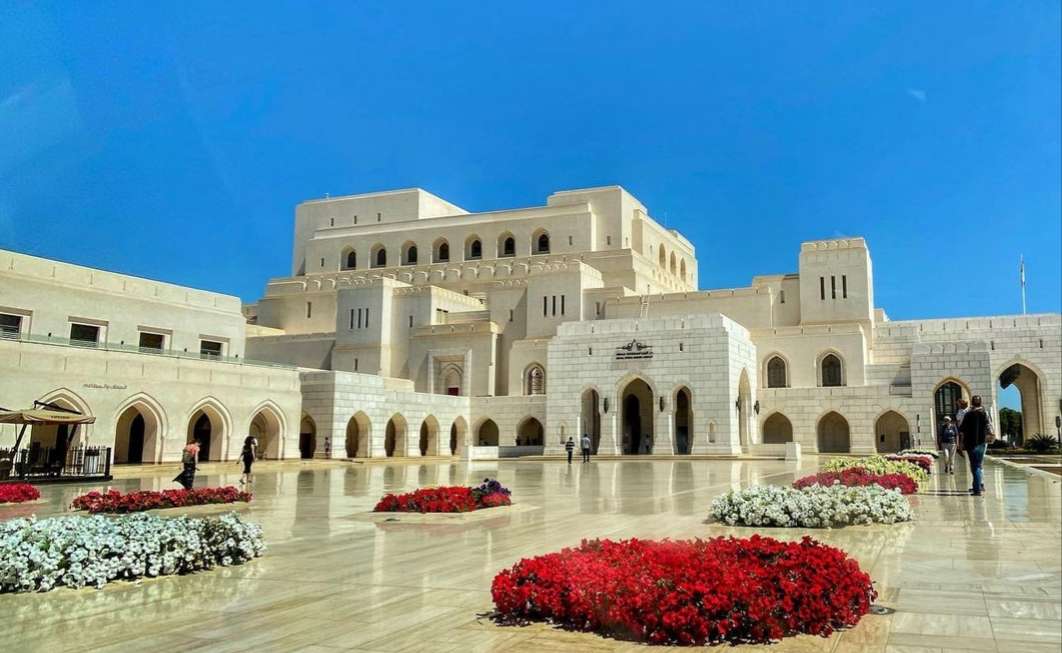
Royal Opera House Muscat isn’t just a theatre—it’s a statement. Opened in 2011 under the patronage of Sultan Qaboos bin Said, it was the first opera house on the Arabian Peninsula, a bold step for a country long known for its deserts and forts rather than its stages. The choice of location was deliberate: Bawshar, once a quiet suburb of Muscat with little more than scattered villas and empty lots, has since become a cultural hub, drawing both locals and visitors into its orbit.
The building itself is a conversation between past and present. From the outside, it resembles an ancient Omani fortress, with its thick walls and intricate carvings, yet the materials—glass and steel—give it a lightness that defies tradition. The façade is adorned with geometric patterns and arabesques, echoing the designs of historic mosques and palaces, while inside, the space is sleek and modern. The acoustics are among the finest in the world, and the stage is equipped to host everything from grand operas to intimate chamber performances.
But the opera house was never meant to be just a venue for high art. It was designed as a meeting point for cultures, a place where East and West could coexist on stage. The programme reflects this: alongside classical operas and ballets, you’ll find jazz nights, traditional Omani performances, and collaborations with international institutions like La Scala or the Vienna State Opera. These events often draw crowds from across the region, turning Muscat into a temporary capital of the arts.
Beyond performances, the opera house plays a quieter but equally important role in Omani society. It hosts charity galas, educational workshops for children, and celebrations of national holidays. For many Omanis, it’s a gateway to art forms that were once out of reach, a place where they can experience the kind of culture they might have only encountered abroad. And while it could easily have become an exclusive enclave, the theatre remains accessible—some shows are priced affordably, and families often gather in the foyer for daytime performances.
The area around the opera house has grown into a destination of its own. Cafés and restaurants have sprung up nearby, offering pre- or post-show meals, while the building itself becomes a luminous landmark at night, its reflection shimmering in the artificial lake. Locals stroll here in the cooler months, turning the space into a social gathering point. The theatre isn’t just a backdrop; it’s part of the city’s rhythm, blending seamlessly into daily life.
The opera house is also a symbol of Oman’s broader cultural evolution. Sultan Qaboos, who ruled for over five decades, championed a vision of a country rooted in tradition yet open to the world. The theatre embodies that balance—it doesn’t mimic European models but reinterprets them through an Omani lens. Even small details, from the interior design to the programming, reflect this careful equilibrium between heritage and modernity.
For visitors, the opera house offers a different perspective on Oman. Most come for the beaches and the deserts, but here, they find something unexpected: a country engaging with the world on its own terms. Attending a performance or taking a tour isn’t just about seeing a show; it’s a chance to understand Oman’s history, its society, and its aspirations. There are no souvenir shops or pushy guides—just the art itself, unfiltered.
What makes the Royal Opera House Muscat special is the way it slows time. Inside, the music carries you away from the noise of the outside world. Outside, the palm trees and modern buildings remind you of a country moving forward. The theatre bridges eras, proving that culture can connect people across languages and borders. In the end, that might be its greatest achievement.