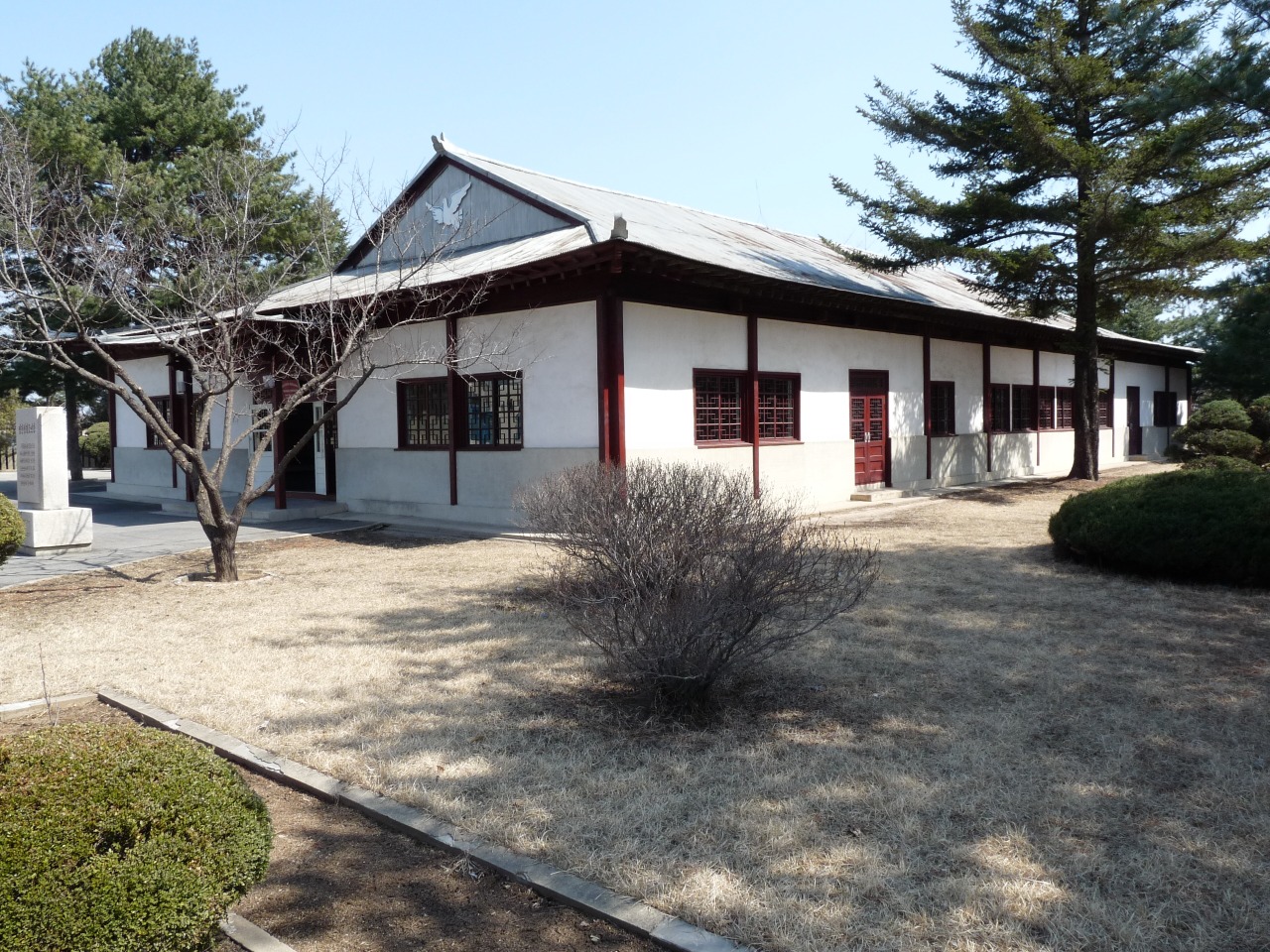
The North Korea Peace Museum in Haeju is one of those places that lingers in the mind long after you’ve left. Tucked away on the outskirts of the city, far from the usual tourist paths, it stands as a quiet monument to a conflict that shaped the Korean Peninsula—and continues to define it. The building itself is unassuming, a low, rectangular structure with large windows, built in the mid-20th century when practicality outweighed aesthetics. Inside, the space is sparse, with exhibits arranged without fanfare. There are no flashy displays or interactive screens, just documents, photographs, and artifacts that tell a story of war, division, and an armistice that never quite became peace.
The museum’s focus is the 1953 armistice agreement signed in Panmunjom, which halted the active fighting of the Korean War but left the peninsula technically still at war. The exhibits center on the negotiations, with copies of the original documents, military maps marking the shifting front lines, and personal items from soldiers who fought in the conflict. The narrative, however, is distinctly North Korean. Kim Il Sung is portrayed as the architect of victory, his portraits and quotes woven throughout the displays. The war is framed as a triumph of resilience against foreign aggression, a perspective that shapes how visitors understand the past.
Yet the museum isn’t just about history—it’s also a reflection of the present. Alongside the wartime exhibits, there are displays on contemporary tensions, including maps of U.S. and South Korean military bases and images of joint military exercises that Pyongyang views as provocations. The message is clear: the conflict never truly ended. For visitors, this creates an uneasy sense of stepping into a space where the past is still very much alive, used to justify the present.
Haeju itself is a city with layers of history. Once a cultural and economic hub, it was the capital of a medieval Korean kingdom before becoming part of a unified Korea. During Japanese occupation, it grew into an industrial center, and after the division of the peninsula, it found itself in the North. Today, it’s a quiet provincial city, where life moves at a slower pace, and foreigners are a rare sight. The museum’s location here, away from Pyongyang’s more polished propaganda sites, gives it a rawness that feels more immediate than staged.
Visiting the Peace Museum is not an experience of spectacle or entertainment. There are no crowds, no guided tours in multiple languages, no souvenir stalls. Instead, there’s a heavy silence, broken only by the occasional murmur of a local visitor or the rustle of an old photograph. The exhibits are straightforward, almost clinical in their presentation, but that only makes the weight of the history they carry more palpable. This is a place where the past isn’t just remembered—it’s weaponized, used to reinforce a narrative of perpetual struggle.
For those who come, the museum offers a rare glimpse into how North Korea sees itself and its place in the world. The story told here is selective, omitting the roles of other nations in the war and presenting events through a lens of national resilience. It’s a reminder that history is never neutral, especially in a country where the past is so tightly controlled. The absence of alternative perspectives doesn’t make the museum any less fascinating, but it does make it necessary to engage with it critically.
The building itself, with its utilitarian design, feels like a relic of another era. The large windows let in natural light, softening the starkness of the exhibits, but there’s no mistaking the purpose of the space. This isn’t a place for reflection in the way Western museums often are—it’s a place for instruction, where the narrative is carefully curated to serve a larger political purpose. The lack of embellishment only reinforces the sense that this is a space where history is not just preserved but actively shaped.
Haeju, with its ancient roots and quiet streets, provides an interesting contrast to the museum’s heavy themes. The city has seen empires rise and fall, been a center of trade and culture, and now exists as a small, overlooked corner of North Korea. The Peace Museum, in its own way, mirrors that history—layered, complex, and still very much a part of the present. For those willing to look beyond the surface, it offers a rare window into a country where the past is never truly past.