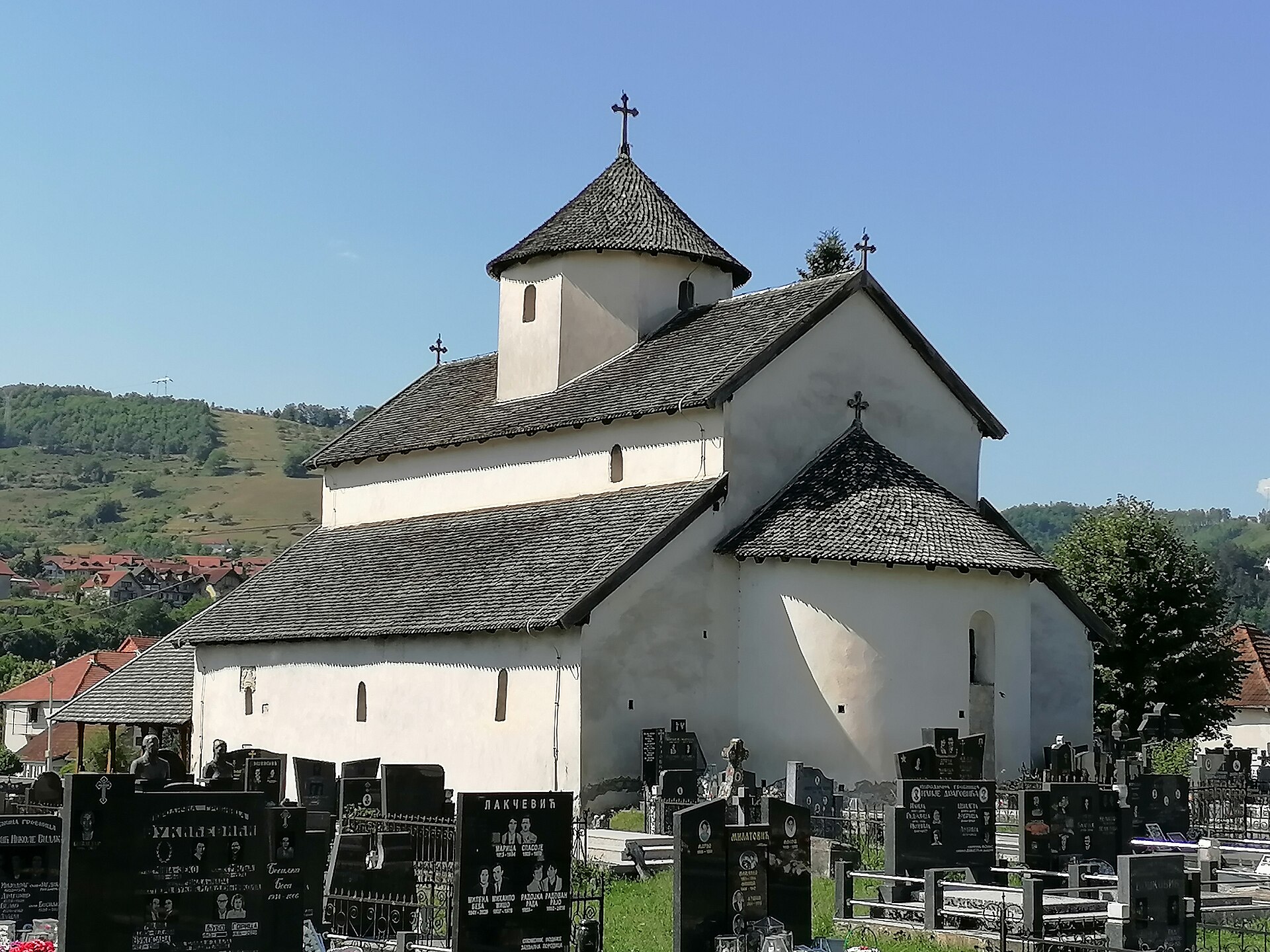
Nestled in the quiet town of Bijelo Polje, St. Nicholas Church is one of those places that doesn’t demand attention but lingers in the mind long after you’ve left. Far from Montenegro’s coastal resorts and dramatic mountain trails, this part of the country moves at its own unhurried pace, where history isn’t just preserved in museums but woven into the fabric of everyday life. The church stands slightly apart from the town’s main thoroughfares, as if guarding its own quiet corner of the world.
Dedicated to St. Nicholas, the patron saint of travelers, the church carries a special resonance in this region. Its origins trace back to the medieval era, when these lands were shaped by Byzantine influence before passing through the hands of Serbian and Bosnian rulers. Orthodoxy here was never just a matter of faith—it was a cultural anchor, and churches like this one served as gathering places for communities. Though not the oldest in Montenegro, St. Nicholas Church embodies that enduring spirit: unassuming yet steadfast, much like the stone walls that have weathered centuries.
The architecture is classic for Orthodox churches across the Balkans—modest in scale, with a single apse and a low bell tower that doesn’t soar but feels perfectly in proportion. The exterior is built from local stone, its surface softened by time into a warm, golden hue. The roof, covered in traditional tiles, shelters a small interior where the simplicity of the design invites contemplation. An iconostasis, a handful of frescoes, and wooden pews create an intimate space where the outside world seems to fade away. There’s no grandeur here, just a sense of quiet reverence.
What sets St. Nicholas Church apart is that it remains an active place of worship. Unlike many historic churches now serving as museums, this one still fulfills its original purpose. Services are held regularly, the faithful gather for holidays, and the sound of bells carries through the town. On feast days, the air fills with the scent of incense and candle wax, and the voices of the congregation rise in song. Even for those who don’t share the faith, there’s a palpable sense of continuity—of traditions passed down through generations, unchanged by time.
Bijelo Polje itself is the kind of town that rarely makes it into guidebooks, and that’s precisely what makes it worth visiting. There are no crowds, no souvenir stalls, no cafes blasting music onto the streets. Instead, you’ll find narrow lanes lined with old houses, their shutters painted in faded blues and greens, and a market where vendors sell homemade cheese and honey. The locals might glance at visitors with quiet curiosity, but there’s no pressure, no expectation. St. Nicholas Church fits seamlessly into this unhurried rhythm, a place that doesn’t seek admirers but welcomes those who happen to wander by.
A small park surrounds the church, offering shade under its trees and a place to sit when the summer sun grows too strong. In autumn, the ground is carpeted with fallen leaves, and the air carries the crispness of the season. Sometimes, you might hear the strum of a guitar or the murmur of conversation from a nearby bench. This isn’t a place for hurried sightseeing or posed photographs. It’s somewhere to pause, to lean against the cool stone of the church wall, and to listen to the silence.
St. Nicholas Church is a reminder that history isn’t always dramatic. Sometimes, it’s found in the quiet corners of towns, in the rituals that locals take for granted, in the way a building has stood for centuries without fanfare. There are no gilded domes or marble columns here, just the quiet dignity of a place that has endured. It doesn’t announce itself with grand gestures; it simply exists, as the mountains around Bijelo Polje exist, as the Lim River flows nearby. If you ever find yourself in this part of Montenegro, it’s worth stopping by—not to tick a box on a list of sights, but to experience something far more elusive: the unspoken soul of a place.