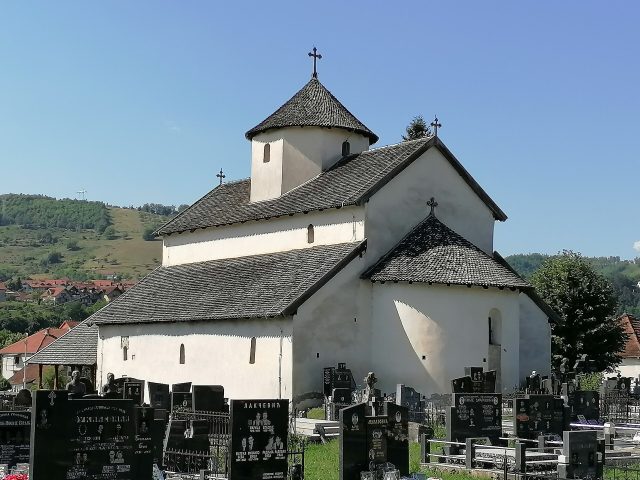
Perched on a gentle hill overlooking the town of Bijelo Polje, the Church of Saint Peter feels like a quiet guardian of time. From this vantage point, the town unfolds below—a patchwork of rooftops and narrow streets nestled in the valley of the Lim River, with the first ridges of the mountains rising just beyond. The church itself is modest in size, its unassuming stone walls belying the weight of history they carry. For the people of this region, it is more than a place of worship; it is a thread connecting past and present, where the rhythms of daily life intersect with centuries of memory.
The exact origins of the church are lost to time, but historians agree it dates back to the medieval period, likely built during the height of the Nemanjić dynasty when these lands flourished under Serbian rule. The architecture is characteristic of the era: a single-nave structure with a semicircular apse, constructed from a mix of stone and brick. There is no grandeur here, no ornate flourishes—just a quiet dignity that comes from enduring through the ages. The simplicity of its design only deepens its appeal, as if the building itself has absorbed the resilience of the people who have gathered within its walls.
Inside, the church holds fragments of its past in the form of faded frescoes. Though time and human hands have worn them down, the remaining paintings still offer a glimpse into the skill of medieval artists. Executed in the Byzantine tradition, they depict saints and biblical scenes with a solemnity that feels almost tangible. The most striking among them is the image of Christ Pantocrator in the dome, one of the oldest surviving elements of the church. Even in their diminished state, these frescoes carry a sense of devotion that transcends the centuries.
The church has witnessed the ebb and flow of empires. Over the centuries, this corner of the Balkans changed hands countless times—from Serbian kings to Ottoman sultans, and later to Austro-Hungarian rulers. Each shift left its mark on the building. During Ottoman rule, the church was converted into a mosque, its interior altered to suit new religious practices. When it was later reclaimed by Orthodox Christians, traces of those changes remained, subtle but unmistakable. These layers of history are visible in the architecture, a silent testament to the region’s turbulent past.
Today, the Church of Saint Peter remains an active place of worship, drawing not only the faithful but also those curious about Montenegro’s cultural heritage. The interior is hushed, the only sounds the soft echo of footsteps on stone and the occasional toll of the bell. In summer, visitors arrive to see the ancient frescoes and soak in the atmosphere of a place untouched by modernity. Winter transforms the scene; the church stands serene amid snow-dusted streets, its quiet presence a counterpoint to the bustle of the town below.
The surroundings add to the church’s charm. The hill it sits on is dotted with old houses, their terracotta roofs weathered by time. From here, the Lim River winds through the valley, its banks lined with trees and fields that stretch toward the foothills. On clear days, the view is breathtaking—a reminder of why people have been drawn to these lands for centuries. The landscape feels timeless, a blend of natural beauty and human history that has shaped the identity of this region.
What makes the Church of Saint Peter special is not its size or splendor, but its ability to endure. It has survived wars, shifting borders, and changing faiths, yet it remains a constant in the lives of those who call this place home. For locals, it is a sanctuary of prayer and remembrance. For travelers, it offers a window into the soul of Montenegro—a country where history is not confined to museums but lives in the stones of its churches, the stories of its people, and the landscapes that have witnessed it all. There is no need for extravagance here; the church’s true value lies in its quiet persistence, a place where the past is never truly gone.