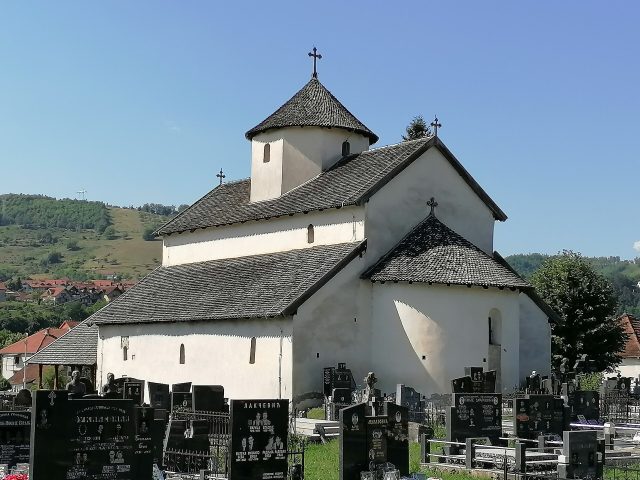
Bielo Polje is one of those quiet Balkan towns where history lingers in the details rather than the grand gestures. Tucked away in northern Montenegro, far from the coastal resorts and mountain retreats that draw most visitors, it feels like a place where time moves at its own unhurried pace. And at its heart stands the Sultan Murad Mosque, a building that doesn’t demand attention but quietly earns it.
Built in the 16th century, the mosque takes its name from Murad I, the Ottoman sultan whose reign marked a turning point in the spread of Islam across the Balkans. There’s no record of his direct involvement in its construction—more likely, the name reflects the reverence for a ruler whose legacy shaped the region. The Ottomans called this town Akova back then, and it served as an administrative hub, a small but important piece of their empire. The mosque would have been one of many such structures, unremarkable in its day but enduring long after the empire itself faded.
From the outside, the building is modest, almost unassuming. A low, square structure topped with a dome resting on an octagonal drum, it follows the classic Ottoman design seen across the Balkans. The minaret, slender and not particularly tall, rises from the northern wall, its silhouette sharp against the sky. Inside, the space is simple: whitewashed walls, a wooden minbar, and a mihrab pointing toward Mecca. The floor is covered in carpets, and light filters through small windows, softening the edges of everything it touches. There’s no ornamentation to speak of, just the quiet functionality of a place meant for reflection.
The mosque has seen its share of changes over the centuries. When the Ottomans left in the early 20th century, many of their religious buildings in the region were destroyed or repurposed. This one survived, though not without alterations. During the Yugoslav era, it was used for other purposes, its original function forgotten for a time. It wasn’t until the late 1990s that the building was returned to the local Muslim community and restored. Today, it serves as it always did—a place of worship, a gathering spot for Friday prayers, and a quiet corner of the town where life unfolds at its own rhythm.
Bielo Polje itself is a town of layers. For centuries, it’s been a crossroads of faiths and cultures, a place where Orthodox churches stand not far from mosques, where the past isn’t just remembered but still visible in the streets. Just a few hundred meters from the Sultan Murad Mosque, the Church of Saints Peter and Paul rises, its 19th-century architecture a counterpoint to the mosque’s Ottoman lines. The two buildings, so close yet so different, are a reminder of how this region has long been a meeting point of worlds. That coexistence hasn’t always been easy, but today, the town carries on with a kind of quiet resilience.
For travelers used to the grand mosques of Istanbul or the ancient ruins of the Mediterranean, the Sultan Murad Mosque might not seem like much. There are no intricate tilework patterns, no towering minarets, no crowds of tourists snapping photos. But that’s part of its charm. It doesn’t try to impress; it simply is. A place that has witnessed centuries of change, yet remains rooted in the everyday life of the town. It’s not a monument frozen in time, but a living space, still used, still cared for, still breathing.
If you find yourself in Bielo Polje, the mosque is worth a visit—not for the sake of ticking off a sightseeing list, but for the chance to step into a different rhythm. In the early morning, when the light is soft and the streets are still quiet, it feels almost suspended in time. By evening, as the call to prayer echoes over the rooftops, the building takes on a different mood, its dome casting long shadows across the cobblestones. And on rainy days, when the town seems to slow down even more, the mosque offers a moment of stillness. You might stand under the eaves, listening to the rain on the roof, and wonder how many others have done the same over the centuries—each with their own thoughts, their own prayers, their own quiet connection to this place.