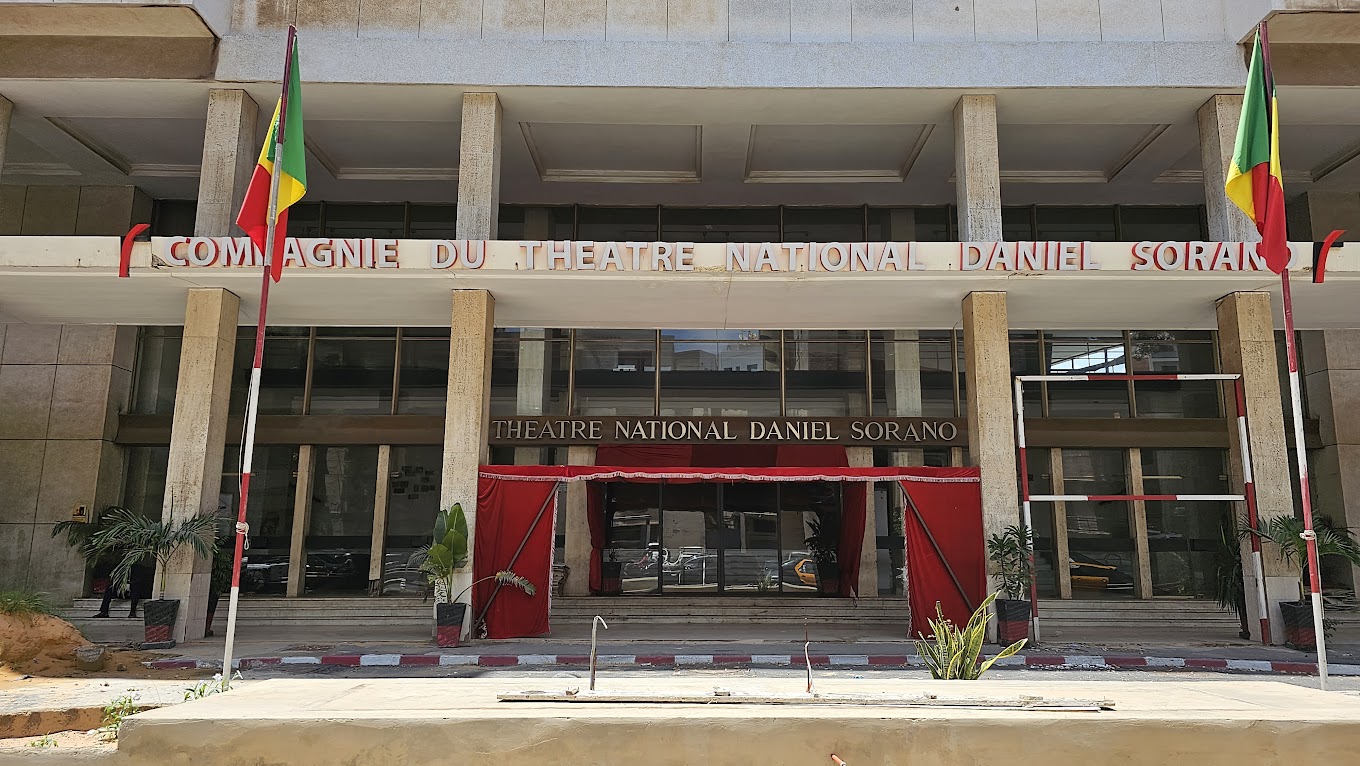
The Daniel Sorano National Theatre in Dakar is one of those rare places where art and history feel inseparable, as if the building itself breathes in time with the city. Standing on Place de l’Indépendance, at the heart of Senegal’s capital, it has served for decades not just as a cultural hub but as a symbol of national identity. Named after Daniel Sorano, a legendary Senegalese actor, the theatre carries the legacy of a man who became synonymous with theatrical art in the country. Sorano wasn’t just an artist—he was a pioneer who brought African theatre in French to global audiences, making it accessible and resonant far beyond the continent.
Built in 1965, shortly after Senegal gained independence, the theatre was one of the first major cultural projects of the young nation. Its architecture blends modernist design with traditional African motifs, reflecting the country’s desire to forge its own artistic path without abandoning its heritage. The façade is adorned with geometric patterns reminiscent of local crafts, while the spacious auditorium, with its balconies and stage, is designed to immerse audiences in sound and light. The acoustics inside are remarkable, turning every performance into something unforgettable.
From the beginning, the Daniel Sorano Theatre was more than just a venue for plays. In its early years, it hosted not only theatrical productions but also political gatherings, concerts, and festivals. It was a place where Senegal’s new culture took shape—bold, experimental, and open to the world. Artists from Europe, Africa, and the Americas performed here, making the theatre a bridge between continents, a space where African art could stand on equal footing with the global stage.
Today, the theatre remains a vital part of Dakar’s cultural life. It stages plays in French and local languages, concerts of traditional and contemporary music, and festivals of film and dance. A special place in its repertoire is reserved for performances rooted in Senegalese folklore and history, from ancient legends to stories of the independence struggle. The auditorium is often full, and it’s no surprise—few places in Dakar capture the pulse of national culture as vividly as this one.
The building itself is worth admiring. It strikes a balance between elegance and festivity, with high ceilings, large windows, and spacious foyers where visitors can wander before a show. The interior features wood and stone, giving it a warm, inviting feel. The stage is equipped with modern technology, yet it retains the spirit of a classic theatre. There’s no unnecessary opulence, just a sense that every detail has been carefully considered to draw performers and audiences into the experience.
The Daniel Sorano Theatre isn’t just about preserving the past—it’s also shaping the future of Senegalese culture. It regularly hosts workshops for young actors, directors, and musicians, as well as educational programs for students. For many Senegalese, it was their first encounter with art, a memory that stays with them for life. In recent years, the theatre has embraced experimental productions, blending traditional forms with modern technology, from video installations to interactive performances.
Visiting the theatre isn’t limited to attending a show. Occasionally, guided tours offer a glimpse behind the scenes—dressing rooms, backstage areas, and even the chance to stand on the stage. For those interested in architecture, the building is a fine example of how contemporary design can harmonize with national traditions. The façade, with its patterns and proportions, reminds us that art isn’t just what happens on stage but how it fits into the fabric of the city.
Dakar is a city of contrasts, where modern skyscrapers stand alongside colonial mansions, and bustling markets give way to quiet streets. The Daniel Sorano National Theatre is one of those places where these contrasts soften, creating a sense of unity. You can spend an evening watching a play, then step outside to feel the rhythm of a city that never sleeps. The theatre doesn’t just occupy this space—it lives alongside Dakar, evolving with it and remaining a cornerstone of its cultural landscape.
For many Senegalese, the theatre is more than a building—it’s a place of memory. It has hosted premieres that marked milestones in the country’s history, performances by artists who became national heroes, and words that inspired generations. While Dakar now has newer cultural venues, the Daniel Sorano Theatre remains a place where art feels especially close and alive. Perhaps because it doesn’t try to be trendy or cutting-edge—it simply exists, as Senegalese culture itself does.