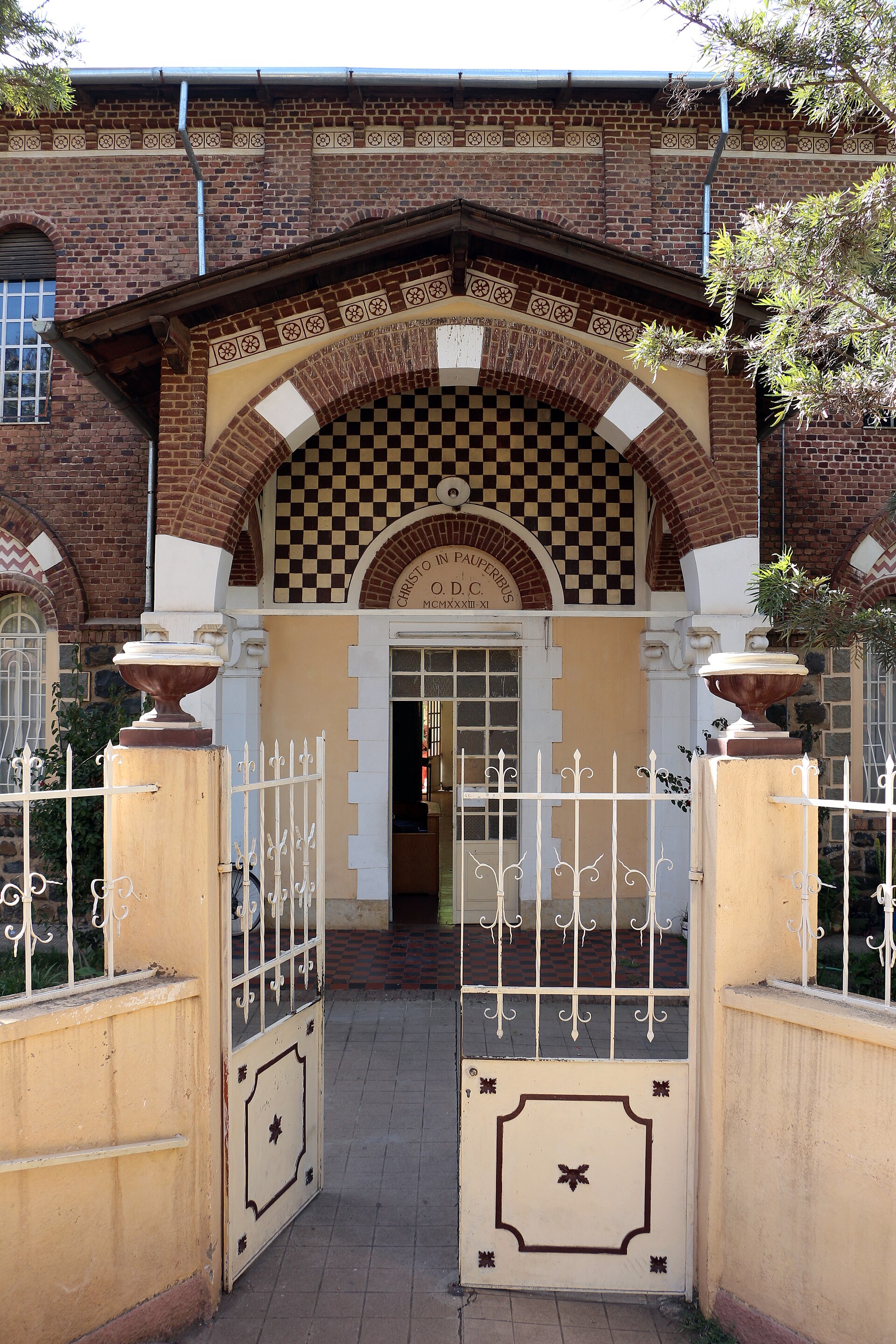
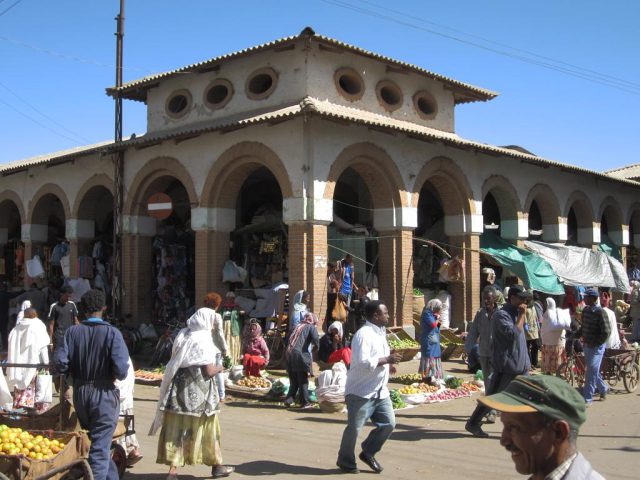
The National Museum of Eritrea sits quietly in the heart of Asmara, a city where Italian Art Deco facades stand alongside ancient mosques and bustling markets. It’s not the kind of place that draws crowds with flashy exhibits or grand promises, but for those who take the time to step inside, it offers something far more meaningful—a chance to piece together the fragments of a country with a history as layered as the earth beneath its feet.
The museum itself is housed in what was once the Governor’s Palace, a building that carries its own weight of history. Constructed during the Italian colonial period in the early 20th century, it reflects the architectural ambitions of the time, with high ceilings, arched doorways, and a sense of order that contrasts with the chaotic energy of the streets outside. The palace was later repurposed after Eritrea’s independence in 1991, becoming a home for the artifacts that tell the story of a nation that has seen empires rise and fall, from the ancient Kingdom of Aksum to the struggles of modern statehood.
Inside, the exhibits unfold in a way that feels more like a conversation than a lecture. The ground floor is dedicated to archaeology, where stone tools, pottery shards, and fragments of ancient inscriptions hint at the lives of people who lived here thousands of years ago. One of the most striking displays is a collection of artifacts from the pre-Aksumite period, including delicate jewelry and ceremonial objects that suggest a society already sophisticated in its craftsmanship and trade. Nearby, a replica of the famous stelae from the ancient city of Metera stands tall, a reminder of the monumental architecture that once defined this region.
Upstairs, the focus shifts to more recent history, though no less complex. The colonial era is represented through photographs, documents, and everyday objects that reveal the tensions and contradictions of life under Italian rule. There are military uniforms, maps of Asmara’s urban planning, and even a few personal items belonging to Eritreans who lived through that time. The exhibits don’t shy away from the darker aspects of colonialism, but they also acknowledge the ways in which cultures intertwined, leaving behind a city that still bears the marks of both its past and its resilience.
One of the most moving sections is devoted to the Eritrean War of Independence, a decades-long struggle that shaped the country’s identity. Here, the museum becomes less about artifacts and more about memory. Black-and-white photographs capture moments of defiance and determination, while handwritten letters and propaganda posters offer a glimpse into the daily realities of war. A few weapons and uniforms are on display, but the most powerful exhibits are the ones that humanize the conflict—the stories of ordinary people who fought, suffered, and ultimately prevailed.
Beyond the historical exhibits, the museum also celebrates Eritrea’s cultural diversity. Traditional clothing, musical instruments, and household items from the country’s nine ethnic groups are arranged in a way that highlights both their differences and their shared heritage. The Tigrinya, Tigre, Saho, and other communities are represented not as static relics of the past, but as living cultures that continue to evolve. A particularly striking display features a reconstructed Afar hut, complete with woven mats and cooking utensils, offering a tangible sense of how people have adapted to the harsh beauty of Eritrea’s landscapes.
The museum’s courtyard is often overlooked by visitors, but it’s worth lingering there for a moment. A few ancient stelae and stone carvings are scattered among the greenery, their weathered surfaces telling stories of their own. The space feels like a bridge between the past and present, a quiet corner where the weight of history doesn’t feel oppressive but rather like a natural part of the city’s rhythm.
For all its depth, the National Museum of Eritrea is not a place that tries to impress with grandeur. There are no interactive screens or high-tech displays, and the lighting is often dim, as if to preserve the artifacts from the harsh African sun. But that simplicity is part of its charm. It’s a museum that trusts its visitors to engage with the material on their own terms, to ask questions rather than seek easy answers. In a country where history is still being written, it serves as both a record and a reminder—a place where the past is not just remembered, but actively grappled with.