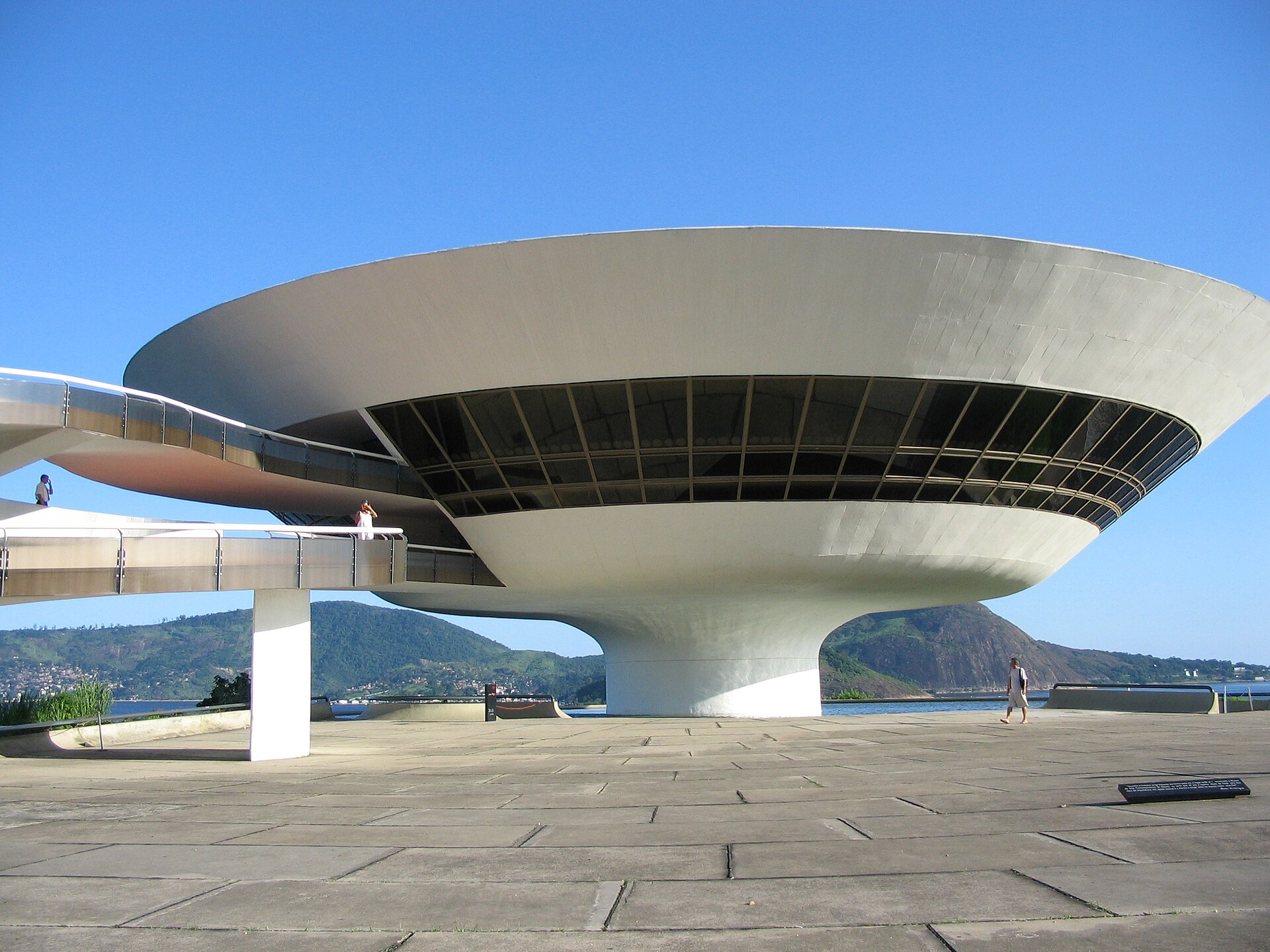
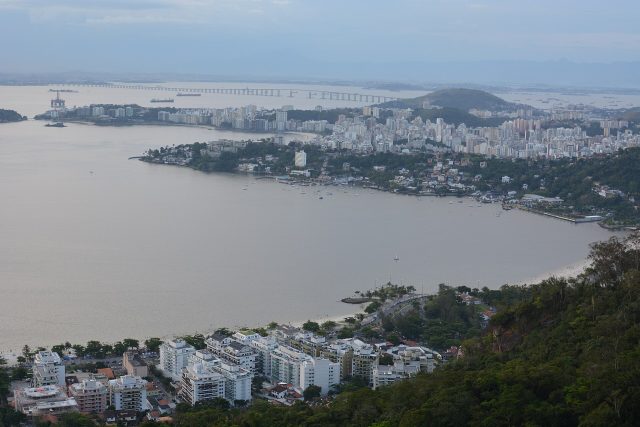
The Museum of Contemporary Art in Niterói isn’t just a place to see paintings and sculptures—it’s a structure that feels alive, woven into the city’s fabric as naturally as the hills around it. Perched on the edge of Guanabara Bay, its futuristic silhouette stands out immediately: a sweeping, disc-like form that seems to hover above the water, as if defying gravity. Designed by Oscar Niemeyer, the visionary Brazilian architect whose work defined modernism, the building embodies his belief in architecture as a dialogue between form, function, and emotion. Every curve of its facade, every open terrace, is meant to blur the line between the art inside and the landscape beyond, offering views of Rio de Janeiro’s skyline across the bay.
The museum’s origins trace back to the mid-20th century, when Niterói was still considered little more than a suburb of Rio. Brazil was in the midst of a cultural renaissance, and the idea of creating a space dedicated to contemporary art felt like a natural extension of the country’s creative energy. Niemeyer, already deep into his work on Brasília, took on the project after a long search for the right location. The site he chose—a stretch of waterfront with sweeping views—wasn’t an obvious pick at the time, but its openness and connection to the bay made it perfect. Construction stretched over years, and the museum finally opened in 1996, decades after the initial vision took shape.
The building itself is a masterpiece. Its inverted-cone shape, supported by a single central column, gives the impression of something weightless, almost floating. Inside, the circular layout ensures that visitors move through the space without feeling confined, while a glass dome above the central atrium floods the galleries with natural light. Niemeyer often spoke about architecture as something that should serve a purpose while also stirring the senses, and here, that balance is struck perfectly. The design doesn’t just house art—it becomes part of the experience, framing the works in a way that feels intentional, almost intimate.
The museum’s collection isn’t vast, but it’s carefully curated to reflect Brazil’s artistic evolution in the latter half of the 20th century. Works by iconic figures like Lygia Clark, Hélio Oiticica, and Ivan Serpa share space with pieces by younger artists pushing boundaries in form and material. The permanent exhibits often include immersive installations that play with the building’s architecture, turning the museum itself into part of the artwork. Temporary exhibitions add another layer, introducing visitors to emerging voices and movements without being tied to a fixed narrative.
Yet the museum’s appeal extends far beyond its walls. Its location makes it a destination in its own right—a place where people come as much for the views as for the art. From the terraces, Rio’s famous landmarks—the Sugarloaf, the Christ the Redeemer statue—appear almost within reach, while Niterói reveals itself from an angle most visitors never see. A small park surrounds the building, offering benches where you can sit and watch the water, or a quiet path along the shore. Locals often stop by not just to see the latest exhibition, but to enjoy the open space, the breeze off the bay, or the way the light changes as the sun sets. On clear evenings, the sky turns shades of orange and pink, and the distant glow of Rio’s lights begins to flicker across the water.
Niterói isn’t the first place most travelers think of when planning a trip to Brazil. Many head straight to Rio and miss the quieter, more lived-in feel of the city just across the bay. But that’s part of its charm. Here, the pace slows, the crowds thin, and the rhythm of daily life feels more authentic. The Museum of Contemporary Art is one of those rare places where that authenticity is on full display. It doesn’t try to compete with Rio’s larger cultural institutions or São Paulo’s sprawling galleries. Instead, it exists as a reflection of its surroundings—of Niterói’s history, its people, and the way art and life intersect in unexpected ways.
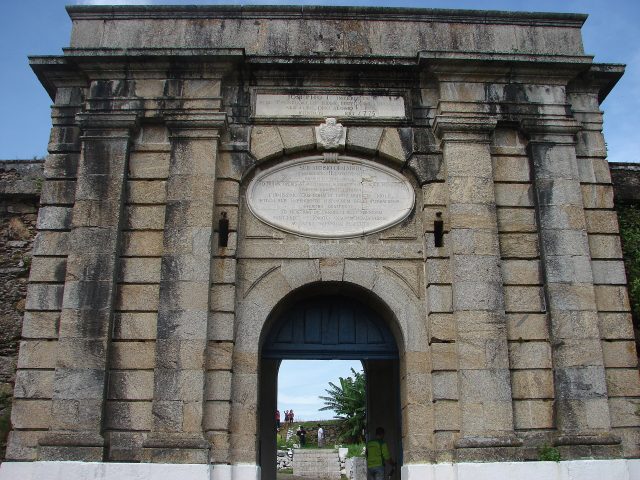
A visit to the museum can easily become part of a broader exploration of the city. Niterói has its own character, shaped by its beaches, its colonial-era buildings, and the favelas that climb its hillsides. Beaches like Itacoatiara and Camboinhas draw surfers and sunbathers, while the historic center offers a glimpse into the city’s past. The museum acts as a kind of bridge between these different worlds, connecting the artistic and the everyday, the old and the new. It’s a place where you might see a group of students sketching in the park, a couple lingering over coffee in the café, or an artist setting up an impromptu installation on the terrace.
If you find yourself in Rio, it’s worth setting aside a few hours to cross the bay and see this place for yourself. The journey—whether by ferry or bus—takes about half an hour, and the changing views of the city along the way are part of the experience. Once you arrive, you’ll notice something unusual: there are no crowds, no rushed tours, no sense of being herded through the space. The museum feels more like a discovery than a destination. You can wander the galleries at your own pace, pause in the café, or simply stand on the terrace and watch the water. There’s no pressure, no scripted experience—just the quiet interplay of art, architecture, and the ever-present hum of the bay. In a region where noise and movement often dominate, that stillness is a rare gift.