Selçuk Museum is one of those rare places where history isn’t just displayed—it lingers in the air, almost tangible. Tucked away in a quiet town near the ruins of Ephesus, the museum doesn’t overwhelm with size or spectacle. Instead, it offers something more intimate: a sense of time unfolding through carefully chosen fragments of the past. The building itself, a 13th-century Seljuk madrasa, sets the tone. Its thick stone walls, arched ceilings, and a central courtyard with a fountain carry the quiet dignity of medieval Anatolia. But step inside the exhibition halls, and the atmosphere shifts. Here, the focus is on the ancient world—Ephesus, Miletus, Priene—cities that once shaped the Mediterranean.
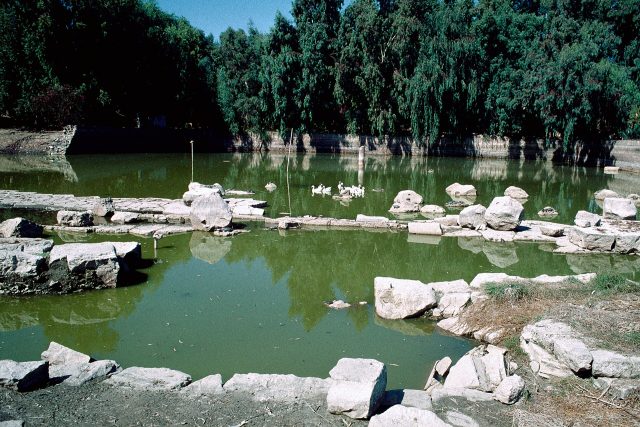
The museum’s collection is small but deliberate, with every artifact tied to the region’s archaeological sites. Among the most striking pieces are the statues of Artemis of Ephesus. Several versions of the goddess are on display, each reflecting the unique blend of Anatolian and Greek traditions that defined her cult. One statue, recovered from the Temple of Artemis, stands out for its distinctive torso, adorned with rows of rounded protrusions symbolizing fertility. Nearby, fragments of friezes and capitals from the same temple lie quietly, their intricate carvings hinting at the grandeur of what was once one of the Seven Wonders of the Ancient World.
A separate gallery is devoted to daily life in antiquity. Clay lamps, medical tools, children’s toys, and coins bearing the profiles of long-dead emperors offer a glimpse into the routines of ordinary people. The jewelry collection is particularly evocative—delicate gold and silver bracelets, earrings, and pendants that once adorned the women of Ephesus. Some pieces look as if they were only recently removed from their owners, their craftsmanship still sharp after two millennia. It’s easy to imagine them being worn at a market stall or a festival, passed down through generations before ending up here.
The early Christian period is represented in another hall, where sarcophagi carved with biblical scenes and fragments of church mosaics tell a different story. One of the most intriguing pieces is a fragment of a marble pulpit, said to be from the basilica where the Apostle John preached. For many visitors, this space feels more contemplative than the rest of the museum. It’s a reminder that Ephesus wasn’t just a center of pagan worship—it was also a place where Christianity took root, where, according to tradition, the Virgin Mary spent her final years.
The necropolis finds occupy their own corner of the museum. Sarcophagi with reliefs, funerary urns, and gravestones inscribed with epitaphs reveal how the ancients viewed death. Some stones bear simple names, while others depict scenes from the lives of the deceased—banquets, hunts, family gatherings. These images feel almost personal, as if the people they represent might step out of the stone at any moment. It’s a humbling reminder that behind every artifact lies a life, a story, a moment in time that once mattered as much as our own.
What makes Selçuk Museum special isn’t its size or the rarity of its exhibits. It’s the way it weaves together different eras—the Seljuk architecture of the building, the pagan artifacts, the Christian relics—without forcing a narrative. There are no crowds here, no rush to move from one display to the next. Visitors can take their time, lingering over details that might go unnoticed in a larger museum. The quiet atmosphere makes it easier to appreciate the craftsmanship of a single coin or the subtle expression on a statue’s face.
After exploring the galleries, the courtyard offers a place to pause. Sitting by the fountain, listening to the water trickle over stone, it’s easy to imagine the madrasa as it once was—a place of learning, where students debated philosophy and theology. Beyond the museum’s walls, the hills of Selçuk rise gently, hiding the ruins of ancient cities beneath their slopes. The museum isn’t just a repository of the past; it’s a bridge between what was and what remains. It doesn’t tell you what to think. It simply invites you to look closer, to listen, and to feel the weight of history in the silence.