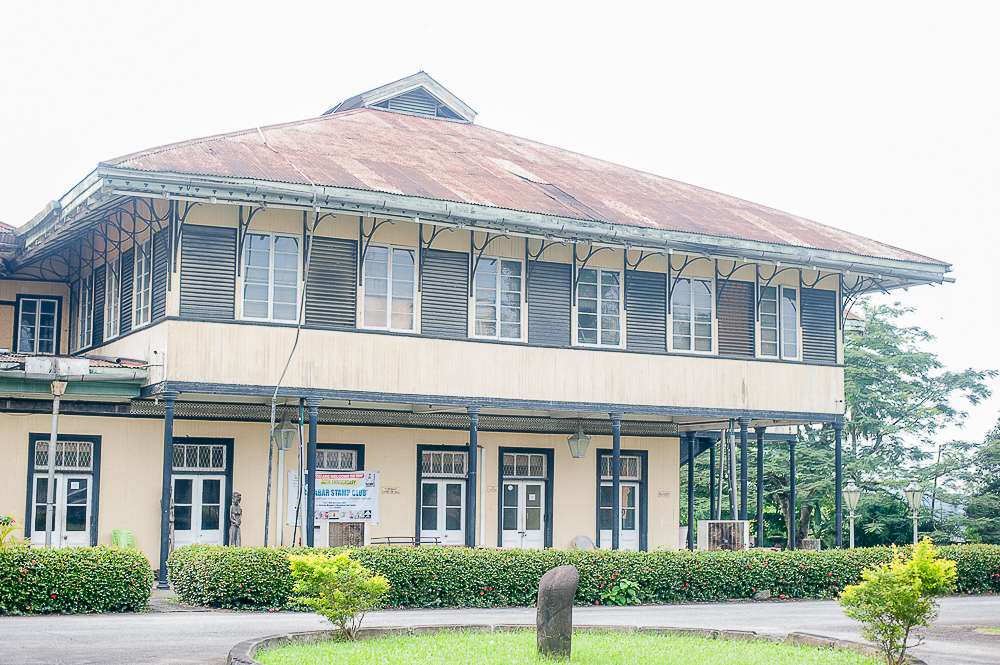
Calabar Slave History Museum is one of those rare places where the past isn’t just preserved behind glass—it lingers in the air, heavy and unavoidable. Housed in a building that itself is a relic of the transatlantic slave trade, the museum stands near the banks of the Calabar River, once a bustling hub for one of West Africa’s largest slave markets. The city was a critical point in the forced migration of millions of Africans to the Americas, and the museum serves as a stark reminder that this history didn’t vanish with time. Instead, it shaped the region’s culture, economy, and even its landscape in ways that are still felt today.
The museum occupies a former slave trader’s residence, constructed in the late 1700s. Its architecture reflects the colonial era’s practicality: thick stone walls to keep out the heat and humidity, high ceilings for ventilation, and narrow windows designed more for defense than aesthetics. Inside, some original features remain—wide wooden doors, creaking staircases—silent witnesses to the transactions that once took place within these walls. The exhibits go beyond artifacts; they reconstruct the machinery of the trade. Documents, maps, and everyday objects illustrate how supply chains functioned, what goods were exchanged for human lives, and how contracts and receipts turned people into commodities.
The story begins long before European involvement. Calabar was already a thriving trade center, known for its markets dealing in ivory, palm oil, and enslaved people captured in local conflicts. But by the 16th century, the trade had evolved into an industrial-scale operation, with Calabar at its heart. The museum doesn’t shy away from explaining how African rulers and European merchants collaborated in this system, how it reshaped social hierarchies, and why it persisted despite growing global condemnation. The exhibits make it clear that this wasn’t just a European enterprise—it was a complex network of local and foreign interests, each playing a role in sustaining the trade for centuries.
What makes the museum particularly compelling are the personal stories woven into the broader narrative. Letters, diaries, and legal records offer glimpses into individual lives—people like Olaudah Equiano, born in the region and later one of the first Africans to publish an autobiography in English. His 18th-century account of enslavement and survival became a powerful tool in the abolitionist movement. The museum also highlights resistance: uprisings on slave ships, daring escapes, and underground networks that helped people evade capture. These stories humanize a history that can otherwise feel abstract, reminding visitors that behind every statistic were real lives, choices, and struggles.
The museum doesn’t end with emancipation. One of its most thought-provoking sections explores the long-term consequences of the slave trade, from demographic shifts to the erosion of traditional economies. It shows how the legacy of slavery persists in modern Nigeria—in proverbs, music, and even language. Many local sayings reference the trade, a testament to how deeply it’s embedded in cultural memory. The exhibits also address the social fractures it left behind, some of which still resonate today. It’s a sobering reminder that history isn’t just about the past; it’s about how the past continues to shape the present.
Visiting the museum isn’t a passive experience. There’s no attempt to soften the brutality of the trade, nor is there a need to sensationalize it—the facts speak for themselves. Interactive displays, like audio recordings of descendants sharing their family histories or maps tracing the routes of slave ships, make the history feel immediate. The museum doesn’t offer easy answers or moral judgments. Instead, it presents the trade in all its complexity: the greed, the violence, and the resilience of those who endured it.
Beyond its role as a museum, the space serves as a research hub. It hosts conferences, lectures, and workshops on the history of slavery and its global impact, collaborating with universities and international organizations to preserve and share knowledge. For many visitors, especially those with personal or ancestral ties to the trade, the museum becomes a place of reflection—a way to confront the past and understand how it connects to their own lives.
Calabar itself is a city worth exploring. One of Nigeria’s oldest, it retains a distinct colonial charm, with its waterfront, bustling markets, and nearby nature reserves. But the Slave History Museum is what sets it apart. It’s not just a collection of artifacts; it’s a living conversation between past and present, a reminder that history isn’t just something that happened—it’s something that continues to shape who we are.