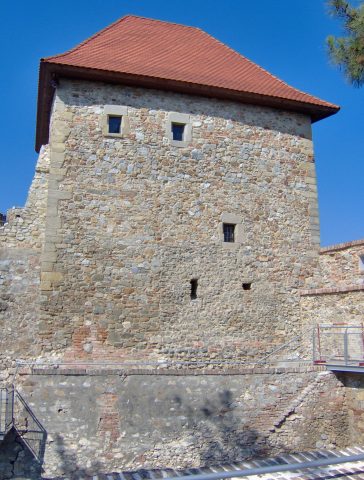
The Nitra Region Museum isn’t just a place where history is displayed—it’s where the past feels alive, breathing through the walls of an 18th-century building that once housed the city’s most powerful figures. Part of the former bishop’s palace, the museum stands in the heart of Nitra, a city with roots stretching back over a thousand years. The palace itself is a quiet witness to centuries of change, its grand halls now filled with objects that tell the story of this land and the people who shaped it.
The museum’s collections span from the earliest settlements in what is now Slovakia to the turbulent events of the 20th century. One of the most compelling sections focuses on archaeology, particularly artifacts from the Great Moravian Empire, a medieval state that once dominated Central Europe. Here, you’ll find everyday items—tools, weapons, jewelry—that offer a glimpse into the lives of people who walked these lands long before the concept of Slovakia existed. Some of the most striking pieces are tied directly to Nitra, which was an early center of Christianity in the region. The museum preserves fragments of that era, from religious relics to remnants of ancient structures, each piece a silent testament to the city’s significance.
The medieval period takes center stage in another part of the museum, where rare manuscripts, ecclesiastical objects, and coins reveal how Nitra evolved from a religious hub into a political powerhouse. The exhibits trace the shift in artistic styles, from the heavy, rounded forms of Romanesque architecture to the soaring lines of Gothic design. Many of the items were crafted by local artisans whose names have been lost to time, but whose skill is still evident in the intricate details of their work. It’s a reminder that history isn’t just about kings and bishops—it’s also about the unnamed craftsmen who built the world around them.
Beyond history, the museum also explores the traditions and daily life of the Slovak people. The ethnographic collections include everything from elaborately embroidered folk costumes to the simple tools of farmers and blacksmiths. Some rooms feature reconstructed interiors of old homes, complete with furniture and household items that show how people lived, worked, and celebrated in the Nitra region over the centuries. These exhibits don’t just document customs—they reveal the resilience and creativity of a culture that adapted to changing times while holding onto its identity.
Nature has its own place in the museum, reflecting the diverse landscapes of the Nitra region. The area stretches from fertile plains to the rolling foothills of the Little Carpathians, and the exhibits capture that variety. Visitors can see taxidermied animals, pressed plants, and geological samples that illustrate the region’s biodiversity. For those curious about the natural world, it’s a chance to understand how the land shaped human life—and how humans, in turn, shaped the land.
The building itself is part of the experience. The former bishop’s palace, with its high ceilings, arched doorways, and ornate details, was designed to impress. Some rooms still bear traces of their original grandeur, from faded frescoes to delicate stucco work. Walking through the halls, it’s easy to imagine the conversations that once took place here, the decisions made within these walls that influenced the fate of the region. The architecture isn’t just a backdrop—it’s a layer of history in its own right.
What makes the museum special is its ability to connect the past with the present. It’s not a static collection of relics but a place that continues to grow, hosting temporary exhibitions, lectures, and workshops for all ages. Whether you’re drawn to archaeology, art, or the stories of ordinary people, the museum offers a way to engage with history on a personal level. It’s a place where visitors don’t just observe—they participate, whether by tracing the evolution of a craft, deciphering an ancient manuscript, or simply standing in a room where centuries of human experience seem to linger in the air.
A visit here is a natural starting point for exploring Nitra, one of Slovakia’s oldest cities. The museum’s location in the city center makes it easy to step outside and discover other landmarks, from the imposing Nitra Castle to the quiet charm of the Old Town’s cobbled streets. But the real value of the museum lies in its ability to frame those experiences. It doesn’t just tell you what happened—it helps you understand why it matters, and how the threads of the past are woven into the fabric of the present.