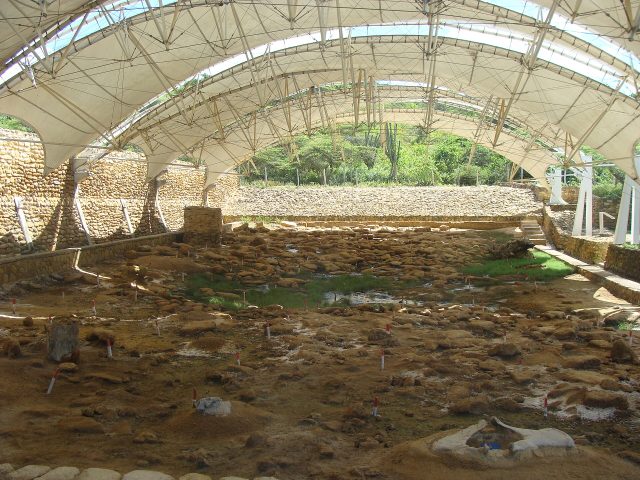
The Diego Ibarra Museum in Coro is more than just a collection of artifacts—it’s a quiet witness to Venezuela’s formative years, preserved in the home where one of the country’s lesser-known but pivotal figures spent his final days. Diego Ibarra was a general in Venezuela’s war for independence, a trusted ally of Simón Bolívar, and a man whose life intersected with the birth of a nation. The museum itself is modest, housed in a single-story colonial building that, while unassuming in its architecture, carries the weight of history within its walls.
The exhibits here are small in number but rich in authenticity. Visitors can see Ibarra’s personal letters, military maps marked with his handwritten notes, and everyday objects from the early 19th century—furniture, tableware, and other items that offer a glimpse into the daily life of the time. What makes the collection particularly compelling are the documents tied to the independence movement: orders, manifestos, and correspondence with Bolívar. These aren’t just relics of war; they reveal the human side of revolution—the hopes, struggles, and decisions of those who fought for a new Venezuela.
Coro, the city where the museum is located, is one of Venezuela’s oldest, founded in 1527. Its history is layered, shaped by Spanish colonization and later Dutch influence in the 17th century. The city’s architecture reflects this past, with narrow streets lined by whitewashed houses topped with red-tiled roofs, and churches that have stood for centuries. Walking through Coro feels like stepping into a living history book, where the museum is just one chapter in a much larger story.
The house that now holds the museum is a classic example of colonial Venezuelan residential architecture. Built around a central courtyard with a shaded gallery, it was once the home of a prosperous merchant or official. Today, the space is simple, almost austere, but that simplicity is part of its charm. There are no grand displays or modern exhibits—just the quiet presence of the past, waiting to be discovered.
Ibarra himself may not be as famous as Bolívar or Francisco de Miranda, but his role in Venezuela’s independence was significant. He fought in key battles, organized supplies for the revolutionary army, and later served in government positions. The museum doesn’t try to mythologize him; instead, it presents a man who lived through a turbulent era and made choices that shaped his country’s future. The exhibits feel personal, almost intimate, as if Ibarra might walk through the door at any moment.
For those interested in Latin American history, the museum offers a small but meaningful piece of the puzzle. There are no flashy reconstructions or interactive displays—just the raw materials of history: handwritten letters, annotated maps, and personal belongings. The atmosphere is quiet, with few visitors, allowing time to linger over each item. It’s the kind of place where history feels tangible, not just something read in a book.
Coro is often overlooked by travelers drawn to Venezuela’s more famous destinations, like Caracas or Margarita Island. But it’s in places like this, away from the usual tourist paths, that the country’s true character emerges. The Diego Ibarra Museum is just one of many reasons to visit, a reminder that Venezuela’s history isn’t just about its most celebrated figures. Behind every major event were countless others—people whose names may not be widely known but whose contributions were just as vital.
A visit to the museum doesn’t take long, but it leaves an impression. It’s not a place that dazzles with grandeur, but it offers something more subtle: a chance to pause and reflect on how a nation’s identity is shaped. History isn’t just about dates and battles; it’s about the people who lived through them. And sometimes, their stories are preserved in the most unassuming of places.