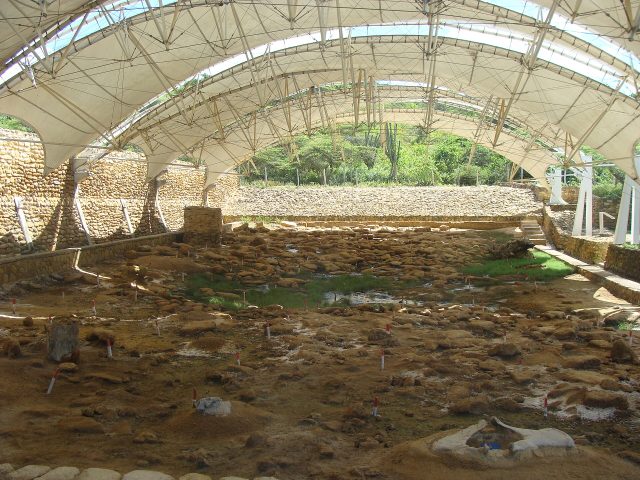
The Lucas Guillermo Castillo Museum in Coro is one of those places where Venezuela’s past feels alive—not through grand declarations, but in the quiet details that shape a culture. Coro itself is one of the oldest cities in the country, founded in the 16th century, and its streets still carry the weight of colonial history. The museum, named after a pioneering anthropologist and ethnographer, serves as a quiet guardian of that legacy, bridging the gap between the indigenous roots of the region and the layers of influence that followed.
The building housing the museum is as much a part of the story as the artifacts inside. It was once a colonial-era mansion, designed to withstand the Caribbean climate with thick walls, high ceilings, and an inner courtyard that once offered respite from the heat. The architecture is typical of Venezuela’s coastal cities—spacious rooms with large windows to catch the sea breeze, wooden balconies, and intricate ironwork that speaks to the craftsmanship of another era. Walking through its halls, you can almost hear the echoes of the families who lived here centuries ago, their lives intertwined with the rhythms of trade and daily labor that defined Coro.
Inside, the museum’s collection focuses on the material culture of Venezuela’s indigenous peoples, as well as the ways colonialism reshaped their world. There are tools and textiles, pottery and ritual masks, each piece telling a story of survival and adaptation. Lucas Guillermo Castillo, the anthropologist after whom the museum is named, spent years documenting these objects, and his work remains foundational for understanding the region’s heritage. The exhibits don’t just display artifacts; they place them in context, showing how traditions evolved over time, how skills were passed down, and how new influences were absorbed without erasing the old.
Beyond ethnography, the museum also preserves the history of Coro itself. Once a key trading hub between the Caribbean coast and the interior, the city has seen its fortunes rise and fall. The exhibits include documents, maps, and photographs that trace its development—from a bustling colonial port to a quieter, more introspective place. There are also glimpses of everyday life: the tools of fishermen, the looms of weavers, the simple belongings of people whose names history rarely records. These fragments of the past remind visitors that history isn’t just about wars and rulers; it’s also about the quiet persistence of ordinary lives.
What makes the museum special is its ability to make the past feel tangible. One room recreates a colonial-era home, complete with authentic furniture, pottery, and household items. Another features recordings of traditional music, played on instruments like the *cuatro* or *maracas*, which visitors can see up close. These details transform a visit from a passive observation into an experience—one that engages not just the eyes, but the senses. It’s the kind of place where you might find yourself lingering over a display of handwoven hammocks or a collection of clay figurines, imagining the hands that made them and the lives they touched.
Coro is a city that moves at its own pace. Unlike Caracas or Margarita, it doesn’t cater to tourists, and that’s part of its charm. The streets are narrow and cobblestoned, lined with colonial churches and shaded plazas where locals gather in the evenings. The Lucas Guillermo Castillo Museum fits seamlessly into this setting, not as a detached attraction, but as a natural extension of the city’s character. After visiting, it’s worth wandering through the historic center, stopping at a café on Plaza Bolívar, or heading to the coast where the Atlantic meets the Medanos de Coro, a desert of rolling sand dunes. The landscapes around Coro are as varied as its history—mangroves, beaches, and arid plains—each with its own stories to tell.
The museum also serves as a starting point for understanding how this region has shaped Venezuela’s identity. The artifacts on display reveal the resilience of indigenous cultures, the complexities of colonialism, and the ways in which people adapted to changing circumstances. It’s a reminder that history isn’t a single narrative, but a tapestry of voices, some louder than others, but all essential to the whole. In an age where globalization often blurs cultural distinctions, places like this museum become even more important—they preserve the nuances that make a place unique.
Visiting the Lucas Guillermo Castillo Museum isn’t about ticking off a tourist checklist. It’s about slowing down and paying attention to the small things: the texture of a woven basket, the curve of a clay pot, the way sunlight filters through a courtyard. Coro itself encourages that kind of mindfulness. The city doesn’t rush you; it invites you to look closer, to listen, to feel the weight of centuries in the stones underfoot. The museum is just one part of that experience, but it’s a part that lingers, offering a deeper understanding of what it means to be a part of this corner of Venezuela.