Nestled on the quiet outskirts of Kosów Lacki, a small town in the heart of Mazovia, the Museum of Wooden Architecture feels like a place where time has gently settled into a slower rhythm. This open-air collection of traditional Polish buildings isn’t just a display of old structures—it’s a carefully preserved fragment of rural life, a glimpse into how people lived, worked, and worshipped in this part of the country centuries ago. The houses, barns, churches, and windmills here weren’t built on this spot; they were brought from villages across the region, each one carrying its own story of craftsmanship, necessity, and the quiet resilience of generations.
Walking through the museum is like stepping into a living history book. The buildings aren’t roped off or treated as untouchable relics—they invite you to explore, to run your fingers along the rough-hewn beams, to duck through low doorways, and to imagine the lives that unfolded within these walls. A peasant cottage, with its cramped interior and tiny windows, might have housed an entire family, their days shaped by the rhythm of the seasons. Inside, the air is thick with the scent of aged wood, and the simple furnishings—a loom, a clay jug, a wooden cradle—hint at the self-sufficiency of rural life. Nearby, a blacksmith’s forge stands cold now, but you can almost hear the clang of metal, the hiss of steam as hot iron meets water, the voices of men bargaining over tools or horseshoes.
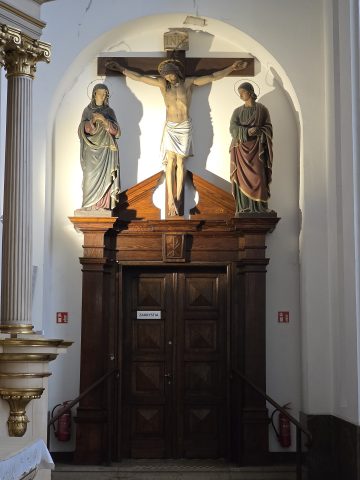
The wooden churches here hold a special kind of silence. One, brought from a nearby village, rises with a steep, shingled roof, its unadorned interior a testament to the austerity of Mazovian faith. The wood, left bare, carries the marks of time—knots, cracks, the faint scent of resin. These were places where communities gathered for baptisms and funerals, where the same benches were warmed by generations of worshippers. Now, they stand empty, but if you listen closely, the past lingers in the creak of floorboards, the whisper of wind through the eaves, the distant echo of a choir long gone.
What makes this museum different from many others is its sense of life, not just preservation. In the warmer months, the grounds come alive with demonstrations of traditional crafts. A potter shapes clay on a spinning wheel, his hands moving with the ease of long practice. A weaver works at a loom, her fingers deftly threading yarn through the warp. A blacksmith strikes iron, the sparks flying as he shapes a horseshoe. These aren’t just performances for visitors—they’re a way of keeping skills alive, of passing down knowledge that might otherwise fade away. Occasionally, the museum hosts fairs where artisans sell their work—handwoven baskets, embroidered linens, pottery fired in wood-burning kilns—each piece a small rebellion against the disposable culture of the modern world.
Kosów Lacki itself is a town that moves at its own unhurried pace, and the museum fits seamlessly into this rhythm. There are no crowds here, no jostling for the best photo spot, no sense of being rushed along a predetermined path. Visitors can wander at leisure, stepping into houses, touching the rough surfaces of old tools, or simply sitting on a wooden bench to watch the clouds drift over the fields. The surrounding landscape—rolling farmland, patches of forest, the distant line of the horizon—serves as a reminder that this was always a place shaped by the land. The people who built these houses didn’t just live on the earth; they were part of it, their lives dictated by the changing seasons, the quality of the harvest, the whims of the weather.
The museum’s origins trace back to the mid-20th century, when it became clear that Poland’s wooden architecture was disappearing. Old houses were being torn down to make way for modern buildings, and churches were left to decay, their timbers rotting, their roofs sagging under the weight of neglect. A group of preservationists decided to act, gathering the most significant examples of regional craftsmanship and relocating them to this site. What began as an effort to save physical structures became something more—a way to preserve the intangible: the skills, the stories, the way of life that these buildings represented.
For many visitors, the museum is a revelation. In an age of central heating, instant communication, and disposable everything, it’s easy to forget how recently people lived without these conveniences. Here, the past isn’t sanitized or romanticized. The doorways are narrow because people were smaller, the windows are tiny because glass was expensive, the stoves are massive because they had to heat the entire house. There’s no electricity, no running water, no insulation—just the raw, unfiltered reality of life as it was. It’s uncomfortable in the best possible way, forcing you to confront the ingenuity and hardship of those who came before.
The museum changes with the seasons, each one offering a different perspective. In summer, the buildings glow in the golden light, their wooden walls warm to the touch, the air filled with the hum of insects and the scent of wildflowers. Autumn turns the landscape into a patchwork of russets and golds, the trees shedding their leaves like a slow, deliberate exhale. Winter transforms the place into something out of a fairy tale—snow dusts the rooftops, smoke curls from chimneys, and the interiors of the houses feel impossibly cozy, the air thick with the smell of woodsmoke and fresh bread. Spring, meanwhile, brings a sense of renewal: birds return, the first green shoots push through the earth, and the buildings seem to sigh with relief, as if waking from a long sleep.
This isn’t a place for grand monuments or sweeping historical narratives. There are no kings or battles here, no dramatic turning points in the nation’s story. Instead, the museum is about the quiet, everyday resilience of ordinary people—the farmers, the craftsmen, the mothers and fathers who built these houses with their own hands, who raised their families within these walls, who buried their dead in these churches. It’s a reminder that history isn’t just made by the powerful; it’s also made by the countless small, unrecorded acts of living. And perhaps that’s why the museum resonates so deeply. In a world that often feels disconnected from the past, it offers a rare chance to slow down, to touch something real, and to remember that the simplest things—a well-made wooden spoon, a sturdy barn door, a hand-stitched quilt—can carry the weight of centuries.