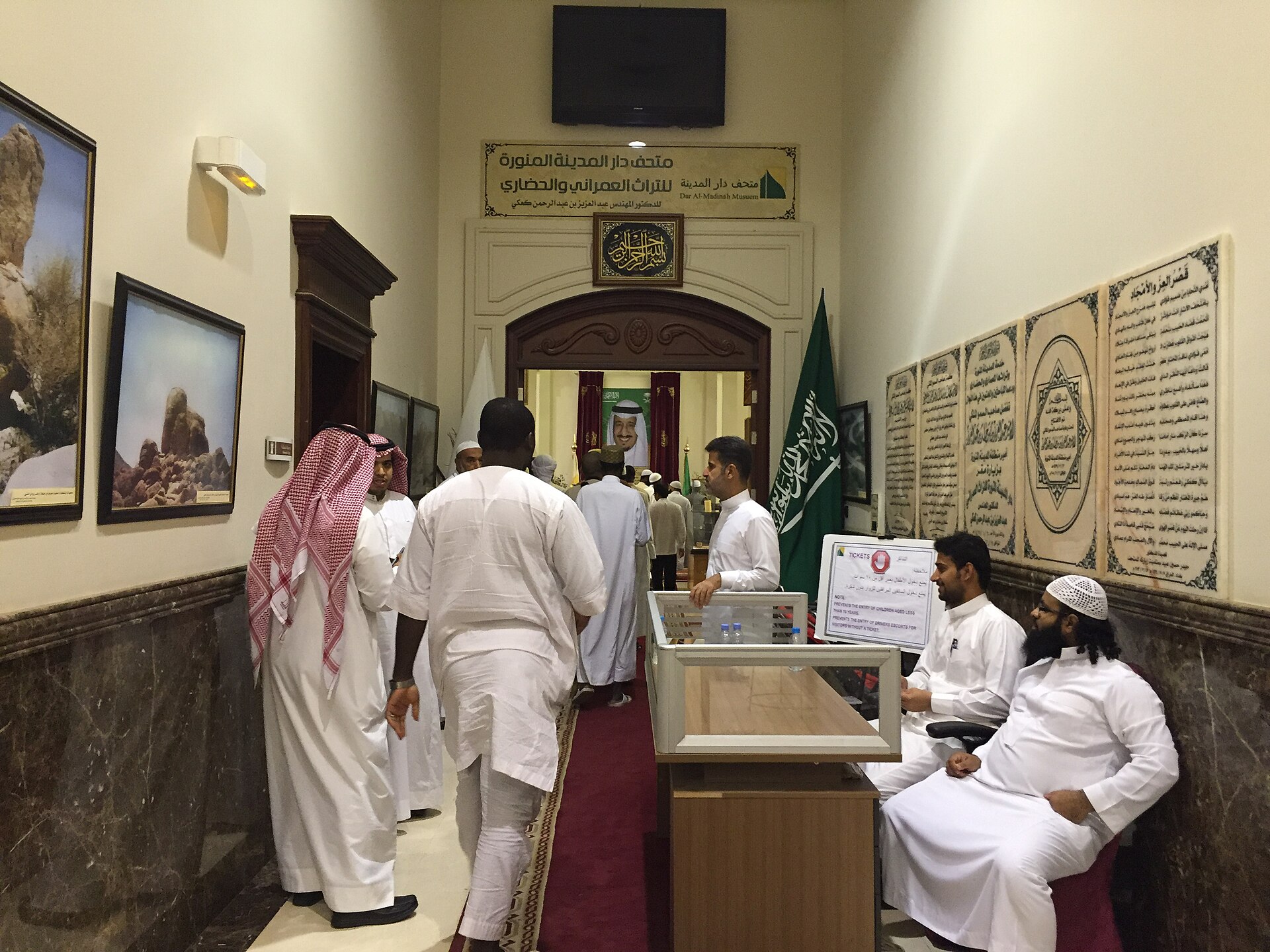
Medina is a city where the weight of Islamic history lingers in every corner, and few places capture that sense of the past as vividly as Dar Al-Madinah Museum. Housed in a restored historic building that once belonged to one of the city’s prominent families, the museum offers more than just artifacts—it preserves the very essence of Medina’s layered existence. The structure itself is part of the experience, with its thick walls, intricately carved wooden ceilings, and shaded inner courtyards, all hallmarks of traditional Hijazi architecture. There’s no grand modern spectacle here, just the quiet authenticity of a place that has stood the test of time.
The museum’s collection is a window into the daily lives of Medina’s residents across the centuries. Manuscripts, household items, clothing, and jewelry tell stories of how people lived, worked, and celebrated in different eras. Among the most striking exhibits are those tied to Islamic culture—early Qurans, calligraphic works, and religious artifacts that date back to the formative years of the faith. Some pieces carry an almost tangible reverence, as if the hands that once held them still linger in the air. It’s impossible not to feel the weight of history when standing before objects that have witnessed the evolution of a city and a religion.
What makes Dar Al-Madinah particularly compelling is its ability to show how Medina transformed over time. The exhibits trace the city’s journey from a modest settlement to one of Islam’s most sacred centers, illustrating shifts in architecture, craftsmanship, and social customs. The displays go beyond mere facts, evoking the rhythm of life in old Medina. One room recreates a traditional home, with low seating, copper coffee pots, and clay dishes arranged as they would have been generations ago. Another features a craftsman’s workshop, where tools and half-finished works hint at the skills that once thrived in the city’s markets.
Medina’s role in Islamic history is central to the museum’s narrative. When the Prophet Muhammad migrated here in 622 CE, the city became the heart of the first Muslim community, and many pivotal events of early Islam unfolded within its walls. Rather than presenting this history as a dry chronicle, the museum weaves it into the fabric of everyday life. Visitors see how faith shaped art, architecture, and even the smallest domestic rituals. The exhibits don’t just explain— they immerse, showing how religion and culture were inseparable in the lives of Medina’s people.
The building itself is a testament to the ingenuity of traditional Hijazi design. Thick walls kept out the desert heat, while high ceilings and inner courtyards created natural ventilation. The carved wooden screens on windows and doors weren’t just decorative—they shielded interiors from sandstorms while allowing breezes to pass through. These architectural details reveal how people adapted to their environment, turning necessity into beauty. Even today, stepping into the museum’s shaded courtyards feels like stepping into another era, where time moves at the pace of a slow, cooling breeze.
A visit to Dar Al-Madinah is less about ticking off exhibits and more about absorbing the atmosphere. There are no crowds rushing through, no guides hurrying you along. The museum encourages lingering—whether it’s examining the delicate patterns on an antique textile, tracing the worn edges of an old coin, or simply sitting in a courtyard, listening to the murmur of a fountain. The quiet allows space for reflection, for imagining the conversations that once filled these rooms, the families who gathered here, the stories exchanged over cups of bitter Arabic coffee.
What the museum lacks in modern spectacle, it makes up for in sincerity. There are no flashy interactive displays or digital reconstructions, just objects that carry the weight of real lives. Each artifact feels like a fragment of someone’s story—a pot used for cooking, a child’s toy, a merchant’s ledger. That connection to the human past makes the experience deeply personal. It’s not just about learning history; it’s about feeling it, about sensing the continuity between then and now.
Dar Al-Madinah reminds visitors that Medina is more than a religious destination—it’s a city with a rich, living heritage. The museum doesn’t just preserve the past; it brings it to life in a way that feels intimate and immediate. Whether you spend an hour or half a day here, each room offers something new, a detail or a story that deepens the sense of place. And even for those who aren’t drawn to history, the museum’s quiet authenticity leaves a lasting impression, like the echo of footsteps on ancient stone.