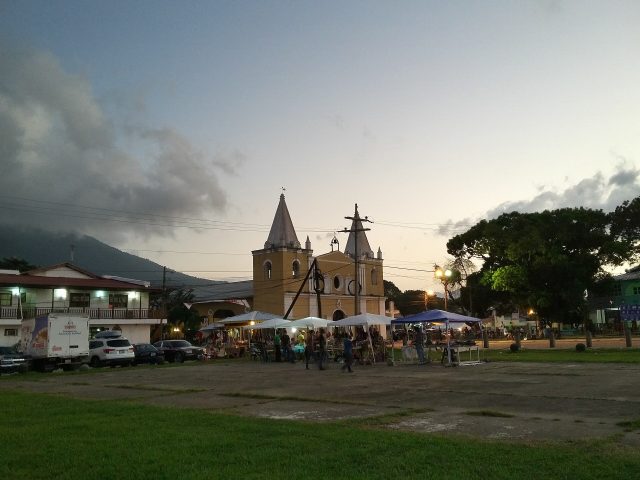
Trujillo’s Museum of Caribbean Archaeology and History feels less like a repository of artifacts and more like a quiet conversation with the past. The building itself, a colonial-era mansion with thick coral-stone walls and a shaded courtyard, was once home to one of the city’s influential families. Its high ceilings and heavy wooden doors speak of a time when Trujillo was a bustling port, a crossroads where European ships unloaded goods and carried away the riches of the New World. Even now, the sound of waves drifting in from the nearby shore blends with the stillness of the courtyard, as if the place itself is reluctant to let go of the stories it holds.
The museum’s exhibits are divided into two main sections, each offering a different lens on the region’s layered history. The archaeological collection focuses on the pre-Columbian cultures that thrived along Honduras’ Caribbean coast long before the arrival of Europeans. Ceramics, stone tools, and ritual objects unearthed in local excavations reveal the daily lives and beliefs of these societies. While the Maya were never the dominant culture here, their influence is visible in trade goods and artistic motifs that found their way into the hands of other indigenous groups. Some pieces—a delicately painted vessel, a jade pendant—are so finely crafted that they make the past feel almost tangible, as if the hands that shaped them might still be nearby.
The historical exhibits shift the focus to the colonial era and the centuries that followed, when Trujillo became a stage for conflict, trade, and cultural exchange. Maps, documents, and weapons trace the city’s evolution from a Spanish stronghold to a target for pirates and rival powers. The Caribbean’s golden age of piracy left its mark here, and the museum doesn’t shy away from that legacy. Cannonballs, navigational instruments, and accounts of raids by figures like William Dampier, the English buccaneer and explorer, paint a vivid picture of a coast where danger and opportunity often walked hand in hand. The exhibits also highlight the resilience of the people who called this place home, from the indigenous communities that resisted conquest to the African slaves who were brought here against their will.
One of the museum’s most compelling stories is that of the Garifuna, a people descended from shipwrecked African slaves and indigenous Caribs. Their culture, a blend of African, Arawak, and European influences, has survived centuries of displacement and marginalization. The museum dedicates space to their traditions—music, language, and crafts—reminding visitors that history isn’t just about empires and battles. It’s also about the quiet persistence of communities that refused to be erased. A drum, a woven basket, or a cooking pot might seem like simple objects, but here they carry the weight of a people’s struggle to hold onto their identity.
Just outside Trujillo stands Fortaleza de Santa Bárbara, one of the oldest Spanish forts in Central America. Built in the 16th century to defend the city from pirates and foreign fleets, the fort is a tangible link to the region’s turbulent past. The museum’s models and historical documents show how the fort evolved over time, from a military outpost to a ruin and, eventually, a restored landmark. Today, it offers sweeping views of the bay, a reminder that the past isn’t just something to be studied—it’s still shaping the landscape. The fort’s cannons, once aimed at enemy ships, now point silently toward the horizon, as if keeping watch over the stories that remain untold.
What makes this museum different from so many others is its refusal to treat history as something distant or abstract. The exhibits don’t just present facts; they invite visitors to consider how the past continues to echo in the present. The blending of indigenous, African, and European cultures that defines the Caribbean coast didn’t happen by accident—it was the result of conquest, resistance, and adaptation. The museum doesn’t shy away from the darker chapters of that history, but it also celebrates the creativity and resilience of the people who lived through them. A cooking pot used by a Garifuna family, a pirate’s pistol, or a Maya trader’s necklace—each object is a thread in a larger tapestry, one that’s still being woven.
After walking through the exhibits, the courtyard offers a place to sit and reflect. The shade of the palm trees and the distant sound of the sea create a space where the past feels close enough to touch. Trujillo has always been a place of contradictions—a city of conquest and resistance, of wealth and poverty, of beauty and violence. The museum doesn’t try to smooth over those contradictions. Instead, it lets them stand, inviting visitors to draw their own conclusions. There are no easy answers here, just the quiet insistence that history matters, not because it’s grand or heroic, but because it’s human.
The real value of this museum isn’t in the artifacts themselves, but in the way it makes you think about the people behind them. Who held this clay pot? Who fired that cannon? Who walked these streets before they became part of a museum’s story? The answers aren’t always clear, but the questions linger long after you leave. Trujillo’s past isn’t just something to be observed—it’s something to be felt. And in a place where the sea still whispers against the shore and the jungle looms just beyond the city limits, the line between past and present has always been thin.