Ölgii’s local museum is one of those quiet places where the past doesn’t just sit behind glass—it breathes. Tucked among the low buildings of this western Mongolian town, it holds the stories of a region shaped by movement, where people have always followed the land rather than settled into it. The museum itself is modest in size, but its collections offer a glimpse into the rhythms of life here, where the steppe stretches endlessly and the mountains stand as silent witnesses to centuries of change.
The exhibits begin with the people who have called this place home for generations. The majority of Bayan-Ölgii’s population is Kazakh, and their traditions fill the museum’s rooms. Intricately embroidered robes, felt hats, and silver jewelry aren’t just artifacts—they’re pieces of a living culture, still worn at weddings and festivals. The domra, a traditional stringed instrument, leans against the wall as if waiting for someone to pluck its strings, the way it has been played at gatherings for as long as anyone can remember. These objects carry the weight of everyday life, where craftsmanship isn’t just skill but a way of passing down identity.
History here isn’t confined to textbooks. A separate hall displays fragments of the past dug from the earth—stone tools, shards of pottery, and arrowheads that speak of people who lived on these lands long before the rise of empires. Some exhibits hint at the time of Chinggis Khaan, when Mongolia’s influence stretched across continents. Bayan-Ölgii wasn’t at the center of it all, but the region still bears traces of that era, like a quiet tributary feeding into a greater river. The displays don’t try to grandstand; they simply show what has endured.
The heart of the museum lies in its portrayal of nomadic life. A felt yurt stands partially assembled, its wooden frame and woven walls a reminder that home, for many here, has always been something you carry with you. Saddles, bridles, and leather goods fill the space, each piece worn smooth by use. Even today, families still migrate with the seasons, moving their herds to fresh pastures. The museum doesn’t romanticize this way of life—it presents it as it is, practical and unadorned, where survival depends on knowing the land as intimately as your own family.
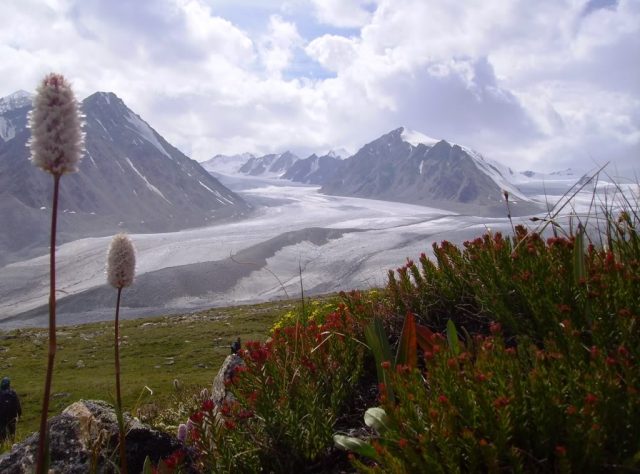
Local art adds another layer to the story. Paintings depict the vast, open landscapes of the Altai Mountains, where the sky seems to press down on the earth. Hunters with golden eagles perch on their arms, a tradition that has survived for centuries. The scenes feel almost motionless, as if time itself moves slower here. The colors are muted—ochres, grays, and deep blues—mirroring the palette of the steppe, where beauty lies in simplicity rather than spectacle.
The museum also acknowledges the present. Photographs show modern Ölgii, a town where satellite dishes sit atop houses and children ride bicycles down dusty streets. Yet even as life changes, traditions persist. A display of contemporary clothing shows how young people blend old designs with new fabrics, how festivals still feature eagle hunting and horse races. It’s a place where the past isn’t something to be preserved in amber but something that adapts, shifts, and continues.
There’s no rush here. The museum sees few visitors, and the quiet allows you to linger over details—a child’s toy carved from bone, a weathered saddle that’s seen decades of use. The objects don’t just tell stories; they invite you to imagine the hands that made them, the voices that once filled the yurts, the horses that carried their owners across the steppe. It’s a rare kind of museum, one that doesn’t just inform but connects.
Bayan-Ölgii is more than its landscapes, more than the sweeping valleys and snow-capped peaks that define it. It’s the people who have lived here, generation after generation, shaping their lives to the land’s demands. The museum captures that essence—not as a relic, but as something still alive, still evolving. To visit is to step into a slower rhythm, where the silence isn’t empty but full of meaning, waiting to be understood.