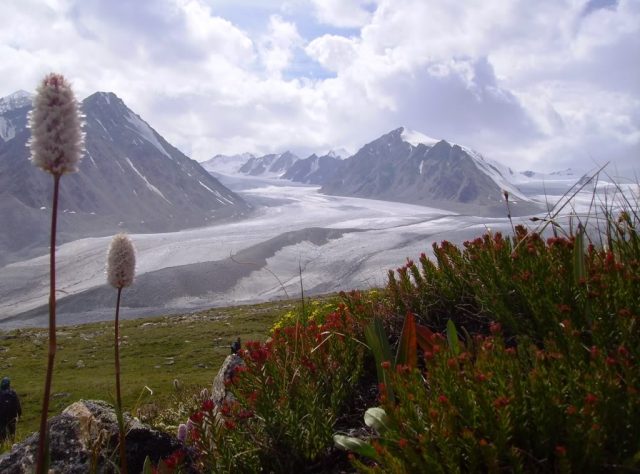
In the far west of Mongolia, the Altai Mountains rise in sheer cliffs and glaciers. Here lies Tsambagarav-Uul National Park—a place that feels untouched by time. Nature dictates the rules, and humans are visitors granted a rare glimpse of the world as it once was. The park takes its name from Tsambagarav Mountain, one of the tallest peaks in the Mongolian Altai. Its snow-capped summit is visible for miles.
The mountains here feel ancient. Time moves differently.
A landscape of raw harmony
Glaciers, alpine meadows, deep gorges, and swift rivers fed by eternal snows coexist within the park’s boundaries. In summer, wildflowers cover the slopes. Winter brings silence, broken only by the wind or the cry of a mountain bird. The park’s wildlife includes argali sheep, snow leopards, ibex, and bears—though bears avoid humans. Birds, from accentors to golden eagles, thrive here. Watching them in their natural habitat is a rare experience.
Traces of the past
Ancient nomadic tribes once roamed these valleys. They left behind petroglyphs, burial mounds, and stone statues. These remnants are scattered across the park. The most striking petroglyphs appear in river valleys and at the foot of mountains. Ancient artists depicted hunting scenes, animals, and mythical creatures. Some carvings look freshly etched.
Life unchanged
There are no grand monuments here. Nature is the main attraction. Nearby, you might find traditional Mongolian gers, home to local herders. Their way of life has changed little over centuries. They move livestock between pastures, living in rhythm with the land. Meeting them can be memorable. They share stories, customs, and sometimes a meal cooked over an open fire.
Have you ever tasted milk tea brewed in a cast-iron pot?
A journey into the unknown
Reaching Tsambagarav-Uul is difficult. The journey requires a rugged vehicle. The route involves hundreds of kilometers of rough terrain, often with no roads. Most expeditions begin in Ölgii, the administrative center of Bayan-Ölgii Province. The drive takes days. There are no hotels, restaurants, or souvenir shops. Just vast open spaces, crisp air, and a sky that feels closer than anywhere else.
This is not a place for passive relaxation. Visitors must prepare for physical challenges, unpredictable weather, and no modern comforts. Yet, that’s what makes it rewarding. Hiking mountain trails, crossing high passes, and camping under a star-filled sky demand effort. Each day brings new discoveries: a herd of argali sheep, a hidden lake, or a rainbow over a gorge. The landscape shifts constantly, revealing its secrets only to those who venture deep.
The glaciers of Tsambagarav-Uul
The glaciers creep down the mountainsides, feeding rivers and streams. Their bluish ice contrasts with the green meadows in summer. Locals regard these glaciers as sacred. Legends speak of mountain spirits that dwell here, aiding travelers—or punishing those who disrespect the land. It’s easy to see why such beliefs persist. There’s a sense of something greater at work in these mountains.
Tsambagarav-Uul is a world governed by its own rhythms. No crowds, no city noise. Just mountains, sky, and wind. For some, it’s a test of endurance. For others, a revelation. Few leave unchanged. If you seek adventure, solitude, and a deeper connection with nature, it awaits. Just be prepared—the world might feel different when you return.