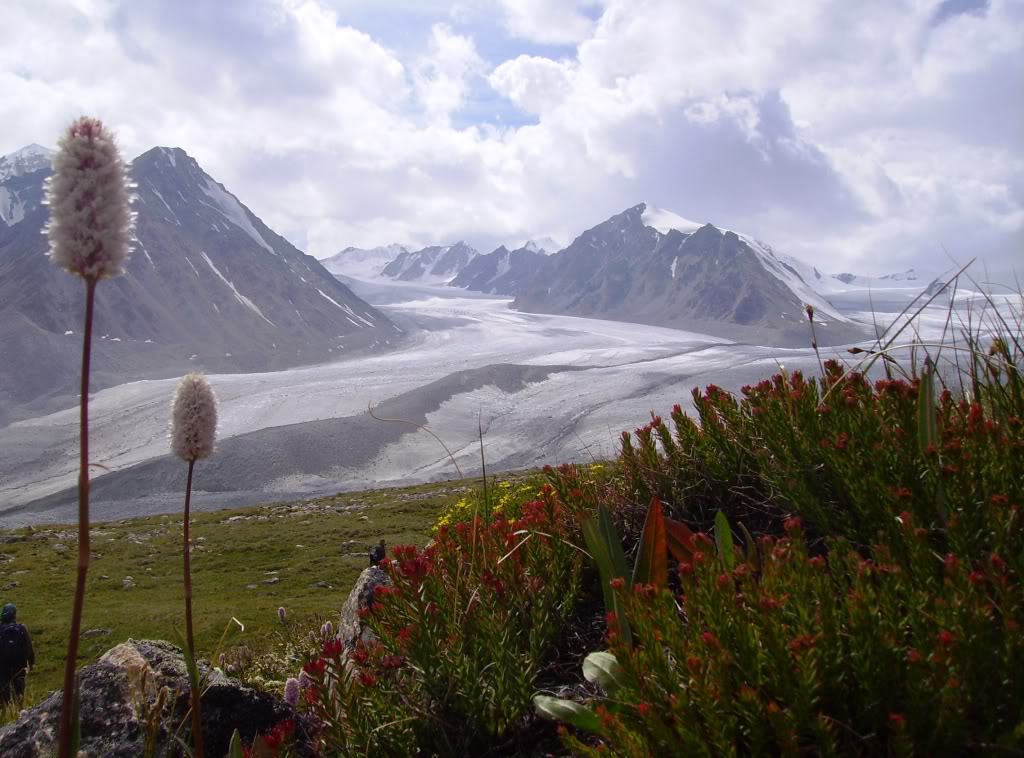
Altai Tavan Bogd isn’t just a mountain range—it’s where Mongolia brushes against the borders of Russia, China, and Kazakhstan, a place where the vastness of Asia seems to converge. Here, five peaks rise above four thousand meters, their slopes shaping the skyline of the country’s western edge. The tallest among them, Khüiten Peak, stands at 4,374 meters, the highest point in Mongolia. But the real draw isn’t the numbers. It’s the way these mountains feel alive, indifferent to the lines humans have drawn across the land, as if reminding visitors that some things exist beyond maps and treaties.
The history of this region stretches back thousands of years, long before borders or nations took shape. Ancient nomadic tribes once roamed these valleys, leaving behind petroglyphs etched into stone—depictions of hunters, animals, and rituals that still survive on weathered boulders. These carvings are more than relics; they’re proof of a people who saw something sacred in these peaks. Later, during the time of Genghis Khan, the Altai Mountains became part of an empire that spanned continents, its passes serving as routes for traders, warriors, and messengers. Even now, if you climb high enough, past the clouds and the noise of the modern world, you can almost sense the echoes of that era in the wind.
There are no grand cathedrals or palaces here—nature itself is the architect. The landscape is raw and unfiltered: jagged ridges, glaciers that shift with the seasons, and alpine meadows that burst into color in the short summer months. The Potanin Glacier, one of Mongolia’s largest, spills down the northern slopes, its ice formations twisting into shapes that look almost sculpted. On clear days, the sunlight bounces off the glacier so intensely it seems to glow from within. In winter, the mountains become a silent kingdom, where the only sound is the wind cutting across the snowfields.
For the people who call this region home—mostly Kazakh and Mongol herders—Altai Tavan Bogd is more than geography. It’s woven into their stories, their beliefs, and their way of life. The Kazakh communities around Ölgii consider the mountains sacred, a place where the spirits of ancestors linger. They speak of the peaks as protectors, rewarding those who approach with respect and punishing those who don’t. For Mongols, these summits symbolize the strength and independence of their nation. It’s no coincidence that Khüiten Peak is where traditional ceremonies still take place, where offerings are made to the land and the sky.
Reaching Altai Tavan Bogd isn’t a casual trip. There are no paved roads, no tour buses, no signs pointing the way. The journey from Ölgii takes days, whether by rugged four-wheel drive or on horseback, crossing rivers, marshes, and rocky trails that test even the most experienced travelers. But those who make the effort are rewarded with something rare: a sense of being part of something vast and timeless. It might be the way the sunrise turns the snow-capped peaks gold, or the way the stars at night feel close enough to touch. There’s no cell service, no crowds, just the quiet rhythm of the land.
In recent years, the range has drawn more than just mountaineers. People come seeking solitude, a break from the noise of cities and the relentless pace of modern life. There are no souvenir shops or guided tours here—just open space, where you can sit by a fire and listen to the wind. In summer, the valleys are alive with wildflowers and the scent of sagebrush. Autumn paints the slopes in shades of amber and rust, while winter transforms the mountains into an icy fortress. Each season offers a different face of Altai Tavan Bogd, and each reveals something new about the place.
For climbers, the peaks are a challenge. Scaling Khüiten or the other summits demands skill and preparation, as weather in the Altai can shift in minutes. But those who reach the top are met with a view that stays with them long after they descend: the endless steppe stretching toward the horizon, the jagged silhouettes of neighboring countries faint in the distance. It’s a place where the earth feels like it’s reaching for the sky, and where you’re reminded of both your smallness and your place in the world.
Not everyone who comes here is looking for a physical test. Some prefer to explore the valleys on horseback, following trails where yaks and sheep graze, or spending nights in a herder’s yurt, listening to stories passed down through generations. Life in these parts moves at a different pace—one dictated by the seasons, the herds, and the land itself. There’s a simplicity to it, a rhythm that’s hard to find elsewhere. You might spend an evening drinking salty milk tea by the fire, watching the sunset turn the snow pink, or simply sitting in silence as the mountains loom overhead.
Altai Tavan Bogd isn’t a place for those who want comfort or convenience. It’s for those willing to meet it on its own terms: wild, beautiful, and unapologetically rugged. There’s no room for distractions here, just space to think, to breathe, and to see the world as it is—not as we’ve built it to be. Maybe that’s why people keep coming back. There’s something about this corner of the earth that lingers, a quiet kind of freedom that only the wildest places can offer.