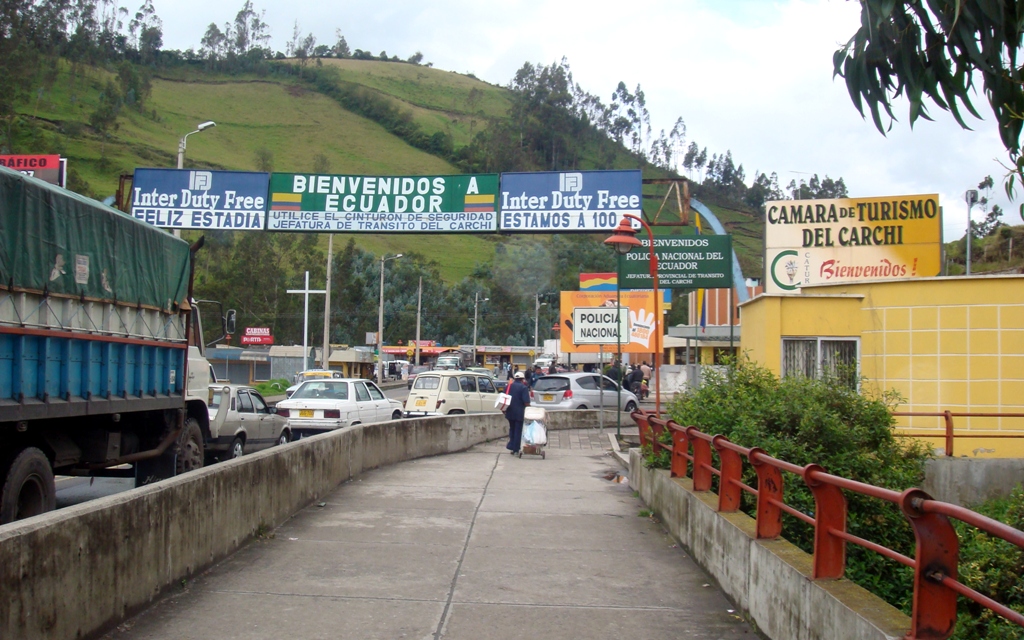
The Rumichaca Bridge, often called the Inca-Chakana Bridge, is one of those places where history feels almost tangible. Stretching across the narrow gorge of the Guáitara River, it connects Colombia and Ecuador just outside the town of Ipiales, near the border. The bridge itself is modest in size, but its significance is anything but. For centuries, it has served as a crossing point, first for indigenous peoples, then for Spanish colonizers, and now for modern travelers. The name *Rumichaca* comes from the Quechua words *rumi* (stone) and *chaca* (bridge), a nod to its ancient origins. While the current structure is a more recent construction, the site has been a vital link for trade, migration, and cultural exchange long before the borders of nations were drawn.
The bridge sits in a dramatic landscape, where the river carves deep into the volcanic rock, creating steep cliffs that drop sharply on either side. The surrounding area is a mix of high-altitude Andean terrain and lush valleys, with the occasional glimpse of snow-capped peaks in the distance. The air here is thin and cool, carrying the scent of damp earth and wild herbs. On clear days, the sunlight catches the mist rising from the gorge, giving the place an almost mystical quality. It’s easy to imagine why this spot was chosen for a crossing—its natural geography made it one of the few feasible routes through the rugged mountains.
The history of the Rumichaca Bridge is intertwined with the broader story of the region. Long before the Inca Empire expanded into these lands, indigenous groups like the Pastos used the site as a crossing. The Inca later incorporated it into their vast road network, the *Qhapaq Ñan*, which stretched thousands of miles across South America. When the Spanish arrived in the 16th century, they recognized its strategic value and reinforced the crossing, though the original Inca bridge was likely made of natural stone or simple wooden beams. Over time, the structure was rebuilt multiple times, adapting to the needs of each era. Today’s bridge, a sturdy concrete and steel construction, still follows the same basic path as its predecessors, a quiet testament to the continuity of human movement through these mountains.
For travelers, the Rumichaca Bridge is more than just a border crossing—it’s a place where two countries meet in the most literal sense. The Colombian side, anchored in Ipiales, is often the first or last stop for those moving between the two nations. The Ecuadorian side, just a few steps away, leads toward Tulcán and the highlands beyond. The border here is porous in the best way, with people, goods, and even livestock passing back and forth daily. On any given morning, you might see vendors selling fresh fruit, truck drivers haggling over paperwork, or families carrying bundles of goods on their backs. The atmosphere is one of practicality rather than ceremony, a reminder that borders are often just lines on a map until they intersect with the lives of those who cross them.
The bridge is also a gateway to some of the region’s most striking natural and cultural sites. Just a short distance away in Colombia lies the Las Lajas Sanctuary, a neo-Gothic basilica built into the side of a cliff, its towers rising dramatically above the river below. On the Ecuadorian side, the town of Tulcán is known for its unique cemetery, where cypress trees are meticulously trimmed into geometric shapes and figures, a tradition that dates back over a century. For those willing to venture further, the surrounding countryside offers hiking trails, thermal springs, and small villages where life moves at a slower pace. The area is also home to indigenous communities who maintain traditions that predate both the Inca and the Spanish, offering a glimpse into a way of life that has persisted despite centuries of change.
Visiting the Rumichaca Bridge is less about grand monuments and more about the quiet stories embedded in the landscape. There are no grand plaques or tourist centers here, just the steady flow of people and the ever-present sound of the river below. The bridge itself is functional, designed for utility rather than spectacle, but that only adds to its charm. It’s a place where history isn’t preserved in museums but lived out in the daily rhythms of those who pass through. Whether you’re crossing on foot, by car, or simply stopping to take in the view, the bridge offers a moment of reflection on the connections that bind places—and people—together.
For those who take the time to linger, the area around the bridge reveals its own kind of beauty. The Guáitara River, which the bridge spans, is a constant presence, its waters rushing over rocks and through narrow channels. In the early morning, the mist clings to the cliffs, softening the edges of the landscape. By midday, the sun burns it away, revealing the stark contrasts of the terrain—dark volcanic rock against the bright green of the valleys. The air is filled with the sounds of birds and the occasional bleat of sheep from nearby pastures. It’s a landscape that feels both ancient and alive, shaped by geological forces as much as by human hands.
The Rumichaca Bridge may not be the most famous landmark in South America, but that’s part of its appeal. It’s a place that doesn’t demand attention but rewards those who pause to notice it. Whether you’re a traveler passing through or someone interested in the deeper layers of history, the bridge offers a quiet reminder of how landscapes shape human stories—and how those stories, in turn, shape the land. It’s a crossing point in more ways than one, a place where past and present, nature and culture, Colombia and Ecuador all meet. And sometimes, that’s enough.