The bridge over the Lim River doesn’t demand attention at first glance, but it lingers in memory. It lacks the grandeur of Belgrade’s spans or the legends of Serbia’s ancient stone bridges. Instead, it carries a quieter significance—sturdy, woven into the town’s fabric.
The Lim flows slowly here, winding past hills and settlements before reaching Priboj. The bridge is part of daily life, a link between the two banks. Pedestrians cross it on their way to work, cars pass over it, and fishermen lean against the railing, casting lines into the water. Built in the mid-20th century, when Priboj was growing as an industrial center, the bridge was made for durability, not decoration.
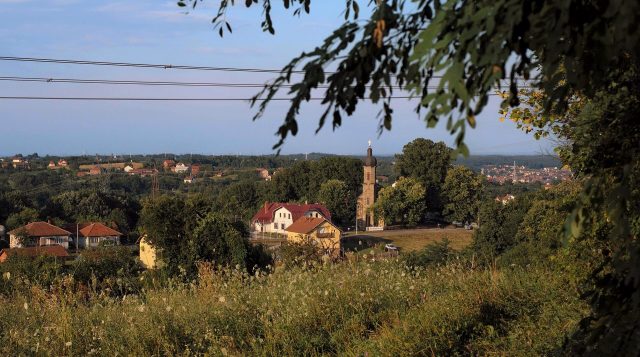
Its design is simple: concrete piers supporting steel spans. Yet it fits the landscape. On one side, green slopes rise; on the other, the town unfolds in layers of old and new buildings. In the evening, the bridge’s lights reflect on the water, stretching shadows across the river.
For locals, this bridge is living history. Older residents remember its construction, the first trucks carrying factory equipment, the gatherings that once happened here. Schoolchildren cross it in the mornings, and in the evenings, retirees stroll, pausing to talk.
The river changes with the seasons. In spring, snowmelt swells the Lim, raising the water nearly to the bridge’s underside. For a moment, it feels like the river might claim it, but the bridge holds. By summer, the water recedes, revealing patches of sand where locals escape the heat, wading into the shallows.
Priboj isn’t a tourist town. There are no souvenir stands or crowds. The bridge exists outside that world, where time moves differently. Stand on it, listen to the water, watch the light shift over the hills. No need to rush.
If you come to Priboj, walk across the bridge slowly. Notice how the river’s color changes—deep blue in the afternoon, golden at sunset. Watch people greet each other as they pass, how the town’s pace slows when the day ends. This isn’t a place for quick impressions; it’s where Serbia reveals itself beyond the usual routes.
The bridge over the Lim is more than a crossing. It connects past and present, a reminder that some things endure without fanfare. Stand on it for a moment, look at the river, and you’ll feel that continuity.