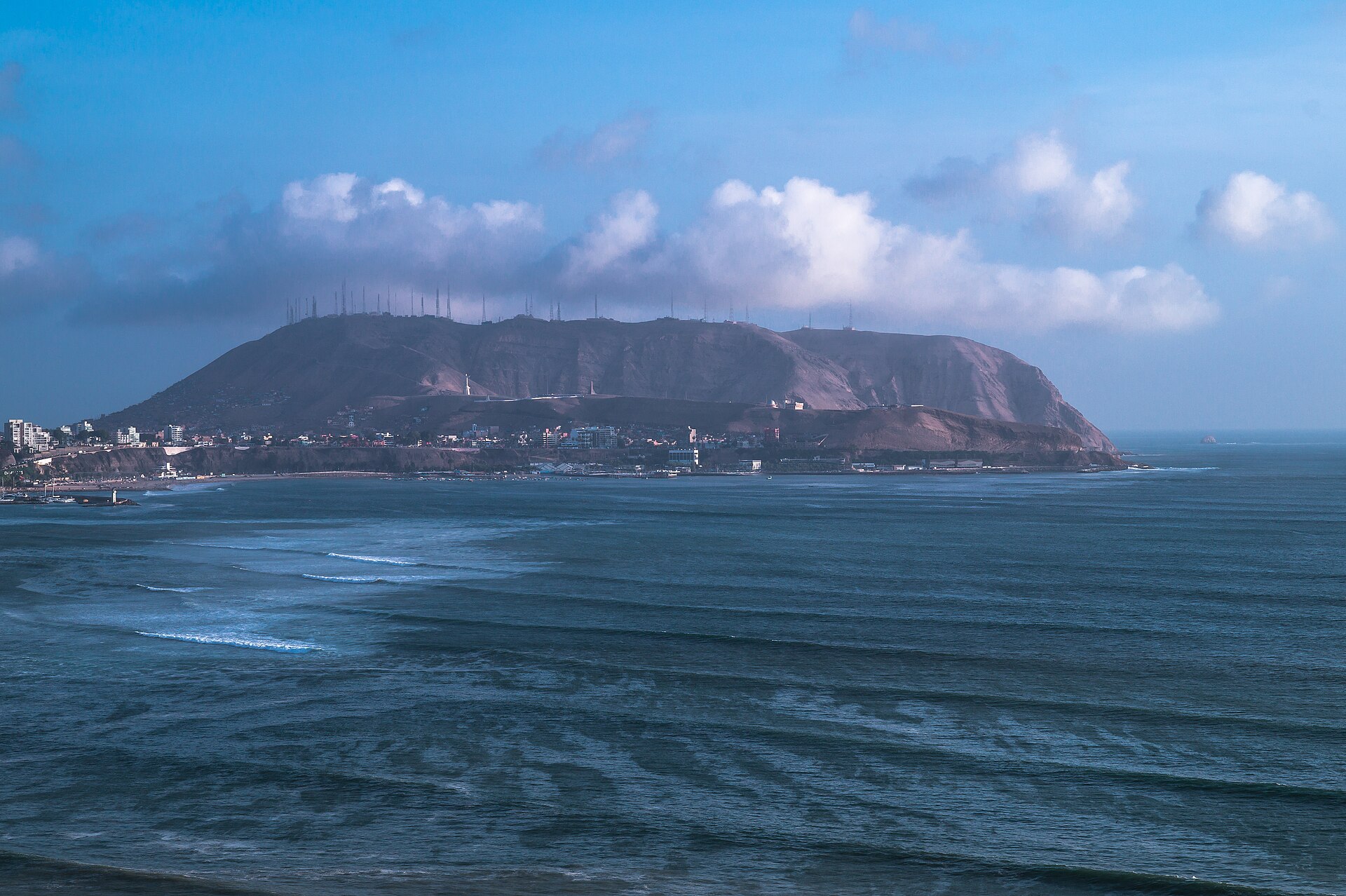
Morro Solar is one of those places that feels suspended in time, a quiet hill on the edge of Lima where the city’s relentless growth seems to pause at its base. From the summit, the Pacific Ocean stretches out in every direction, waves crashing against the rocky shore while the horizon blurs into the sky on clear days. It’s not a place that draws crowds of tourists, nor does it have the polished appeal of a major attraction. Instead, it carries the weight of Peru’s past in its stones and winding paths, a living monument to the stories that shaped the country.
The hill is best known for its role in the War of the Pacific, when Peruvian forces fought desperately to defend Lima from Chilean troops in 1881. The battles here were brutal, and the echoes of that conflict still linger in the air. A monument stands on the slopes, honoring the soldiers who fell, while a small museum nearby preserves their memory through photographs, documents, and personal belongings. For many Peruvians, Morro Solar is more than just a historical site—it’s a symbol of resilience, a reminder of the sacrifices made to protect their land.
The architecture here is simple but striking. At the top of the hill, a massive cross rises against the sky, its silhouette visible from miles away, especially when illuminated at night. It serves as both a religious symbol and a landmark for locals and visitors alike. Nearby, a modest chapel offers a quiet space for reflection, its doors open to those who come to pray or simply sit in silence. The hillside is dotted with stone steps and narrow paths leading to viewpoints where the ocean and the sprawling city below come into sharp focus.
Morro Solar is also a place where nature and urban life exist in an uneasy balance. The slopes are covered in sparse vegetation, adapted to the arid climate, and in the early mornings, birds circle above the cliffs. Locals often visit to escape the city’s chaos—some bring picnics, others walk the trails, breathing in the crisp air. Weekends are particularly lively, with families, photographers, and even runners tackling the steep inclines. It’s a rare spot in Lima where the pace slows, and the noise of the city fades into the background.
The hill hasn’t always looked the way it does today. During colonial times, the land belonged to monasteries, and later, it became a strategic point for fortifications guarding Lima from sea attacks. Over the centuries, it transformed from a military stronghold into a memorial, its layers of history still visible in the remnants of old defenses and the monuments that now stand in their place. Walking its paths, you can sense the different eras that have left their mark here—the weight of war, the quiet of devotion, and the relentless expansion of the modern city below.
For those visiting Lima, Morro Solar offers a different perspective on the capital. There are no crowded streets or tourist traps here, just open space, silence, and the feeling that time moves a little slower. In the evenings, as the sun dips below the ocean, the hill is bathed in golden light, and the city’s lights begin to flicker in the distance. It’s a place for contemplation, not entertainment, where the past feels closer than it does in the bustling center.
That said, Morro Solar isn’t without its challenges. The area can be unsafe for solo visitors after dark, and locals often recommend exploring during daylight or in groups. Still, those who make the effort are rewarded with an atmosphere that’s hard to find elsewhere—one of quiet dignity and sweeping views that make the journey worthwhile.
In recent years, Lima’s authorities have begun to pay more attention to the hill, adding new paths, benches, and informational signs that tell its story. It hasn’t turned into a tourist hotspot, but it’s become more accessible to those who want to understand its significance. Even so, Morro Solar remains a place where the focus isn’t on spectacle but on connection—to history, to the land, and to the city that sprawls below.
If you find yourself in Lima, don’t rush past the usual sights. Morro Solar is one of those rare places where you can feel the true character of the city—its past, its struggles, and its quiet beauty. There are no luxury hotels or noisy restaurants here, just open space, fresh air, and the chance to step away from the chaos. For travelers who seek something deeper than postcard views, it’s a place that lingers in the memory long after the visit.