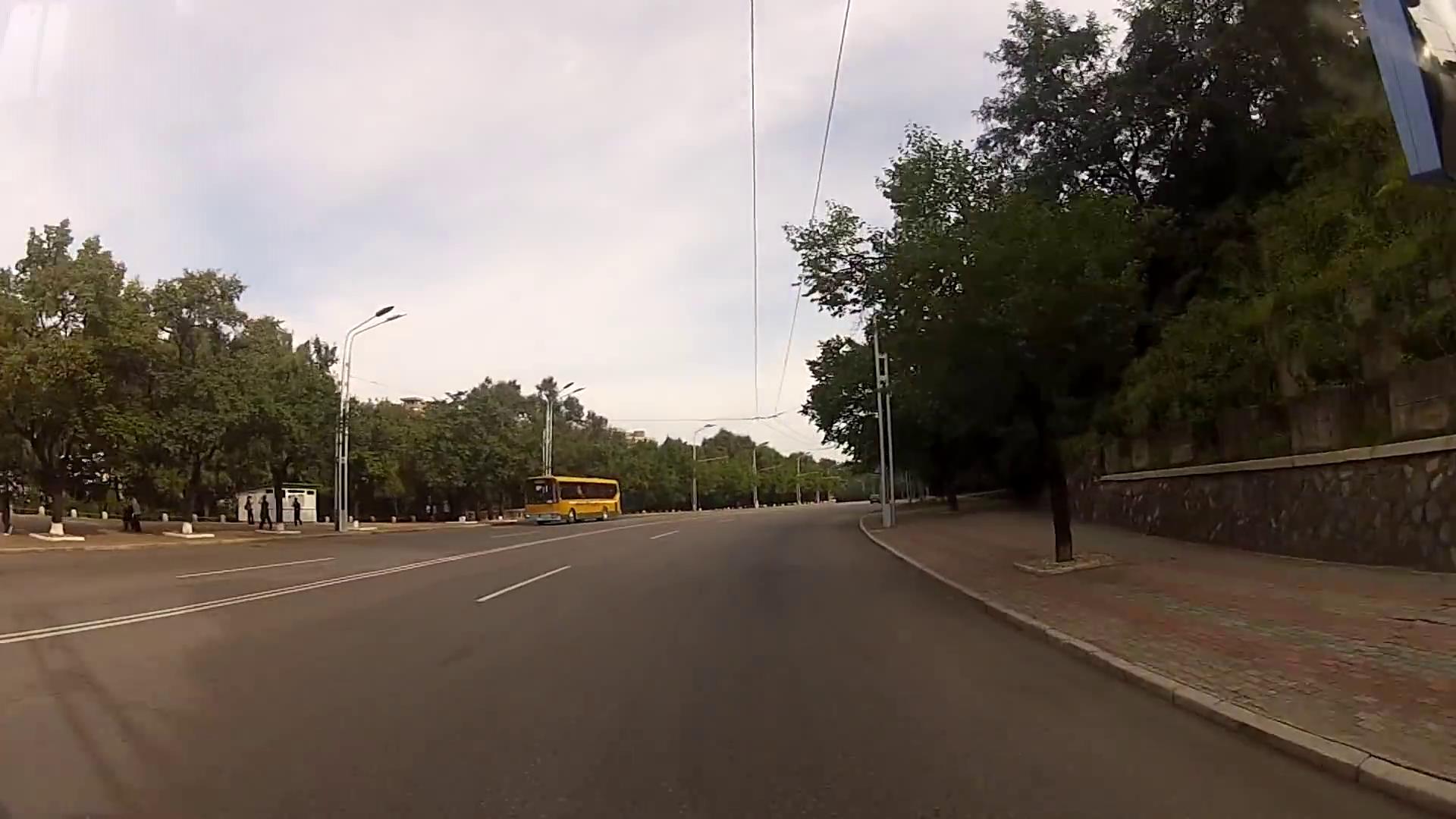
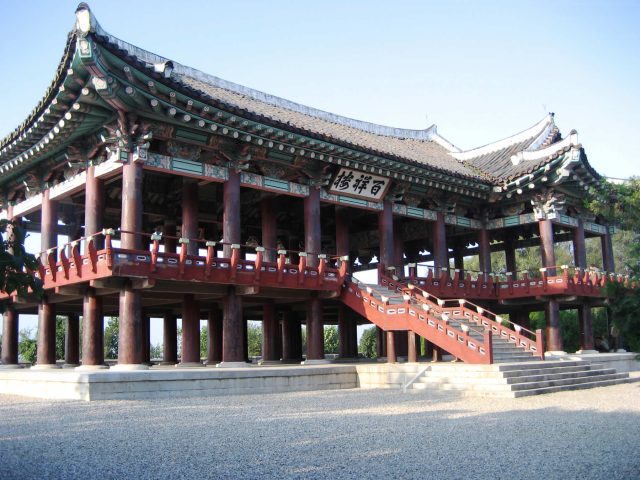
The Chollima Monument in Anju is one of those landmarks that does more than just stand in a city—it carries a story. Dedicated to the mythical winged horse Chollima, a symbol of rapid progress and collective achievement, the statue embodies an idea that has shaped North Korea’s identity for decades. The image of the horse soaring into the sky represents forward momentum, resilience, and the belief in a brighter future. It emerged in the mid-20th century, a time when the country was rebuilding after the devastation of war, and since then, Chollima has become a cornerstone of national ideology.
The monument itself is a striking example of North Korean monumental art—grand, expressive, and slightly idealized. The horse is captured mid-leap, its mane and wings flowing as if caught in motion, ready to ascend above the city. The sculpture stands on a tall pedestal, reinforcing its imposing presence. Made of bronze and granite, the materials were chosen for their durability, reflecting the monument’s intended permanence. The design is both powerful and deliberate, a physical manifestation of the ideals it represents.
Anju may not be the capital or the most famous city in North Korea, but it holds a special place in the Chollima narrative. Located in South Pyongan Province, the area has long been an industrial hub, playing a key role in the country’s post-war recovery. The decision to erect the monument here wasn’t arbitrary—it was meant to inspire workers and remind them of their contributions to the nation’s progress. The surrounding greenery softens the monument’s imposing form, creating a quiet contrast to the energy of the sculpture itself.
The story of Chollima as a national symbol began in 1956, when Kim Il Sung called for accelerated economic development. The Chollima Movement, which translates to "a thousand li a day," became a rallying cry for labor achievements, and the image of the winged horse soon appeared everywhere—on posters, in literature, and in public art. While Chollima monuments exist in other North Korean cities, the one in Anju has its own distinct character. Here, it feels less like a tourist attraction and more like a familiar part of daily life, a silent witness to the city’s rhythms.
The architectural style of the monument follows the traditions of North Korean monumental art. The pedestal is geometric and solid, emphasizing stability, while the horse itself is dynamic and full of movement. The contrast between the two elements reflects the balance between strength and progress. Official events, particularly those celebrating labor milestones or national holidays, are often held here. For locals, the monument is more than just a symbol—it’s a gathering place, a reminder of the values that define their society.
Chollima is far more than a sculpture; it’s part of a broader cultural and ideological framework. In North Korea, symbols carry deep meaning, and each one reinforces the principles that shape the nation. Chollima represents not just speed and progress, but also collective effort, unity, and faith in the future. The monument in Anju isn’t just a decoration—it’s a physical embodiment of the ideals that guide the country.
Visiting a place like this offers a glimpse into how symbolism functions in North Korea. Nothing is left to chance—every detail is carefully considered. The monument’s elevated position isn’t accidental; it overlooks the city, as if watching over its people and encouraging them to keep moving forward. For outsiders, this can be an unusual experience. In many countries, such monuments are relics of the past, but here, they remain an active part of the present.
On most days, the area around the monument is quiet. Locals pass by without a second glance, accustomed to its presence. But if you look closely, you might see children playing nearby or elderly residents sitting on benches, chatting. That’s the essence of such places—they aren’t just static memorials but living parts of the community, woven into the fabric of everyday life.
The Chollima Monument in Anju is more than a tribute to history; it’s a reflection of how ideas and symbols can shape reality. It serves as a reminder that even in ordinary cities, there are places that carry profound meaning. If you ever find yourself in this part of North Korea, it’s worth pausing at the base of the monument to take in the atmosphere—a mix of history, ideology, and the quiet persistence of daily life.