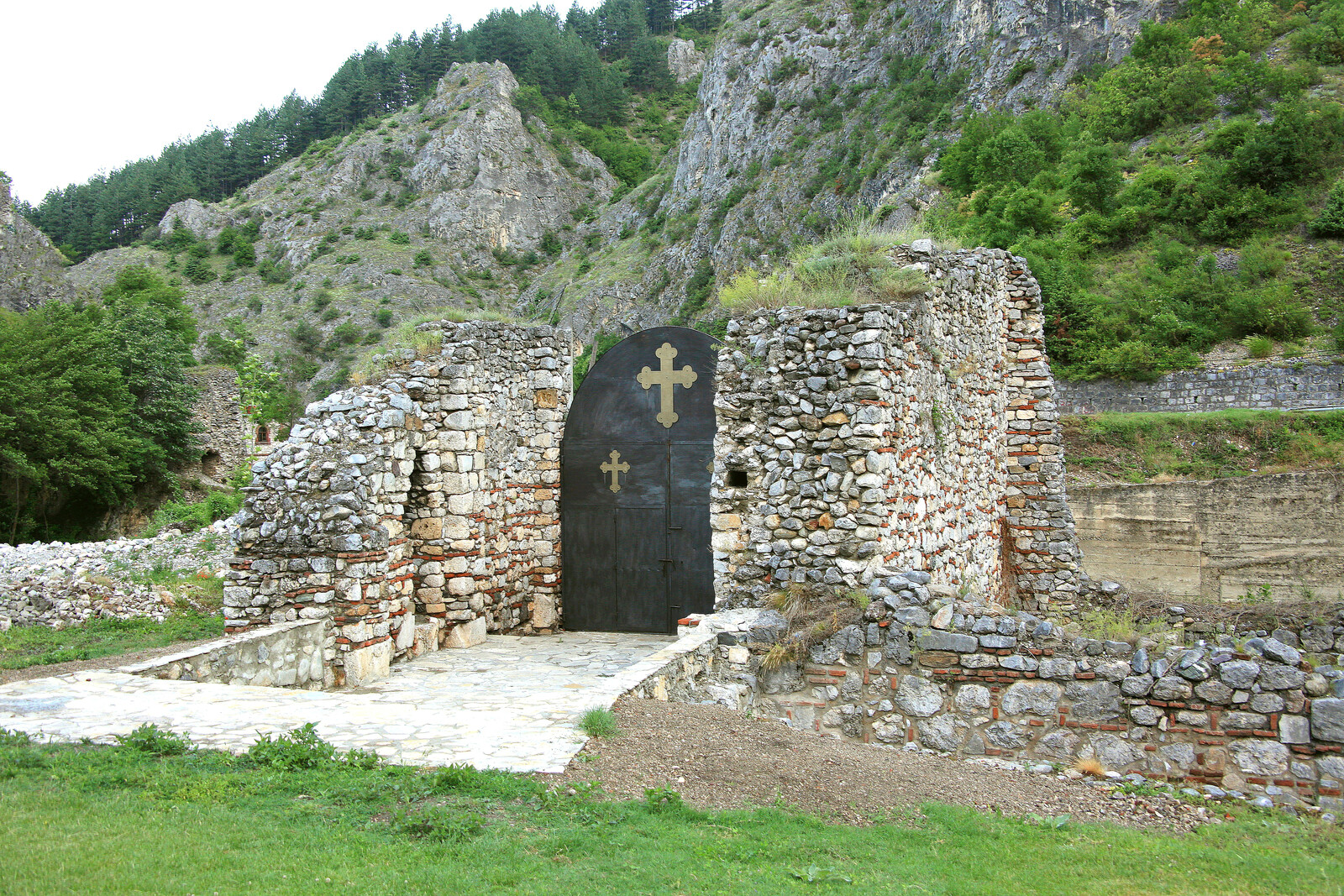
Perched on the edge of Prizren, where the Prizrenska Bistrica River bends sharply around low hills, the Monastery of the Holy Archangels feels like a place time forgot. Its ruins don’t announce themselves at first—just weathered stone walls softened by grass and wild shrubs. But step closer, and the outlines of a once-grand complex emerge: fragments of frescoes, arches that once held up vaulted ceilings, and the quiet dignity of a structure that has witnessed centuries of change. The air here is still, thick with the weight of history that stretches back to the 14th century.
The monastery was the vision of Stefan Dušan, one of medieval Serbia’s most powerful rulers. He imagined it not just as a religious retreat but as a spiritual heart for his empire, a monument to its strength and faith. Construction began in 1343, spanning decades, though Dušan never lived to see it completed. He had intended it as his final resting place, but fate intervened—he died in 1355, and his remains were never moved here. Instead, the monastery became the burial site of his son, Uroš the Weak, the last ruler of the Nemanjić dynasty. The irony is hard to miss: a place meant to glorify an empire’s golden age instead became a marker of its decline.
The architecture reflects the crossroads of cultures that defined the Serbian Empire at its height. Byzantine influences blend with Romanesque elements in the design of the main church, dedicated to Archangels Michael and Gabriel. Built in the shape of a cross with three apses and a towering dome, the interior was once a marvel of craftsmanship—walls covered in frescoes, floors laid with intricate mosaics, and an iconostasis adorned with gold and precious stones. Today, only fragments remain, but they’re enough to hint at the splendor that once filled these walls. The craftsmanship speaks to an era when art and faith were inseparable, when every brushstroke and carved stone carried meaning.
The monastery’s fate mirrors the turbulent history of the region. After the Battle of Kosovo in 1389, the Serbian Empire began to crumble, and the Balkans became a battleground between the Ottoman Empire and local rulers. By the 16th century, the monastery was destroyed, its stones repurposed to build the Sinan Pasha Mosque in Prizren. For centuries, it lay abandoned, a silent witness to the shifting tides of power. It wasn’t until the 20th century, under Yugoslav rule, that efforts were made to preserve what was left. Archaeologists cleared the site, stabilized the remaining walls, and pieced together fragments of its past. But full restoration was never possible. Today, it stands as a ruin, not a functioning monastery, though occasional services and pilgrims still find their way here.
Visiting the Monastery of the Holy Archangels is less about ticking off a tourist site and more about stepping into a different era. There are no crowds, no guided tours reciting rehearsed facts—just the quiet rustle of leaves, the murmur of the river, and the sense that the stones themselves remember. The place feels suspended in time, as if the past isn’t just something you learn about but something you can almost touch. On a clear day, the view from the hill stretches over Prizren, nestled in the valley below, and it’s easy to imagine the city as it once was: a bustling center of trade and faith, connected to the wider world by roads that passed right by this very spot.
The monastery is surrounded by a small park, a peaceful place to sit under the trees and let the atmosphere sink in. Nearby, an old stone bridge spans the river, once part of the route that linked Prizren to other Balkan cities. Now, it’s just another quiet corner of a landscape that has seen empires rise and fall. If you’re lucky, you might encounter locals who come here to pay their respects or simply to escape the noise of modern life. Their presence adds another layer to the place, a reminder that history isn’t just about the distant past but about the people who still carry its echoes.
For anyone with an interest in history, the monastery is a treasure. It’s a place where you can trace the evolution of architecture, from the Byzantine domes to the Romanesque arches, and see how cultures collided and merged in this corner of the Balkans. The ruins tell a story of a time when this region was a center of Orthodox Christianity, when Prizren was one of the most important cities in the area. But they also speak to the impermanence of power—how even the mightiest empires fade, leaving behind only fragments and stories.
What makes the Monastery of the Holy Archangels special isn’t just its age or its architecture, but the way it exists in the present. It’s not a museum, not a carefully curated exhibit, but a raw, unfiltered piece of history. There are no signs explaining every detail, no audio guides narrating its past. You’re left to wander, to observe, to piece together the story for yourself. That lack of polish is part of its charm—it doesn’t try to impress or entertain, it simply is. And perhaps that’s why it lingers in the mind long after you’ve left: because it feels real, like the wind in the trees or the river flowing past, a quiet constant in a world that’s always changing.