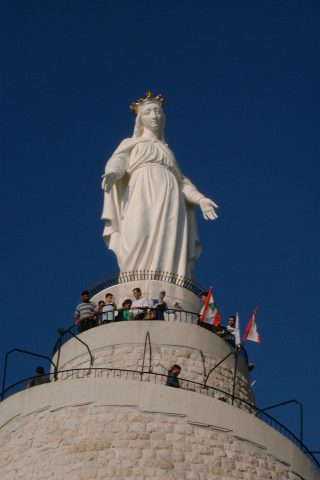
Perched in the mountains above Jounieh, the Monastery of Saint Paul in Harhara feels like a world apart from the bustling coastal towns below. The winding road leading to it climbs through pine-scented slopes, offering glimpses of the Mediterranean shimmering in the distance. By the time you arrive, the noise of the city has faded into silence, replaced by the rustle of wind through the trees and the occasional chime of a bell. The monastery itself is nestled among rocky outcrops and ancient pines, its stone walls blending seamlessly with the landscape, as if it grew from the earth rather than being built upon it.
The origins of the monastery are shrouded in time, but its roots stretch back to the Byzantine era, when Christianity was taking hold in the region. Over the centuries, it became a spiritual refuge, particularly during the Crusades, when pilgrims and travelers sought solace within its walls. Today, it remains an active monastery under the Maronite Church, one of the oldest Christian communities in the Middle East, known for preserving its traditions through generations of upheaval and change.
There is nothing ostentatious about the monastery’s architecture—its beauty lies in its simplicity. The buildings, constructed from local stone, have weathered into warm, golden hues that shift with the light. The bell tower rises modestly above the rest, its silhouette familiar to anyone who has seen the mountain from below. Inside, the chapels are unadorned except for a few faded frescoes, their quiet dignity speaking of centuries of prayer. The library holds a collection of ancient manuscripts, some dating back to the Middle Ages, their pages brittle with age but still carrying the weight of history.
Unlike many religious sites, the monastery isn’t overrun with tourists. Visitors are welcome, but the atmosphere remains one of quiet reverence. You can wander the courtyard, step into the small church where the scent of incense lingers in the air, or sit on a bench beneath the trees, listening to the wind and the distant sound of bells. On clear days, the view stretches all the way to the sea, the horizon seeming closer here than anywhere else.
Life within the monastery follows a rhythm that hasn’t changed in centuries. The monks rise before dawn for prayer, tend to the gardens and workshops during the day, and gather again in the evening for services. For those who wish to stay longer, there’s a modest guesthouse where the rooms are simple but comfortable. Meals are prepared with ingredients grown on the monastery’s land—fresh vegetables, homemade cheese, olive oil, and honey—served in a communal dining hall where silence is as much a part of the experience as the food.
Harhara itself is a place where nature and spirituality intersect. The surrounding mountains are thick with forests, their trails leading to hidden gorges and springs. Locals say that if you’re quiet enough, you might spot foxes or hares darting through the underbrush, or even a deer grazing in a sunlit clearing. The air is crisp and fragrant, carrying the scent of pine and wild herbs, a stark contrast to the dust and noise of the city below.
This isn’t a place you visit for grand architecture or dramatic history—though both are present in their own understated way. What draws people here is the sense of stillness, the feeling that time moves differently within these walls. Some come for a few hours, seeking a moment of peace before returning to their lives. Others stay for days, immersing themselves in the quiet routine of monastic life. Either way, leaving is difficult. The mountains, the sea in the distance, the endless sky—it all conspires to make you forget, just for a little while, that the rest of the world exists.