Jounieh’s coastline doesn’t announce itself. The city spills toward the Mediterranean without fanfare, the beach curving along the edge of daily life. No manicured palms or rows of sunbeds here—just sand, pebbles, and the sea lapping at the shore as it always has.
The water is clear but not flawless. In summer, families spread blankets, fishermen cast lines at dawn, and elderly men sip coffee on benches. Winter strips the beach bare—storms leave seaweed tangled in the rocks, and the wind scatters dry leaves across the sand. The sea isn’t dramatic. It’s just there, steady and unchanging.
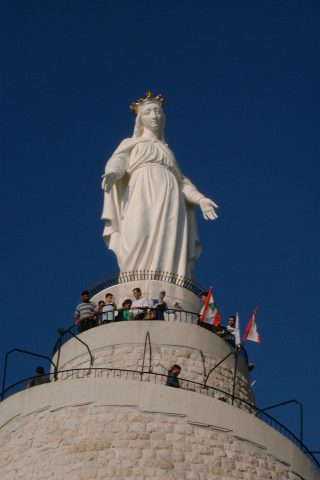
The promenade starts where Harissa Mountain looms, its statue of the Virgin Mary watching over the city. By day, the waterfront buzzes: seagulls cry, traffic hums, music spills from cafés, and the smell of grilled fish lingers. At dusk, lights flicker on, and the sea mirrors their glow. Locals stroll here, especially when the weekend air cools and the city exhales.
This isn’t a postcard beach. The sand isn’t powdery, the water isn’t turquoise, and there are no luxury resorts. What it has is the weight of real life. In summer, small cafés serve coffee, fresh juice, hummus, falafel, and tabbouleh under reed canopies. Children build sandcastles that the tide erases by evening. The beach doesn’t perform—it just is.
Jounieh’s resort reputation is young, barely seventy years old. When Lebanon became a destination for Europeans and Arabs in the mid-20th century, hotels rose along the shore, and the promenade became a place for evening walks. But the city never shed its identity as a working port. Even now, as tourism rises and falls, Jounieh holds onto itself.
The waterfront’s buildings tell the story. Modern glass towers stand beside old houses with grapevines spilling over balconies. Some cafés and restaurants jut over the water, their terraces perfect for late evenings when the heat fades and the sea murmurs below. Sometimes, music drifts through the air—not a show, but the kind played at family gatherings: oud melodies or old French songs.
Here, the beach is more than water and sand. Fishermen mend nets, children kick soccer balls, teenagers strum guitars on the promenade’s low walls. In summer, small festivals pop up, selling sweets, spices, and handmade crafts. Winter turns the sea dark and restless, its roar drowning out everything else. The beach adapts.
If you come to Lebanon for more than ruins and cedars, Jounieh gives you the country unfiltered. No tours, no scripts—just the sea, indifferent to who stands before it, and a waterfront where everyone finds their own pace. The beach doesn’t ask for anything. It just endures.