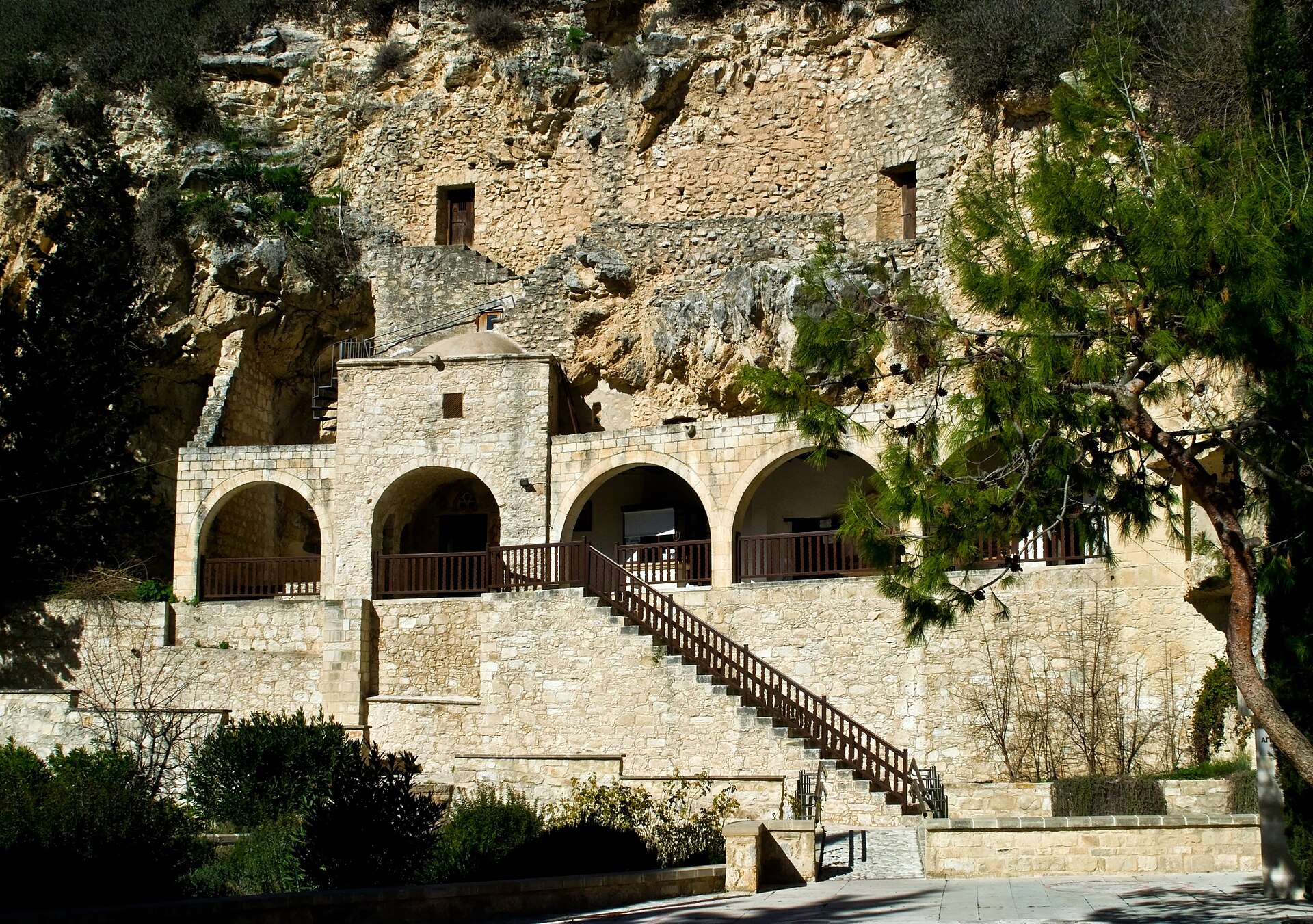
Perched in the hills just outside Paphos, the Monastery of Saint Neophytos feels like a quiet retreat from the world. The road winding up to it passes through dry, rocky terrain dotted with olive trees and wild herbs, the kind of landscape that has shaped Cyprus for centuries. The monastery itself is tucked into a cliffside, its honey-colored stone blending into the rock as if it grew there naturally. This isn’t a grand, imposing structure but something more intimate—a place built for solitude, prayer, and the slow rhythm of monastic life.
The monastery was founded in the 12th century by Neophytos the Recluse, a Cypriot monk who sought isolation after a pilgrimage to the Holy Land. Disappointed by the crowds at Jerusalem’s holy sites, he returned home determined to live as a hermit. He carved his first cell directly into the rock, expanding it over time into a small chapel and living quarters. The original cave, known as the *Enkleistra*, still exists today, its walls covered in faded frescoes that date back to Neophytos’s lifetime. These paintings are some of the best-preserved examples of Byzantine art on the island, offering a glimpse into the spiritual and artistic traditions of medieval Cyprus.
Neophytos wasn’t just a hermit; he was also a writer. His works, including theological treatises and accounts of his own life, provide rare insight into the religious and political turmoil of his time. The monastery became a center of learning, attracting monks who copied manuscripts and preserved knowledge during an era when much of Europe was in flux. Even after Neophytos’s death in 1214, the monastery remained a place of scholarship and devotion, though its influence waxed and waned with the island’s fortunes.
The architecture of the monastery reflects its layered history. The original cave chapel is the heart of the complex, but later additions—like the 16th-century katholikon, or main church—show the influence of different eras. The katholikon’s simple, whitewashed exterior contrasts with the richly decorated interior, where icons and gilded woodwork tell stories of saints and biblical scenes. The bell tower, added in the 18th century, rises above the complex like a sentinel, its bells still ringing out over the valley below.
Visiting the monastery today feels like stepping into a living tradition. While only a handful of monks still reside here, the place retains its sense of purpose. The air is thick with the scent of incense and old stone, and the silence is broken only by the occasional footsteps or the rustle of robes. The *Enkleistra* remains the most atmospheric part of the site, its low ceilings and flickering candlelight creating an almost timeless space. The frescoes, though worn by centuries of candle smoke and humidity, still convey a sense of devotion—figures with elongated faces and expressive eyes, their gestures frozen in prayer or blessing.
Beyond the monastery walls, the surrounding landscape invites quiet reflection. A short walk leads to a viewpoint overlooking the valley, where the patchwork of fields and distant villages stretches toward the sea. In spring, wildflowers carpet the hillsides, and the air hums with the sound of bees. Even in summer, when the heat shimmers off the rocks, the monastery offers shade and a cool breeze. It’s easy to see why Neophytos chose this place—remote enough to escape the world, yet close enough to the rhythms of rural life.
The monastery’s role in Cypriot history extends beyond religion. During the Ottoman period, it served as a refuge for Christians, and its monks were often mediators between the island’s Greek and Turkish communities. In the 19th century, it became a symbol of cultural resilience, preserving Greek Orthodox traditions under foreign rule. Today, it stands as a reminder of Cyprus’s complex identity—a place where faith, history, and landscape intersect.
For those who visit, the Monastery of Saint Neophytos is more than a historical site. It’s a place where the past feels tangible, where the quiet persistence of monastic life offers a counterpoint to the noise of the modern world. Whether you’re drawn by the art, the history, or simply the chance to step away from the bustle of Paphos, the monastery leaves an impression that lingers long after the descent back down the winding road.