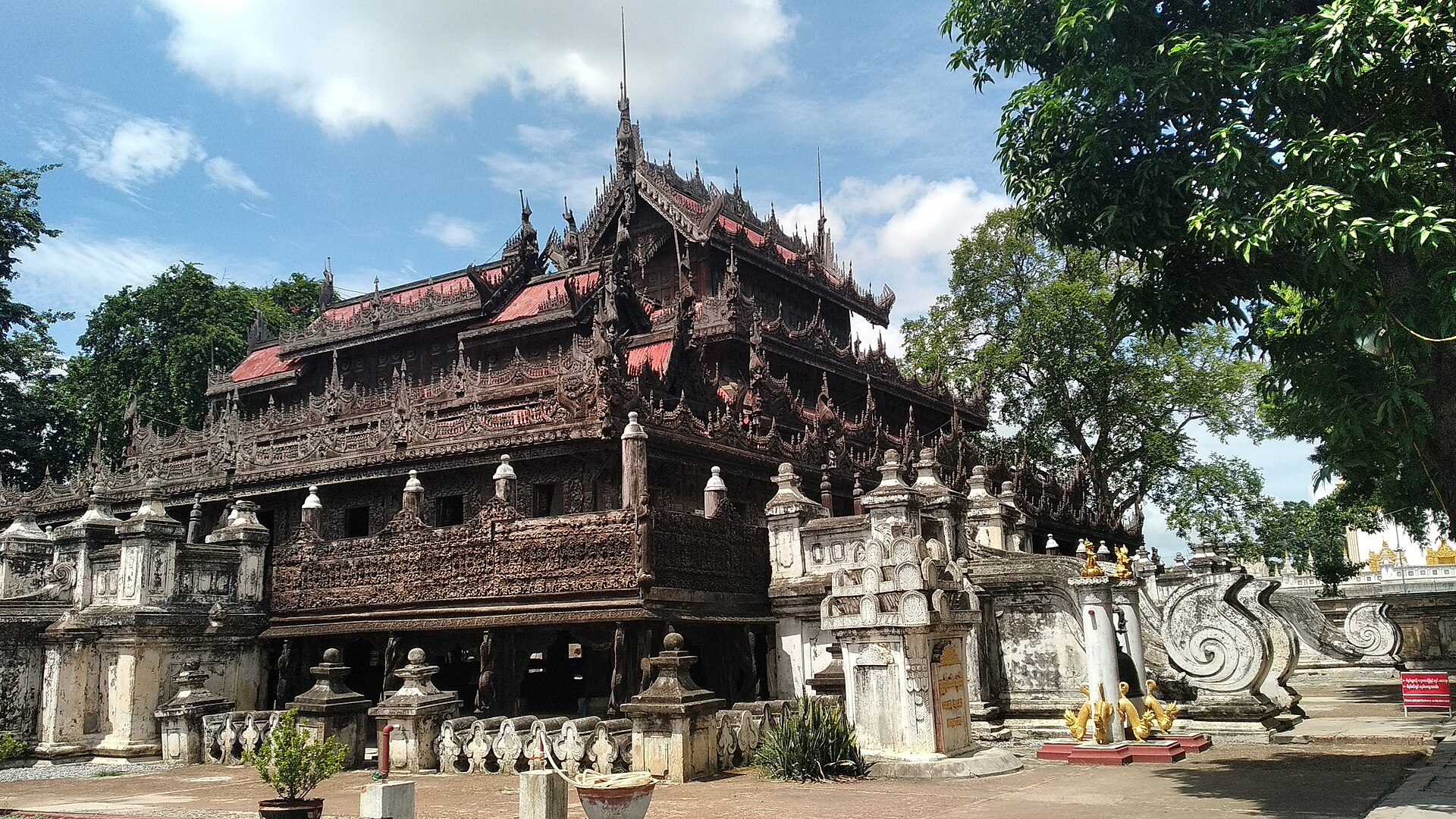
Shweinbin Monastery is one of those rare places in Mandalay where time seems to slow down, allowing you to step into a quieter, more deliberate world. Built in the late 19th century, it stands apart from other Buddhist sites not just for its architecture but for the stories woven into its wooden beams and carved pillars. Unlike many of Myanmar’s temples, which bear the scars of wars and earthquakes, Shweinbin has remained remarkably intact, its original beauty preserved through the decades.
The monastery was commissioned by King Thibaw, the last monarch of Burma, as a gift to his spiritual mentor. Construction took place between 1878 and 1882, with the finest craftsmen of the era contributing their skills. What makes Shweinbin unique is its use of teakwood, a material prized in Myanmar for its durability and resistance to the tropical climate. Every inch of the structure tells a story—from the intricate carvings depicting scenes from Buddhist legends to the floral motifs that reflect traditional Burmese artistry. The craftsmanship is so detailed that some scholars see traces of Indian and Thai influences, a nod to the region’s history as a crossroads of cultures.
Stepping inside, you’re greeted by a soft, filtered light that seeps through the lattice windows, casting delicate patterns on the wooden floors. The air carries the scent of aged teak and incense, while the only sounds are the occasional rustle of monastic robes or the quiet footsteps of visitors. The main hall, where monks once gathered for meditation and teachings, retains an atmosphere of deep stillness. There are no grand altars or gilded statues here—just the simplicity of wood and shadow, a space designed for reflection rather than spectacle.
The monastery’s design is a marvel of engineering. It rests on 150 teak columns, each one adorned with its own unique pattern. The most striking features are the carved panels, which depict mythical creatures, scenes from the Buddha’s life, and intricate geometric designs. The way the building balances on these columns gives it an almost floating appearance, as if it’s barely touching the ground. This sense of lightness is intentional, a physical manifestation of the Buddhist ideals of impermanence and detachment.
Shweinbin remains an active monastery, home to monks who follow the same rhythms of prayer and study that have defined this place for over a century. Unlike many historic sites that have been turned into museums, it hasn’t lost its living essence. Visitors might see monks chanting at dawn, sweeping the wooden walkways, or sitting in quiet contemplation. There’s no rush here, no pressure to move along—just the steady, unhurried pace of monastic life.
For those interested in history, the monastery offers a glimpse into Burma’s past. It witnessed the fall of the monarchy, the arrival of British colonial rule, and the upheavals that followed. The walls seem to hold the memories of the craftsmen who built it, the kings who commissioned it, and the countless people who have sought solace within its halls. In a country that has seen so much change, Shweinbin has endured as a place of continuity, a rare constant in a shifting landscape.
The best time to visit is early morning or late afternoon, when the light is soft and the heat less intense. The way the sun filters through the carvings, illuminating the wood’s rich grain, makes the details come alive. Walking through the halls feels less like touring a landmark and more like stepping into a different way of being—one where time isn’t measured in minutes but in moments of quiet awareness.
Shweinbin isn’t on the main tourist trail, which only adds to its charm. To reach it, you’ll wander through Mandalay’s quieter streets, past old wooden houses and small shops selling flowers for offerings. The journey itself becomes part of the experience, offering a taste of the city’s unhurried rhythm. There are no crowds here, no vendors pushing souvenirs—just the monastery, the monks, and the occasional visitor who has made the effort to seek it out.
More than just an architectural gem, Shweinbin is a living piece of Myanmar’s spiritual heritage. It reminds you that beauty often lies in simplicity, and that true richness comes from stillness. For many, it’s an unexpected discovery—a place where you can pause, breathe, and feel a connection to something deeper than the noise of everyday life.