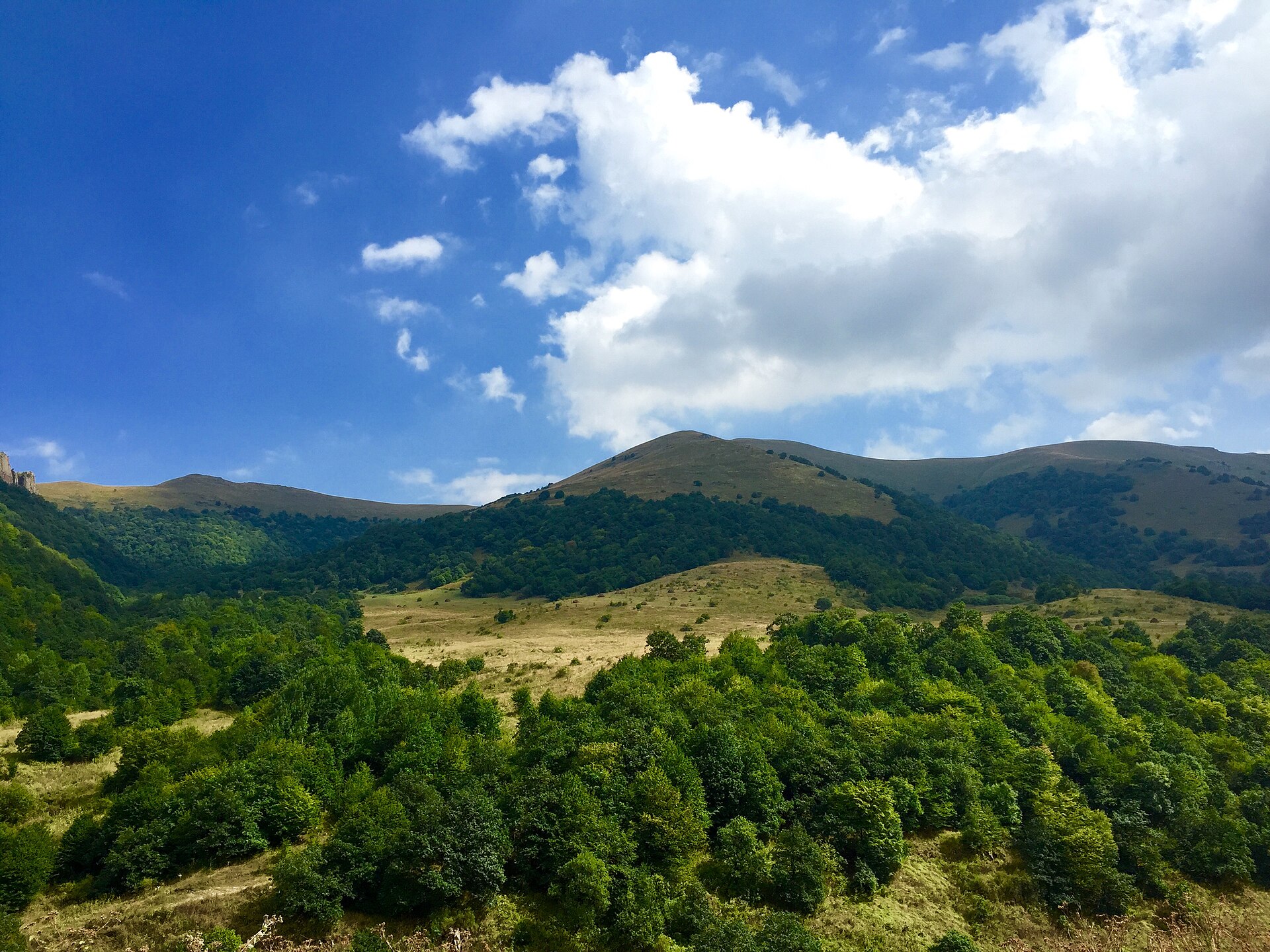
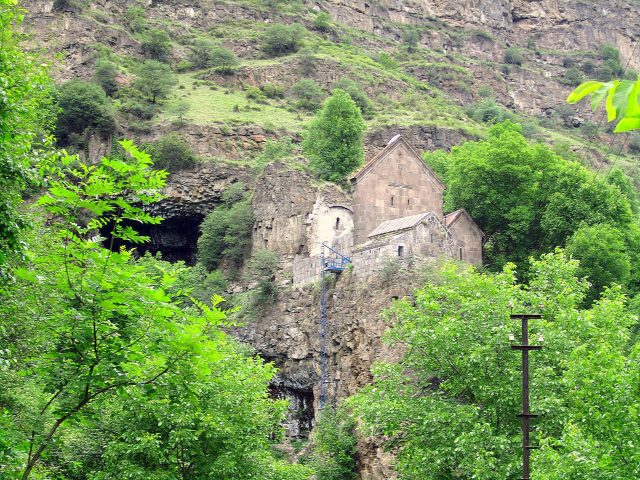
Perched on a gentle hill in the Lori region of northern Armenia, the Odzun Monastery stands as a quiet witness to centuries of faith, artistry, and the slow passage of time. From a distance, its pale stone walls blend almost seamlessly with the surrounding landscape, as if the earth itself had risen to cradle this place of worship. The monastery, believed to have been founded in the 5th or 6th century, has seen empires rise and fall, yet its presence remains steadfast, a testament to the enduring spirit of Armenian Christianity.
The architecture of Odzun is a study in harmony between human craftsmanship and the natural world. The main church, dedicated to Saint John the Baptist, is a domed basilica, a style that became characteristic of Armenian ecclesiastical design. Its exterior is marked by clean, geometric lines, with arched windows and niches that create a rhythmic play of light and shadow. The dome, once likely covered in intricate carvings, now bears the marks of time, its surface softened by weather and age. Inside, the space feels intimate yet grand, with thick stone walls that muffle the sounds of the outside world, inviting contemplation.
One of the most striking features of Odzun is its unique funerary monument, a rare example of early medieval Armenian sculpture. Standing near the southern wall of the church, this structure resembles a small, open-air chapel with a pitched roof. Its surfaces are adorned with reliefs depicting biblical scenes, including the Crucifixion and the Last Judgment, rendered with a simplicity that belies their emotional depth. The figures, though worn by centuries of wind and rain, retain a sense of movement and life, their expressions still capable of stirring something in those who pause to look.
The monastery’s location was no accident. Built on a hill overlooking the Debed River valley, Odzun occupies a landscape that has long been a crossroads of cultures and trade routes. The surrounding region, Lori, is known for its lush greenery and dramatic gorges, a stark contrast to the arid plains found elsewhere in Armenia. In the early medieval period, this area was a hub of activity, with monasteries like Odzun serving not only as spiritual centers but also as places of learning and refuge. The thick forests and rugged terrain provided both isolation and protection, allowing communities to thrive even in turbulent times.
Over the centuries, Odzun has undergone numerous restorations, each leaving its mark on the structure. The most significant of these took place in the 19th century, when the monastery was partially rebuilt to address the damage wrought by time and neglect. Yet despite these interventions, the essence of the place remains unchanged. The stones still bear the faint traces of ancient masons, their hands long turned to dust, while the carvings whisper stories of a faith that has outlasted kingdoms. Even the air here feels different—cooler, perhaps, or heavier with the weight of history.
Visitors to Odzun often remark on the sense of tranquility that pervades the site. Unlike some of Armenia’s more famous monasteries, which draw crowds of tourists, Odzun retains an air of quiet dignity. There are no souvenir stalls or guided tour groups here, just the occasional traveler who has made the journey to this remote corner of the country. The approach to the monastery is part of the experience—a winding path through fields and past scattered farmhouses, where the only sounds are the rustling of leaves and the distant lowing of cattle.
The surrounding village of Odzun, though small, offers a glimpse into rural Armenian life. The houses, built from the same pale stone as the monastery, cluster around narrow lanes, their gardens bright with flowers and fruit trees. The villagers, many of whom trace their ancestry back generations, live at a pace that feels untouched by the rush of the modern world. It’s not uncommon to see an elderly man leading a donkey laden with hay or a group of children playing in the shade of a walnut tree. This is a place where time moves differently, where the past is never far from the present.
For those who take the time to explore beyond the monastery walls, the Lori region holds further rewards. The nearby Debed Canyon, with its sheer cliffs and winding river, is a haven for hikers and nature lovers. The medieval monasteries of Haghpat and Sanahin, both UNESCO World Heritage sites, lie within easy reach, their intricate stonework and serene settings offering a deeper dive into Armenia’s rich cultural heritage. Yet even as these places draw visitors, Odzun remains something of a hidden gem—a place where the connection between land, history, and faith feels particularly tangible.
Standing in the shadow of Odzun’s ancient walls, it’s easy to imagine the monks who once walked these grounds, their voices echoing in the stillness as they chanted prayers or debated the finer points of theology. The monastery has seen its share of hardship—earthquakes, invasions, and the slow erosion of time—but it endures. In a world that often feels fragmented and hurried, places like Odzun offer a rare sense of continuity, a reminder that some things are built to last. Whether you come for the history, the architecture, or simply the chance to stand in a place where the past feels alive, Odzun leaves an impression that lingers long after you’ve left its hilltop perch.