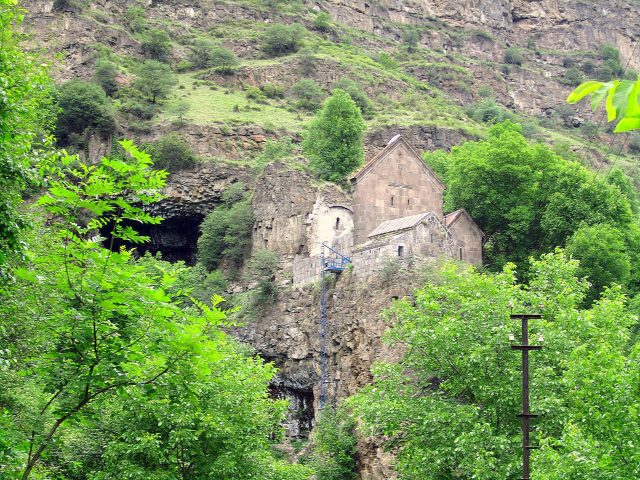
Perched on a gentle hill in Tumanyan, the Church of the Holy Mother of God stands as a quiet marker of Armenia’s past. The surrounding landscape is one of soft slopes and distant mountains. The only sounds are the rustle of leaves and the murmur of the valley below. This was once a crossroads of trade routes, but today the area moves at its own pace. The church is modest in size—its stone walls and simple silhouette carry centuries without grandeur.
History and purpose
The exact origins of the church are unclear, though scholars place its construction between the 10th and 11th centuries. These were years of shifting borders and foreign rule, yet faith remained a steady presence. Churches like this were built not just for worship but as symbols of endurance. The craftsmanship reflects that purpose—stones laid with care, arches shaped to last.
The church was never a major religious center, but it has always been part of local life. It witnessed baptisms, weddings, and funerals. During the Soviet era, many Armenian churches were closed or repurposed, but this one survived. Some damage was done, some neglect took its toll, yet it endured.
Design and atmosphere
The church follows the classic Armenian design of its time: a small cruciform structure with a central dome, a semicircular apse, and two side chapels. The facades have understated details—delicate arcades, carved reliefs, and narrow windows that soften sunlight. The dome is low but well-proportioned, its curves echoing older churches across the country. There’s no ostentation, just a sense of balance.
Inside, the space feels intimate. The walls, made of pale tuff stone, have mellowed into a soft golden hue. The uneven flagstones underfoot show wear from countless footsteps. The altar stands slightly elevated, its frescoes faded to faint traces. The air carries the scent of old wood and stone. The silence is broken only by the creak of a floorboard or the call of a bird.
It’s easy to imagine how this place felt to those who came here generations ago—not just as a house of prayer, but as a refuge.
Visiting today
The church remains active, though services are infrequent. Most visitors are locals or travelers who stray from the usual paths. There are no souvenir stalls or cafes nearby, just ancient trees and mountains. The lack of fanfare is part of its appeal; this is a place that doesn’t demand attention but quietly earns it.
Tumanyan is a small town, and the church is one of its few landmarks. Its significance isn’t in scale or opulence. Instead, its power lies in its authenticity—unadorned walls, weathered stones, the way light falls through narrow windows. It’s a reminder that some things don’t need embellishment.
If you visit, sit on the steps. Watch the shadows lengthen across the valley. Listen to the wind in the trees. In a world that moves too fast, places like this offer stillness. They don’t shout their history; they simply stand, patient and enduring, as they have for centuries.