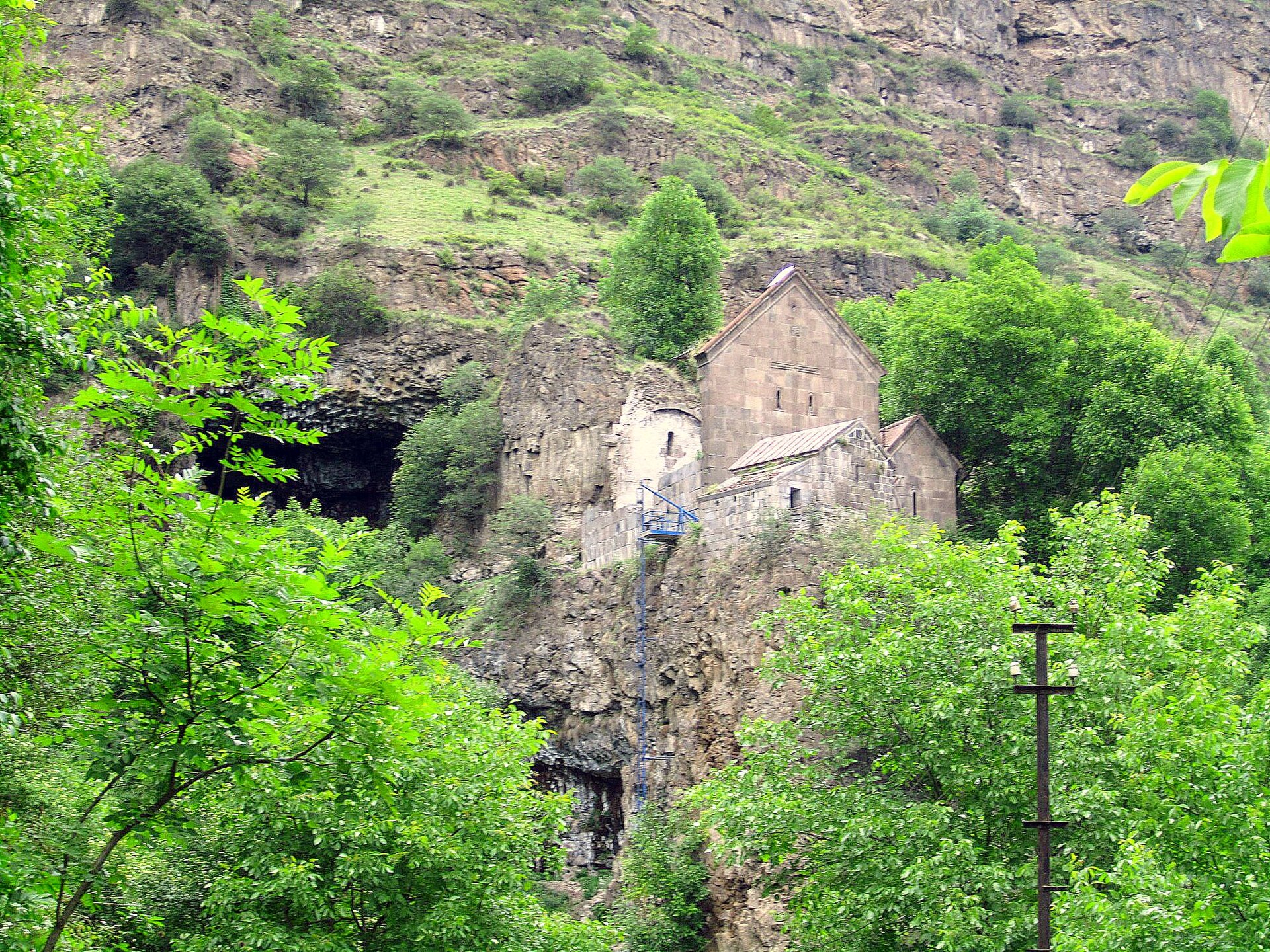
Perched on a rocky slope above the Debed Gorge, Kobayr Monastery feels like a place suspended in time. The gray tuff walls, worn by centuries, rise from the cliffside with a quiet dignity, their crumbling arches framing views of the valley below. Unlike the more famous monasteries of Armenia, Kobayr doesn’t draw crowds. There are no tour buses, no souvenir stalls, just the wind rustling through the gorge and the occasional echo of footsteps on stone. The history here isn’t explained by plaques or guides—it’s written into the very fabric of the place, in the weathered carvings and the way the light falls through broken windows.
The monastery was founded in the 12th century, during a brief but vibrant period of revival for the Armenian Kingdom of Lori. This was a time when the region, still recovering from the devastation of Seljuk invasions, experienced a cultural and political resurgence under the Zakarid dynasty. Kobayr was built not just as a spiritual center but as a fortress, its location on a steep slope making it nearly impregnable. By the 13th century, it had come under the influence of the Georgian Bagratids, and this shift left a lasting mark on its art. The frescoes that once adorned its walls were painted in a Byzantine-Georgian style, blending traditions in a way that reflected the fluid borders of the time. Today, only fragments remain, but even these glimpses offer a rare window into the artistic dialogue between cultures.
The architecture of Kobayr follows the familiar patterns of medieval Armenian design, yet with subtle differences that set it apart. The main church, a cross-domed structure from the 12th century, features two side chapels and walls built from large blocks of local tuff. Inside, the remnants of frescoes still cling to the walls—faces of saints, geometric patterns, and scenes from the Gospels rendered in a restrained, almost austere style. The apse painting, though faded, reveals figures of the Virgin Mary and Christ, their expressions solemn and timeless. Nearby, a smaller chapel stands in partial ruin, while the foundations of a refectory and other monastic buildings hint at the community that once thrived here. The remnants of defensive walls encircle the site, a reminder of the monastery’s dual role as both sanctuary and stronghold.
Kobayr wasn’t always a ruin. Even in the 17th and 18th centuries, monks still lived within its walls, though the monastery’s decline had already begun. Earthquakes, wars, and the slow passage of time took their toll—roofs collapsed, frescoes faded, and the stones cracked under the weight of centuries. During the Soviet era, the site was largely forgotten, left to the elements until conservation efforts began in recent decades. Unlike many restored monuments, Kobayr has been preserved in a state of arrested decay. There are no modern reconstructions here, just the raw, unfiltered presence of history. The absence of restoration gives the place an authenticity that’s increasingly rare, as if the stones themselves are holding their breath, waiting to tell their story.
Reaching Kobayr requires some effort. From Tumanyan, the journey involves descending into the Debed Gorge and then climbing a steep, winding path that cuts through the cliffs. The hike takes about an hour, but the views along the way make it worthwhile. The river roars below, its waters carving through the rock, while the slopes above are dotted with scrubby vegetation. When the monastery finally comes into view, it’s clear why this spot was chosen. The isolation is absolute—nothing but mountains, sky, and the ancient stones, standing as they have for centuries. The silence here isn’t just the absence of noise; it’s a presence in itself, thick with the weight of time.
What makes Kobayr particularly fascinating is the way it embodies the layered history of the region. The monastery’s inscriptions appear in both Armenian and Georgian, and its frescoes reflect a fusion of artistic traditions. This blending of influences speaks to a time when the boundaries between cultures were more porous, when these lands were a shared space rather than divided territories. Kobayr stands as a quiet testament to that era, a place where the past feels less like a series of conflicts and more like a conversation.
Today, the monastery attracts those who seek something beyond the usual tourist experience. There are no cafes, no gift shops, no neatly packaged narratives—just the raw, unmediated encounter with history. Visitors often find themselves lingering, sitting on the rocks to watch the light shift over the gorge or listening to the river’s distant murmur. It’s a place that doesn’t offer easy answers but invites reflection, a reminder of how much has changed and how much has stayed the same. Kobayr doesn’t demand attention; it earns it, quietly, through the sheer force of its presence.