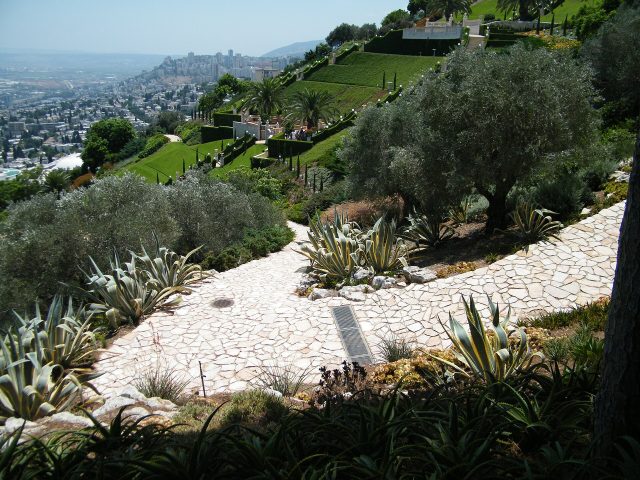
Perched on the slopes of Mount Carmel, the Stella Maris Monastery feels like a place where time moves differently. The view from here stretches across the Mediterranean, a vast expanse of blue that has watched over this land for centuries. The Carmelites, a Catholic order founded in the 12th century, chose this mountain for a reason. Long before their arrival, the slopes of Carmel were a place of solitude and prayer, revered by those who sought connection with something greater than themselves.
The mountain’s spiritual significance predates Christianity. Ancient texts and traditions speak of the prophet Elijah, a figure central to Judaism, Christianity, and Islam, who is said to have taken refuge in these caves, hiding from persecution. By the time the Crusaders arrived, the mountain was already a haven for hermits and pilgrims, drawn to its quiet isolation. The Carmelites formalized this presence in the 13th century, establishing a monastery that would become the heart of their order. Yet their history here was never easy. The monastery was destroyed and rebuilt multiple times, surviving Ottoman rule, wars, and even earthquakes, each reconstruction adding another layer to its story.
The building that stands today dates to the early 19th century, a graceful structure that blends simplicity with grandeur. Its white stone facade, arched windows, and domed roof rise above the greenery of the mountain, a striking contrast against the sky. Inside, the monastery is both austere and reverent. The main altar, adorned with marble and gold leaf, draws the eye, while the walls are covered in frescoes depicting scenes from the lives of Elijah and the Virgin Mary. The most striking feature, though, is the statue of Our Lady, Star of the Sea—Stella Maris—who gave the monastery its name. She stands as a protector, not just of the monks, but of sailors and travelers, a beacon for those navigating both physical and spiritual waters.
Beneath the monastery lies the Cave of Elijah, a small, dimly lit space reached by a narrow staircase. According to tradition, this is where the prophet hid from Queen Jezebel’s wrath, and the air here feels thick with history. The cave is unassuming, its rough stone walls worn smooth by centuries of touch, but there’s a quiet power to it. Pilgrims and visitors often pause here, some in prayer, others in silent reflection, as if the weight of the past lingers in the cool, still air.
Mount Carmel itself is more than just a religious landmark. It’s a nature reserve, its slopes covered in dense forests of oak, pine, and cypress. Trails wind through the trees, leading to viewpoints where the city of Haifa sprawls below, its buildings clustered along the curve of the bay. On clear days, the horizon stretches all the way to the northern coast of Israel and even into Lebanon. The monastery seems to float above it all, a reminder that this place has always been a meeting point—between earth and sky, between the sacred and the everyday.
Stella Maris isn’t a museum, nor is it a typical tourist attraction. There’s no rush here, no scripted experience. Some come to pray, others to wander the grounds, tracing the footsteps of those who have walked these paths for centuries. The monastery has its own rhythm: the tolling of the bell at dawn and dusk, the murmur of prayers, the rustle of leaves in the wind. It’s a place where the outside world feels distant, where the only sounds are the ones you bring with you—your breath, your footsteps, the occasional cry of a bird overhead.
Haifa, the city below, is known for its diversity, a place where different faiths and cultures coexist. Stella Maris embodies that same spirit. There are no rigid divisions here—between pilgrim and tourist, between past and present. The monastery welcomes all who approach with an open heart, whether they’re seeking solace, history, or simply a moment of quiet. Perhaps that’s why it endures. It’s not just a building on a hill; it’s a living testament to resilience, to the human need for connection, and to the quiet beauty of a place where the land itself seems to breathe with meaning.