The Abai Kunanbayev Memorial Museum in Semey isn’t just a building—it’s a place where the legacy of one of Kazakhstan’s most important poets and thinkers comes alive. Standing on the banks of the Irtysh River, in the house where Abai spent his final years, the museum preserves the atmosphere of the late 19th century, when the Kazakh steppe was just beginning to find its voice through culture and ideas. Rather than simply recounting the poet’s biography, the museum immerses visitors in the era when his thoughts on enlightenment, humanism, and cultural dialogue were taking shape, already reshaping the course of history.
The house itself, built in a traditional Kazakh style with elements of Russian estate architecture, feels like a living witness to those times. The wooden walls, low ceilings, brick-lined stoves, and creaking floorboards create the sense that Abai has just stepped out of the room. Inside, the furnishings have been carefully recreated to reflect the poet’s life: books in Arabic and Russian, manuscripts, personal belongings, and photographs of family and friends. His writing desk holds a special place, where he composed poetry and translated works by Pushkin, Lermontov, and Krylov—writers who became bridges between East and West.
Abai Kunanbayev was born in 1845 into the family of a steppe ruler, but from childhood, he was drawn to knowledge, which at the time was a privilege reserved for few. He studied in a madrasa, learning Arabic and Persian, but it was Russian literature that became a revelation for him. His poetry and prose reflected not only his love for the steppe but also his sorrow for an uneducated people held back by backwardness and prejudice. Abai was the first to speak openly about the need for reform, arguing that culture and education were not luxuries but essential for a nation’s survival. His ideas were so bold that even a century after his death, they remain strikingly relevant.
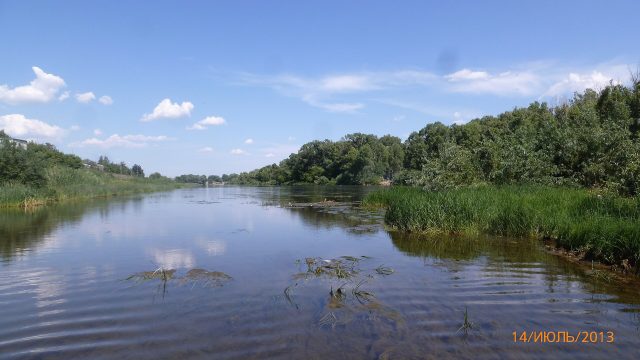
The museum extends beyond the house itself. The surrounding grounds feature monuments dedicated to Abai and his contemporaries, as well as a small park where visitors can sit in quiet reflection by the Irtysh. The river here is wide and unhurried, much like life in these parts. Time flows past with the water, but Abai’s words endure. In Semey, he isn’t remembered as a museum exhibit but as a living presence—his thoughts still echo in conversations, in the songs of akyns, and in debates about Kazakhstan’s future.
A special section of the museum explores Abai’s influence on culture and literature. Here, visitors can see editions of his works in various languages, scholarly research, photographs, and documents tracing how his ideas spread beyond the steppe. Abai became a symbol not just of Kazakh literature but of the entire Turkic world. His poetry has been translated into Turkish, Uzbek, Tatar, and, during the Soviet era, many European languages. Rare editions on display show how perceptions of his work have evolved over the decades.
Semey, where the museum is located, is a city with a complex history. Once a frontier outpost of the Russian Empire on the edge of the Kazakh steppes, it was a place of exile for Decembrists and political prisoners. Cultures, languages, and destinies intersected here. Living in this city, Abai witnessed the world changing around him and sought to understand his people’s place in it. The museum’s location in Semey is no accident—it was here that the poet’s ideas took concrete form, where he wrote his most important works, and where his voice resonated most powerfully.
Visiting the museum isn’t just a tour; it’s an encounter with history that is still unfolding. Abai Kunanbayev left no political manifestos or economic programs, but his words about the pursuit of knowledge, honesty, and justice became a foundation for generations. The museum keeps these ideas alive, hosting lectures, writer’s meetings, and poetry readings. It doesn’t just preserve the past—it explores how that past connects to the present.
For first-time visitors to Semey, the Abai Museum serves as a starting point for discovering the city and its surroundings. After exploring the exhibits, one might stroll along the Irtysh embankment, visit local libraries with their rare collections, or venture into the steppe to see the landscapes that inspired the poet. Abai wrote about the boundless expanses, the silence that fills the soul, and the people who live in harmony with nature. In Semey, these things can still be felt in a very real way.
The Abai Kunanbayev Memorial Museum is more than a tribute to a great poet—it’s a reminder that culture is not a static past but a living process. Here, every visitor can ask themselves: what from Abai’s legacy remains relevant today? His call for education, respect for tradition, and openness to the new feel more timely than ever. In an age of globalization and digital technology, his words about staying human take on special significance. The museum in Semey is a place to pause, reflect, and realize that history doesn’t end in textbooks—it continues within us.