Nikopolis ad Istrum is one of those rare places where the past doesn’t just linger—it feels almost tangible. Tucked away near the quiet Bulgarian village of Nikyup, these ruins once formed the heart of a thriving Roman city, a strategic outpost on the edge of the empire. Today, the stones scattered across the landscape tell a story of trade, daily life, and the slow march of time, offering a glimpse into a world that flourished nearly two thousand years ago.
Founded in the early 2nd century by Emperor Trajan, the city was a monument to Rome’s victory over the Dacians. Its name, meaning "City of Victory on the Istrum," referred to the Danube, which the Romans called the Ister. Positioned at the crossroads of major routes connecting the Black Sea to the Balkans and the empire’s interior, Nikopolis ad Istrum quickly grew into a bustling hub. Merchants, soldiers, and artisans flocked here, turning it into one of the most important centers of the province of Moesia.
The city’s layout was a testament to Roman urban planning. Streets paved with stone intersected at right angles, forming a grid that divided the city into orderly blocks. At its heart lay the forum, a public square surrounded by temples, administrative buildings, and shops. Nearby stood the baths, where people gathered not just to bathe but to socialize, negotiate deals, or simply unwind. The remains of a theater, capable of holding thousands, hint at the cultural life that once thrived here, while the ruins of a stadium suggest a love for athletic competitions.
Nikopolis ad Istrum also played a role in the spread of Christianity. By the 3rd century, it had become one of the first cities in the region to embrace the new faith, and the remnants of an early Christian basilica stand as evidence of its growing influence. Though the city later declined under Byzantine rule, overshadowed by newer centers, its early Christian heritage remains a quiet but significant part of its story.
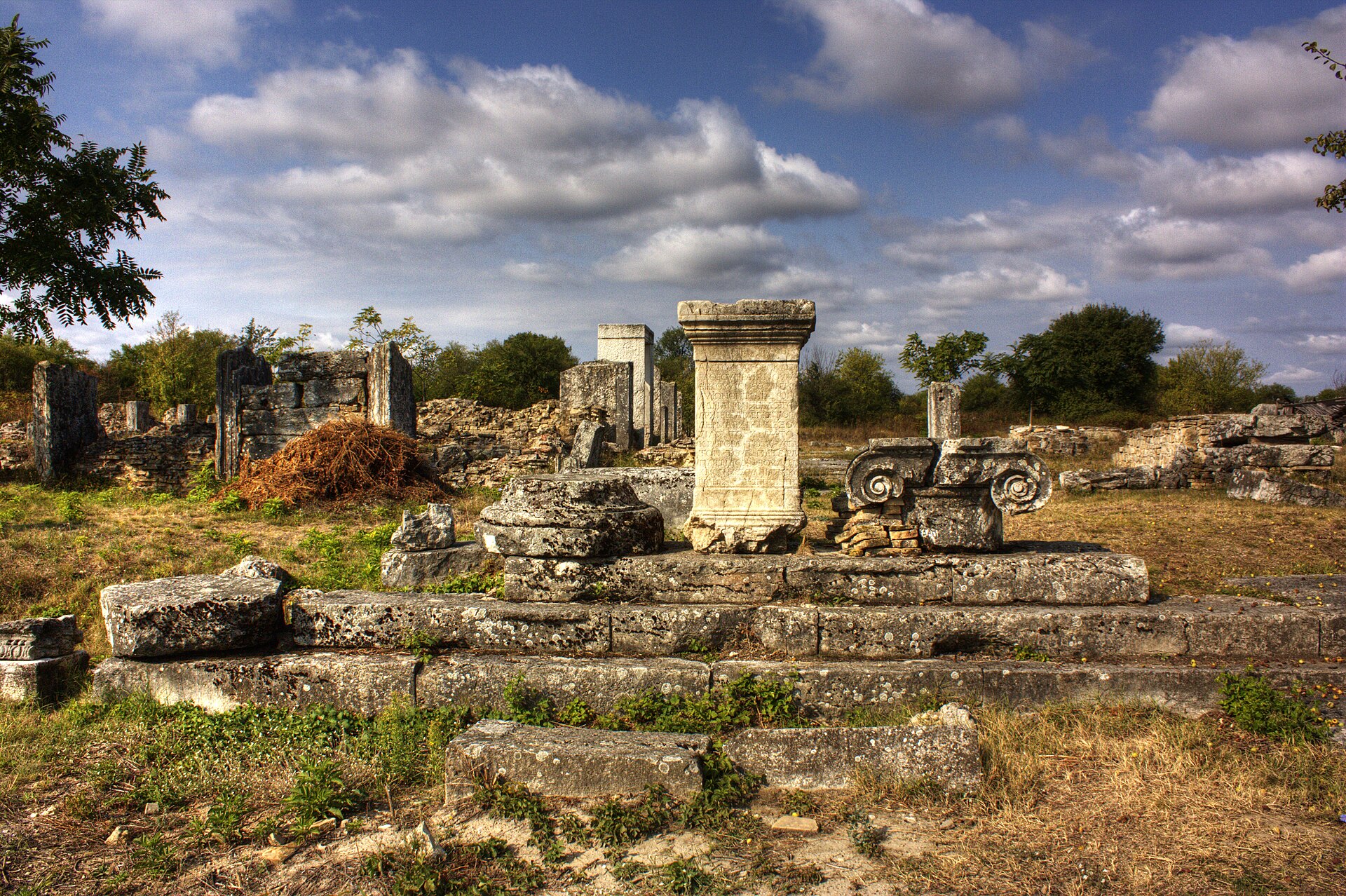
Walking through the site today feels like stepping into a forgotten chapter of history. The ruins are scattered across a gentle landscape, with fragments of columns, mosaic floors, and the outlines of houses still visible. The most striking remnants are those of the public buildings—the thick walls of the baths, the arches that once supported roofs, and even sections of the aqueduct that carried water from nearby springs. There’s a sense of stillness here, as if the city’s inhabitants have only just stepped away.
Unlike more famous Roman sites, Nikopolis ad Istrum sees few visitors, which makes it all the more atmospheric. You can wander the ancient streets without the crowds, imagining the voices of merchants in the forum or the applause of theatergoers. The surrounding countryside adds to the experience—rolling hills dotted with vineyards, fields stretching toward the horizon, and the distant curve of the Danube, a river that has witnessed centuries of change.
What makes this place special is its authenticity. There are no reconstructions or modern additions, just the raw, weathered stones that have borne witness to history. For anyone drawn to the ancient world, Nikopolis ad Istrum offers something rare: a chance to connect with the past without the filter of tourist infrastructure. It may not have the fame of Pompeii or Ephesus, but that only adds to its quiet allure. Here, history isn’t just observed—it’s felt.