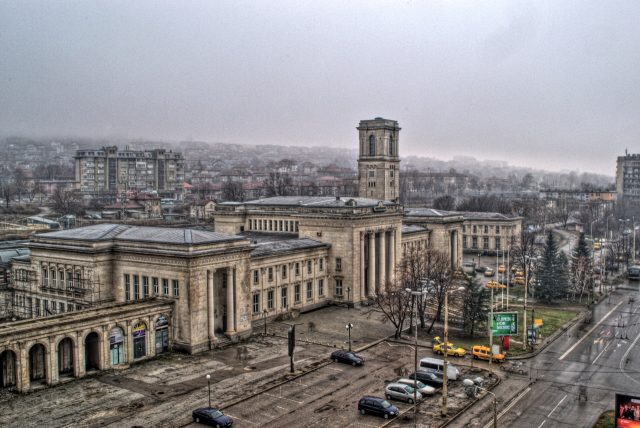
Monument to the Liberation from Ottoman Rule in Nikyup
Nikyup is one of those quiet Bulgarian towns rarely marked on tourist maps. Yet for those who seek to understand the country’s past, it holds more than the usual sights. On its outskirts stands a monument marking the end of nearly five centuries of Ottoman rule. It is modest, almost understated, but its meaning goes beyond its size.
The monument honors the Russo-Turkish War of 1877–1878, when Russian forces and Bulgarian volunteers fought to free these lands. Nikyup lay on the path of the advancing army, and some of the war’s key battles took place here. The memorial is simple—a granite obelisk with a plaque—but it carries weight. It does not tower or demand attention; it invites quiet reflection, a silent marker of struggles that shaped Bulgaria.
For Bulgaria, this war changed everything. After 500 years under Ottoman rule, the country regained independence, though full sovereignty came later. Monuments like this one appear across Bulgaria, but Nikyup’s stands apart because of its setting. It is not in a grand city square but on the edge of a small town, a reminder that history is not made only in capitals. Here, the past feels close, as if the ground itself remembers.
The monument’s design is plain. There is no grandeur, no pomp—just a quiet dignity that fits what it represents. Visitors sometimes leave flowers at its base, a small act that shows how deeply these events matter to Bulgaria. Without crowds or tourist displays, the place feels personal, more like a private moment than a public spectacle.
Nikyup is a small town, but its history goes back much further. Long before the 19th century, this was Nicopolis ad Istrum, a Roman city that thrived as a trade and cultural center. Today, only ruins remain—fragments of walls and columns scattered across the land. The modern town carries on quietly, but the past is never far. Locals still talk about the battles fought here, and the nearby ruins connect them to a time when this land was part of a vast empire.
Visiting the monument is not like touring a museum. There are no guided tours, no exhibits, no explanations. Just the wind in the grass and the weight of history. For those who come, it is less about seeing and more about feeling. The place does not offer answers; it offers space to think about how the past shapes a nation. In a world where history is often reduced to dates, Nikyup reminds us that some stories are best understood in silence.
What makes this monument moving is its honesty. It does not try to impress with size or spectacle. It simply stands, a marker of something far greater. There are no grand stories here, no attempts to romanticize the past. Instead, it leaves room for each visitor to connect with history in their own way. Whether you are a history lover or just passing through, the monument offers a moment of quiet connection to those who once fought for this land.
Nikyup and its memorial show that history is not always found in grand monuments or busy cities. Sometimes, it lingers in quiet places, where time moves slowly and memory is kept in small ways. For Bulgaria, this place is part of its identity. For travelers, it is a chance to step off the usual path and experience history not as a distant idea, but as something alive in the air around them.
The monument may not be the most striking sight in Bulgaria, but its power lies in its simplicity.