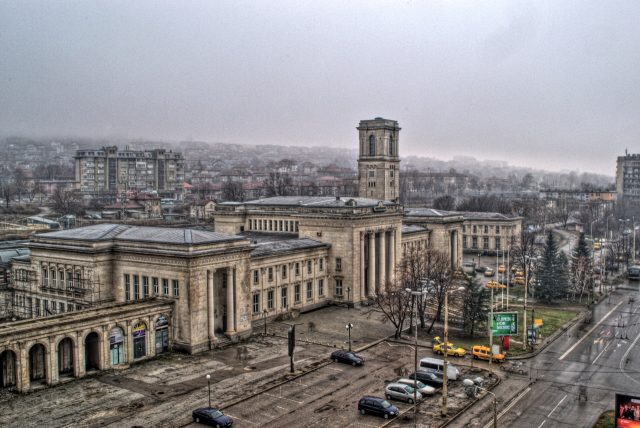
Nikyup is one of those quiet Bulgarian towns that most travelers pass by without a second thought. There are no bustling streets, no neon signs, no crowds of tourists snapping photos. Yet that very stillness is what makes it special. Long ago, the land around Nikyup was home to one of the Roman Empire’s most important cities in the Balkans—Nicopolis ad Istrum. Today, only ruins remain, but the town’s small archaeological museum preserves the memory of that past in a way that feels intimate and unhurried. This isn’t a place for grand historical spectacles; it’s where you can touch the traces of ordinary lives lived nearly two thousand years ago, far from the pomp of Rome or the clamor of tourist hotspots.
The museum itself is easy to miss. Tucked away in the center of Nikyup, it occupies an unassuming building with no grand facade or marble columns. Inside, the space is modest—small exhibition rooms, quiet corners, the occasional rustle of pages as the attendant flips through a catalog. But the moment you step inside, the atmosphere shifts. This isn’t just a collection of artifacts; it’s an attempt to piece together the rhythm of an entire era. The exhibits are arranged not just to display objects, but to explain them—to show how people lived, what they traded, how they worshipped, and what they left behind.
Nicopolis ad Istrum was founded in the early 2nd century by Emperor Trajan after his victory over the Dacians. Within decades, it grew into a thriving hub of trade and culture, a crossroads where Roman roads connected the empire’s Danube provinces to the heart of Greece. The city was a melting pot of influences—Roman administration, Greek art, and Thracian traditions all blended here, shaping everything from architecture to daily life. The museum’s exhibits reflect that diversity: Greek statues stand near Roman coins, Thracian jewelry lies beside everyday tools, and inscriptions in Latin and Greek reveal the laws, festivals, and bureaucratic details of urban life. One of the most striking displays is a series of epitaphs, where families bid farewell to their loved ones, sometimes with simple wishes for eternal rest, other times with proud mentions of their achievements.
Perhaps the most compelling piece in the museum is a detailed scale model of Nicopolis ad Istrum at its height. Built to represent the city in the 3rd century, it reconstructs the forum, temples, baths, residential quarters, and even a small theater. The model helps visitors grasp the scale of the city, which once covered nearly 30 hectares and was enclosed by defensive walls. Today, only foundations and fragments of paved streets remain, but the model allows you to walk those streets in your mind—to imagine the clatter of a potter’s workshop, the murmur of merchants haggling, or the shade of a colonnade where locals gathered to gossip.
The museum also dedicates space to artifacts uncovered in the city’s necropolis. Funerary urns, gravestones, jewelry, and coins—objects buried with the dead—offer a glimpse into ancient burial customs and beliefs. Some gravestones bear touching epitaphs, where families expressed their grief or celebrated the lives of the departed. One of the most poignant finds is a child’s toy, discovered in a youngster’s grave. It’s a quiet reminder that behind every historical record are real people, with their own joys and sorrows.
While the focus is on Nicopolis ad Istrum, the museum doesn’t ignore the layers of history beneath it. Earlier artifacts, including Thracian pottery and tools, show that people lived here long before the Romans arrived. Later Byzantine pieces hint at the city’s decline and transformation. Together, these exhibits paint a picture of how life on this land evolved over centuries, how one culture gave way to another, and how each left its mark for archaeologists to uncover.
A visit to the museum naturally leads to the ruins of Nicopolis ad Istrum, just a short distance from Nikyup. Though far less preserved than Pompeii or Herculaneum, the site has its own quiet power. You can walk along the same stone-paved streets that once carried chariots and pedestrians, peer into the remains of public baths where citizens relaxed, or stand in the shadow of a temple where sacrifices were once made. The ruins, combined with the museum’s exhibits, help fill in the gaps—letting you imagine the city as it was, not just as it stands today.
This isn’t a place for those seeking flashy attractions or interactive displays. There are no audio guides, no souvenir shops, no crowds. But that’s precisely why it feels so authentic. The museum in Nikyup doesn’t try to dazzle; it simply tells a story. It invites you to sit quietly, to study the details of a broken pot or a worn coin, and to wonder about the hands that held them. In a world where history is often packaged for mass consumption, this small museum offers something rare: a chance to connect with the past on its own terms.