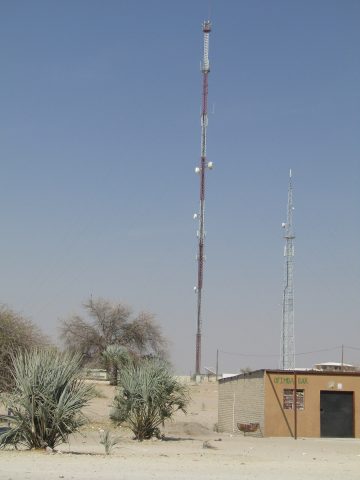
The War Veterans Memorial in Omutia is one of those quiet places where history lingers without fanfare. Tucked on the edge of this small Namibian town, it stands where the last houses give way to the vastness of the savanna, surrounded by sparse trees and the endless horizon. Unlike grand monuments built to impress, this memorial carries its weight in simplicity. There are no crowds here, no tour buses, just the occasional visitor who comes to honor those who fought in conflicts far from this land, yet whose lives became intertwined with Namibia’s story.
The memorial’s origins trace back to Namibia’s struggle for independence. For decades, the country endured colonial rule and the violence that came with it, and many of its people fought not only on home soil but across Africa and beyond. When independence finally arrived in 1990, there was a need to remember those who had sacrificed everything, especially those whose names might otherwise be forgotten. The memorial in Omutia became one such place—a space for remembrance that doesn’t rely on grandeur but on quiet dignity.
Its design is unassuming, almost austere. A central stone stele, carved from local rock, stands within a low fence where the names of the fallen are etched. Nearby, a few granite slabs bear brief inscriptions in English and local languages. There are no towering sculptures or dramatic compositions, just the raw honesty of names and dates. Against the backdrop of the open plains, the memorial feels small, yet that very modesty makes it all the more powerful. It doesn’t demand attention; it earns it.
Omutia itself is not a place that draws tourists. It moves at its own unhurried pace, and the memorial is less a landmark than a part of daily life. Locals sometimes leave flowers, particularly on national holidays or anniversaries of significant events. For them, it’s not a tourist attraction but a reminder of the price paid for freedom. The memorial serves its purpose without ceremony, a silent guardian of memory that doesn’t need fanfare to matter.
The significance of this place extends beyond regional history. Namibia, like many African nations, carries the weight of its colonial past and the struggles that shaped its identity. The memorial in Omutia isn’t just about honoring individuals—it’s a symbol of how the country remembers its journey. There are no divisions here between victors and vanquished, no labels of "us" and "them." Instead, there’s a shared understanding that war leaves scars that take generations to heal.
The atmosphere here is hard to describe. On hot days, the stone becomes too warm to touch, while the wind carries the scent of dry grass and dust across the savanna. Time seems to slow, and the only sound is the quiet rustling of the land. It’s not an oppressive silence but one that wraps around you, giving space for reflection. That’s why the memorial doesn’t attract crowds—it’s not a place for casual visits. Those who come leave with the sense that they’ve touched something deeper than they expected.
There’s no tourist infrastructure around the memorial—no cafes, no souvenir stalls, not even signs pointing the way. It exists almost in isolation, and reaching it requires intent. For some, that might seem inconvenient, but there’s a certain logic to it. This isn’t a place for passersby; it’s for those who seek it out, whether locals paying their respects or the rare traveler curious about Namibia’s history.
Omutia and its memorial remind us that remembrance doesn’t always need pomp. Sometimes, all it takes is a simple stone with names, a quiet corner away from the noise of cities, and the time to stand still. In a world that often glorifies battles and heroes, this place is understated, yet no less meaningful. Perhaps that’s where its true power lies—not in grand gestures, but in the quiet respect for those who can no longer speak for themselves.