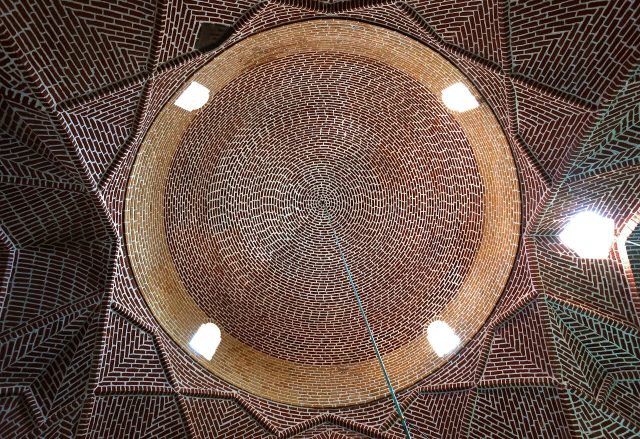
Nabi Mosque in Tekab is one of those quiet places that doesn’t demand attention but lingers in memory long after you’ve left. Tucked away in the heart of a small Iranian town where life moves at its own unhurried pace, it feels like a piece of history preserved in stone. Unlike the grand mosques of Isfahan or Shiraz, with their towering minarets and intricate tilework, this one is modest—almost unassuming. Yet there’s something deeply authentic about it, as if the centuries haven’t quite touched its walls.
The architecture is typical of northwestern Iran: thick adobe brick walls, a minaret that once served as both a call to prayer and a watchtower, and a central courtyard where the shade offers relief from the midday sun. Inside, the space isn’t cluttered with ornate decoration. Instead, a few carved wooden details and simple geometric patterns on the walls create a sense of calm. It’s the kind of place built not to impress, but to serve—a refuge for those who come to pray, reflect, or simply escape the heat.
Tekab itself has always been a crossroads of cultures. Over the centuries, Zoroastrians, Christians, and Muslims have all left their mark on the region, and the mosque likely dates back to the Safavid or Qajar eras, when Islamic culture flourished here. While no one knows exactly when it was built, locals pass down stories of how it has stood through wars and upheavals, offering shelter as much as spiritual solace. The mosque’s history is woven into the fabric of the town, a quiet witness to the lives of those who have come and gone.
Today, the mosque remains very much alive. In the early mornings, elderly men gather for prayers, their voices low and steady. By afternoon, children play in the courtyard under the shade of the trees, their laughter mixing with the rustle of leaves. During Ramadan or Eid al-Adha, the space fills with families, the air humming with conversation and the murmur of prayers. For visitors, it’s a rare chance to see religious life unfolding naturally, far from the well-trodden tourist paths.
The streets around the mosque tell their own story. Tekab is a town where the past hasn’t been entirely erased by modernity. Narrow lanes wind between flat-roofed houses, and small shops sell spices, dried fruits, and sweets that have been made the same way for generations. If you wander a little farther, you might stumble upon the ruins of old caravanserais or ancient settlements, remnants of a time when this region was part of the Silk Road. The mosque isn’t just a building—it’s a thread connecting the present to a much older way of life.
What makes Nabi Mosque special is that it isn’t a place people flock to. There are no crowds, no pushy guides, no stalls selling mass-produced trinkets. Instead, there’s a quiet rhythm to the days here, a chance to sit on a bench in the courtyard and watch life unfold at its own pace. For travelers who seek more than just photographs, it offers something far more meaningful: a glimpse into the everyday, the unremarkable moments that make up a community’s existence.
Of course, visiting a mosque in Iran comes with its own customs. Women are expected to cover their hair and wear clothing that covers their arms and legs, while men should avoid shorts and sleeveless shirts. Inside, it’s best to keep voices low and ask before taking photos. These aren’t strict rules so much as common courtesies, a way to respect the space and the people who consider it part of their daily lives.
Tekab and its Nabi Mosque aren’t about grand declarations of faith or empire. They’re about the quiet persistence of history, the way life carries on in small, unnoticed ways. There’s no fanfare here, no dramatic backstory—just the steady pulse of a place that has seen centuries pass and yet remains unchanged in all the ways that matter. Maybe that’s why it leaves such a lasting impression: not because of what it shows you, but because of how it makes you feel. Like you’ve touched something real, something that time hasn’t quite managed to erase.