Prizren is a city where layers of history settle like dust on cobblestone streets, and the Mevlevi Mosque stands as a quiet witness to its many transformations. Built in the late 16th century, it was never meant to be grand or imposing. Instead, it served as a spiritual home for the Mevlevi order, a Sufi brotherhood known for its mystical teachings and the mesmerizing ritual of the whirling dervishes. The Ottomans brought this tradition to the Balkans, and Prizren became one of the places where it took root, not as a spectacle, but as a way of life.
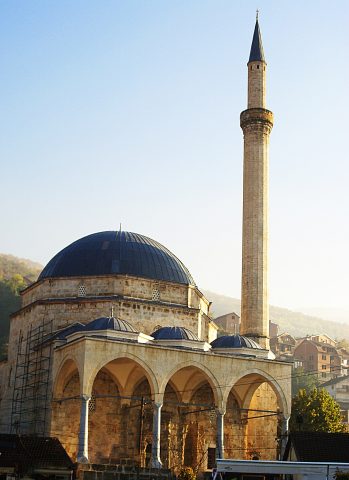
The mosque itself is unassuming, almost blending into the surrounding buildings. Its stone facade is weathered by time, and the minaret, slender and unadorned, rises just high enough to call the faithful to prayer. Inside, the space is divided simply—a prayer hall and a smaller room where dervishes once gathered for their meetings. The walls bear traces of delicate plasterwork, and the light filters through arched windows, soft and diffused. There are no gilded domes or intricate mosaics here, just a sense of quiet dignity, the kind that comes from centuries of use rather than ostentation.
The history of the mosque mirrors the fate of the Mevlevi order itself. When the Turkish government banned Sufi brotherhoods in 1925, many of their lodges fell into disrepair, but in Prizren, the traditions lingered. The mosque remained a place of worship, though its role shifted with the times. Today, it still functions as a house of prayer, and if you visit at the right moment, you might hear the faint strains of Sufi chants drifting through the air, a reminder that some rituals refuse to fade entirely.
The Mevlevi order is best known for the sema, the whirling ceremony where dervishes spin in a trance-like state, symbolizing their journey toward divine unity. While such performances were rare in Prizren, the very presence of the mosque speaks to the city’s connection to this spiritual practice. Even now, the building carries an echo of those gatherings, when music and movement became a form of devotion. You won’t see dervishes here today, but the walls seem to hum with the memory of their presence.
Prizren has always been a place where different faiths coexisted. The Mevlevi Mosque stands near Orthodox churches, Catholic cathedrals, and a synagogue, a testament to the city’s role as a crossroads of cultures. For centuries, merchants, travelers, and settlers passed through, leaving behind traces of their beliefs. The mosque is just one thread in this tapestry, but it’s a reminder of how communities held onto their traditions while living side by side with others.
In recent years, the mosque has drawn visitors beyond the faithful—historians, artists, and travelers curious about the Balkans’ layered past. It’s not an easy place to find; tucked away in the maze of the old town, it rewards those who seek it out. There are no crowds here, just the occasional local stopping to pray or sit in quiet reflection. The courtyard, with its worn stones and dappled light, feels like a world apart, where time moves at its own pace.
The Mevlevi Mosque is neither a museum nor just a place of worship. It’s a living space, shaped by the people who have passed through its doors. After the Kosovo War, the building suffered damage, but it was restored, and today it stands open to anyone willing to step inside. The interior holds fragments of its past—old manuscripts, photographs of dervishes, everyday objects that tell stories more vividly than any plaque could.
Many who come to Prizren are drawn to its more obvious attractions—the bustling bazaars, the fortress looming over the city, the sweeping views of the Sharr Mountains. But some of the most meaningful experiences lie in the quiet corners, where history isn’t displayed but simply exists. The Mevlevi Mosque is one of those places. It doesn’t demand attention, but if you pause long enough, you might sense the weight of the centuries in its walls, the whispers of those who once gathered here, and the quiet resilience of a tradition that refuses to be forgotten.