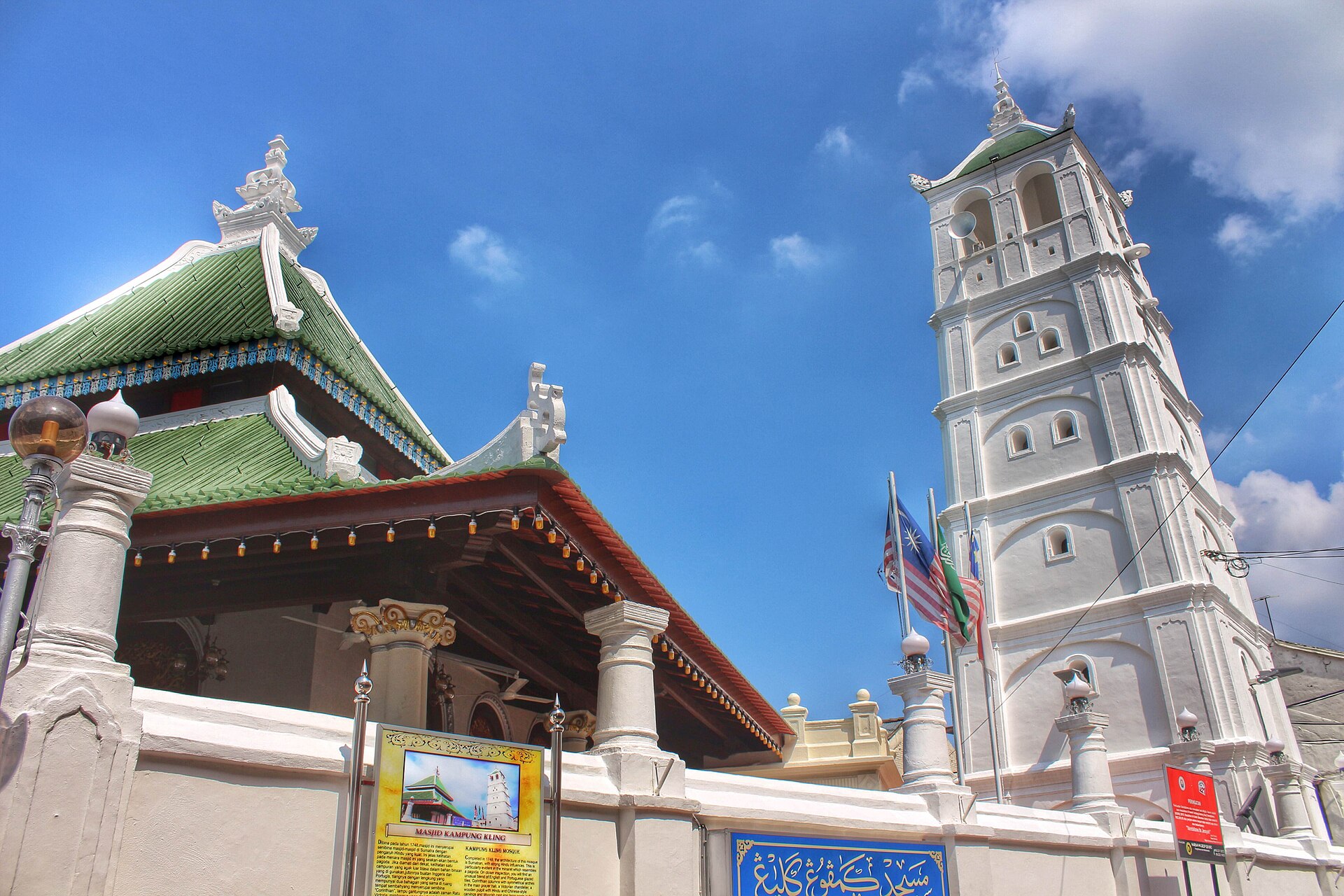
Malacca’s Kampung Kling Mosque stands as one of the oldest Islamic places of worship in Malaysia, a quiet witness to the layers of history that have shaped this port city. Built in the late 18th century by Tamil Muslim traders from southern India, it reflects the cultural exchanges that once thrived along the Straits of Malacca. Unlike the grand, modern mosques that dominate skylines today, this one feels rooted in the past—its architecture a blend of influences that tell a story of migration, trade, and faith.
The mosque’s most striking feature is its hybrid design. The minaret, for instance, resembles a traditional Hindu or Chinese pagoda, a nod to the diverse communities that settled here. The main prayer hall, with its high, sloping roof and wooden beams, follows the style of early Malay houses, while the intricate carvings on the doors and windows hint at Indian craftsmanship. Even the name—Kampung Kling—refers to the Indian Muslim settlers who once lived in this neighborhood, their legacy preserved in the building’s very structure.
Inside, the mosque is simple but atmospheric. The prayer hall is supported by thick wooden pillars, their surfaces worn smooth by time. Natural light filters through the louvered windows, casting shifting patterns on the floor. The mihrab, the niche indicating the direction of Mecca, is modestly decorated, a contrast to the ornate designs found in later mosques. The absence of a dome—a common feature in Islamic architecture elsewhere—is another reminder of how local traditions shaped the building’s form.
The mosque’s courtyard is just as telling. A well, now covered, once served as the community’s water source, a practical necessity in a time before modern plumbing. Nearby, an old ablution pool, lined with blue and white tiles, adds a touch of color to the otherwise earthy tones of the mosque. The surrounding walls, though weathered, still bear traces of the original plasterwork, a testament to the care taken in its construction.
What makes Kampung Kling Mosque special is not just its age, but how it embodies Malacca’s role as a crossroads of cultures. The city was a melting pot long before the term became a cliché—Chinese, Indian, Arab, and European traders all left their mark here. The mosque, with its mix of architectural styles, is a physical manifestation of that history. It’s not a grand monument, but a lived-in space, one that has adapted over the centuries without losing its essence.
Today, the mosque remains an active place of worship, though visitors are welcome outside prayer times. The neighborhood around it, once a bustling enclave of Indian Muslim merchants, has changed. Modern shops and cafes now line the streets, but the mosque stands as a reminder of what came before. Walking through its gates feels like stepping into another era, one where the rhythms of daily life were dictated by the tides of the strait and the call to prayer.
For those interested in history, the mosque offers more than just architecture. It’s a piece of a larger narrative about how Islam spread through Southeast Asia—not through conquest, but through trade and cultural exchange. The Tamil Muslims who built it were part of a network that stretched from India to China, their faith traveling alongside spices, textiles, and ideas. In that sense, Kampung Kling Mosque is as much a product of commerce as it is of devotion.
The best time to visit is in the late afternoon, when the light softens and the heat of the day begins to fade. The mosque’s location, just a short walk from Jonker Street, makes it easy to combine with other sights in Malacca’s historic core. Unlike the crowded tourist spots, it offers a moment of quiet reflection, a chance to appreciate the layers of history that make this city so compelling. There’s no need for grand gestures or dramatic revelations—sometimes, the most interesting stories are the ones that unfold quietly, in the details of a building that has stood the test of time.