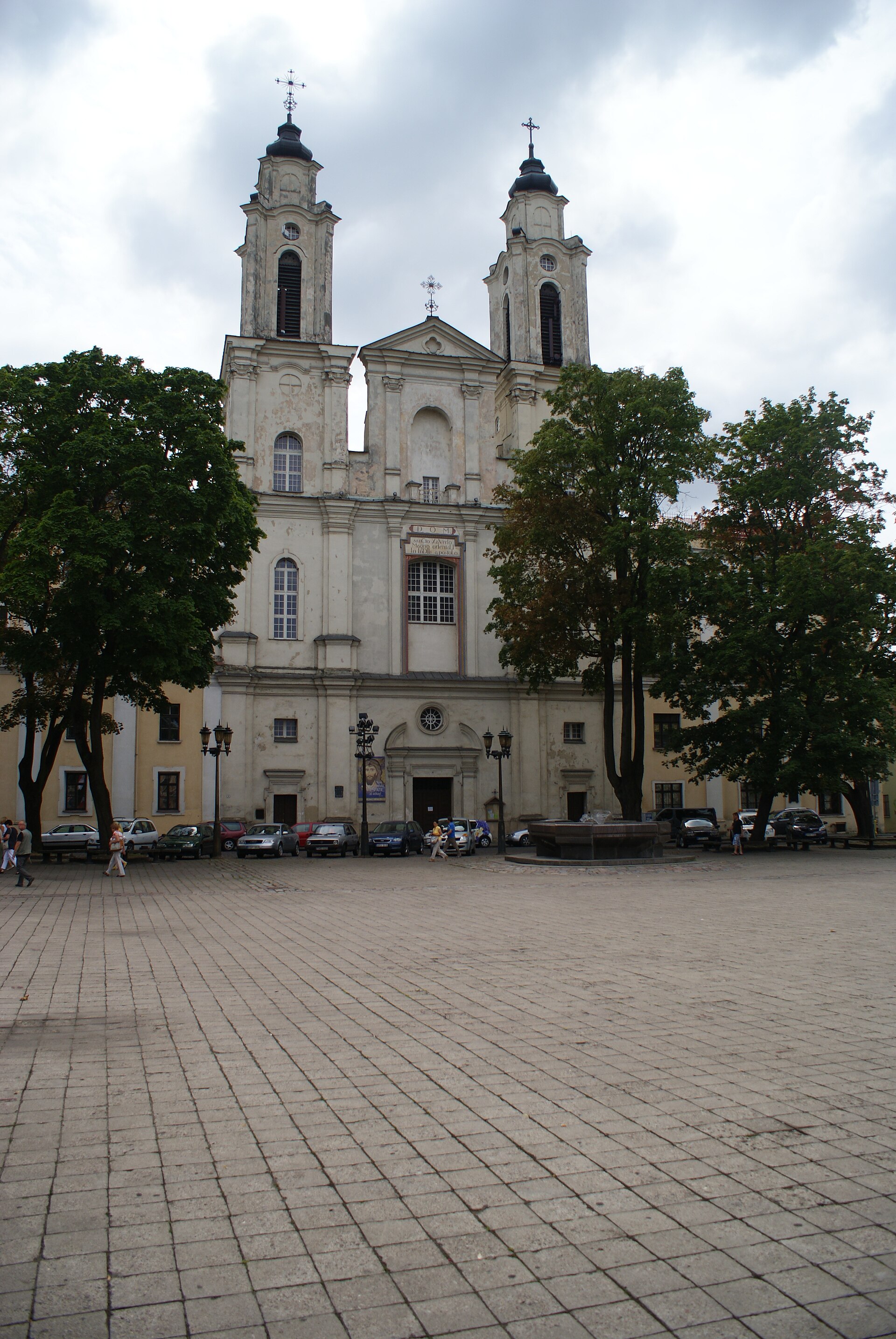
St. Francis Xavier Church stands quietly on a side street in Malacca, just a short walk from the river and the bustling heart of the old town. Built in the mid-19th century, it doesn’t immediately demand attention—its modest white facade, framed by two bell towers, lacks the grandeur of Europe’s great cathedrals. Yet this very simplicity gives it a distinct character. There are no lavish decorations or gilded domes here, just an unassuming presence that feels authentic, as if time has slowed to preserve the spirit of Malacca’s Portuguese colonial past.
The church’s history is deeply tied to the spread of Catholicism in Southeast Asia. St. Francis Xavier, the Jesuit missionary after whom it is named, was one of the first to bring Christianity to the region in the 16th century. Though he never set foot in Malacca himself, his influence was profound. The church was built later, in 1849, designed by a French priest named Father Fabre, who sought to honor the missionary’s legacy. Local Catholics, many of them descendants of Portuguese settlers, funded its construction, turning the church into a symbol of faith and a connection to their distant homeland.
Architecturally, the church blends European traditions with local adaptations. Built in the Neo-Gothic style, it incorporates practical adjustments for Malacca’s tropical climate—tall windows allow for natural ventilation, while thick walls keep the interior cool. Inside, the space is airy and bright, with vaulted ceilings supported by columns of local stone. The altar features a statue of St. Francis Xavier, and the carved wooden ceiling, crafted by local artisans, subtly reflects Malay artistic motifs. Unlike many churches of its era, it lacks frescoes or stained glass, yet the simplicity of the design gives it a quiet dignity.
For the Catholic community in Malacca, the church has long been more than just a place of worship. In the 19th century, it also served as an educational center, with a school attached for local children. Today, services are still held here, though the congregation has dwindled as many descendants of Portuguese settlers have moved away. Even so, the church remains active, drawing both worshippers and visitors curious about the city’s history. Inside, old church records and books, donated by parishioners in the 19th century, offer a glimpse into the past, while the atmosphere feels largely unchanged from its early days.
Malacca is a city where cultures and religions intertwine, and St. Francis Xavier Church is one of the places where this blend is most evident. Nearby stand Kampung Kling Mosque and Cheng Hoon Teng Temple, a testament to the peaceful coexistence of different faiths. The church itself hasn’t escaped local influences—during certain festivals, services incorporate Malay musical traditions, and the altar’s decorations sometimes echo the patterns of batik. This subtle fusion speaks to the broader story of Malacca, where diverse communities have shaped the city’s identity over centuries.
Visiting the church doesn’t require any special preparation. On weekdays, it’s a quiet place, with only the occasional chime of the bells or the footsteps of a few visitors breaking the stillness. During holidays like Christmas and Easter, the mood shifts—flowers adorn the space, hymns fill the air, and families gather for services. For travelers, these moments offer a chance to see how religious traditions endure in modern Malaysia, where Christianity is just one of many faiths living side by side.
From the outside, the church looks much as it did a century and a half ago. Over the years, it has undergone several restorations, the most recent in the early 2000s, when the facade was repaired, the foundation reinforced, and the interior refreshed while preserving its historical character. Today, the building is protected as a heritage site, ensuring its upkeep. A small garden with palms and flowering plants surrounds it, providing a shady spot to escape the midday heat.
St. Francis Xavier Church isn’t the kind of place that overwhelms you at first sight. Its value lies in something quieter—the unassuming story it tells about people, their faith, and how one culture took root in foreign soil. There are no grand legends or epic battles here, just the enduring memory of those who built this city, prayed within these walls, and passed down their traditions through generations. For those who see Malacca not just as a tourist destination but as a living place with a soul, this church offers one of the most meaningful experiences the city has to offer.