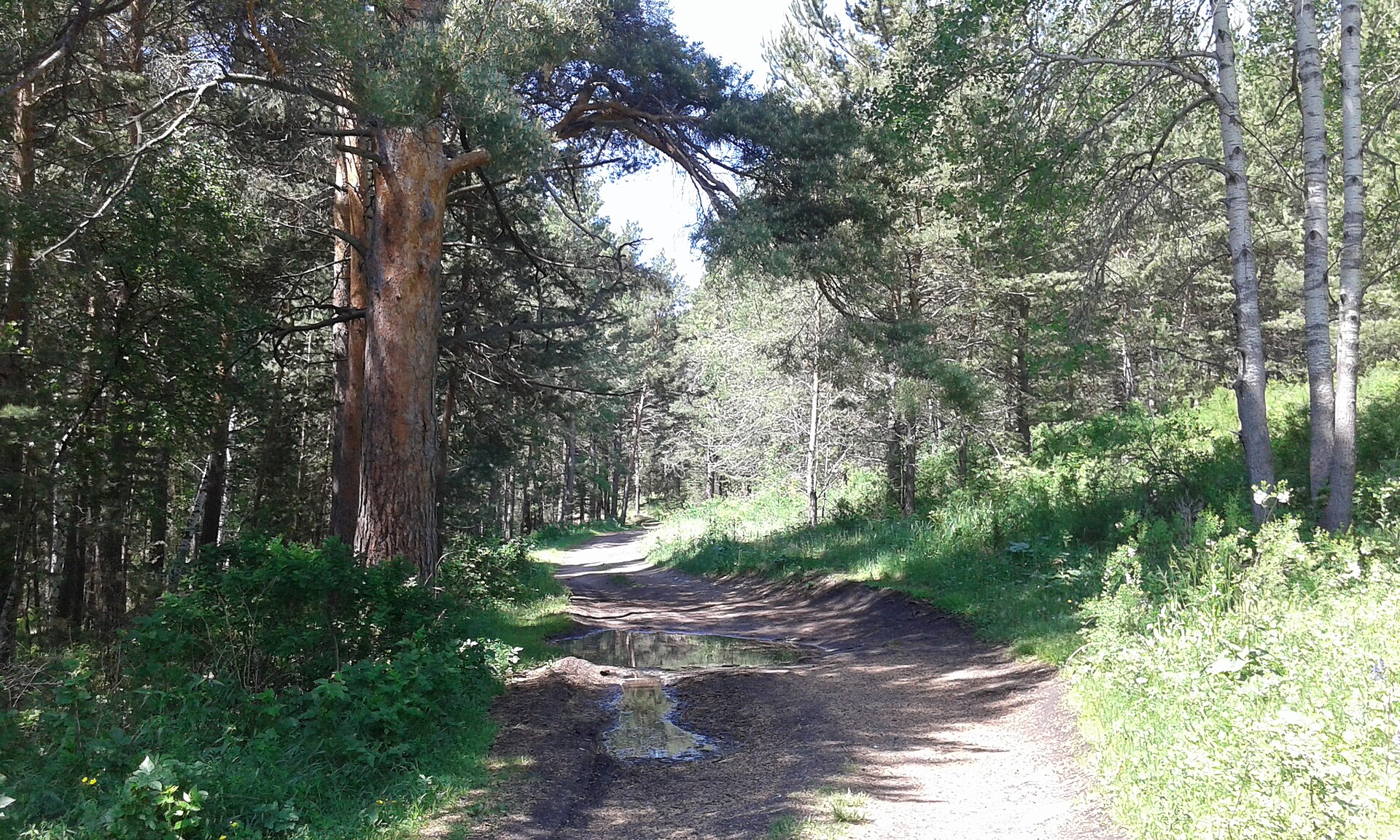
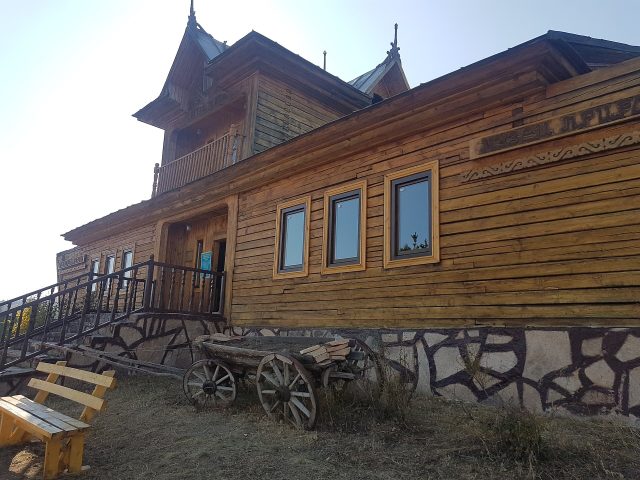
Karkaralinsk is a town where the vast Kazakh steppe begins to fold into the foothills of the Karkaraly Mountains, a place where the past lingers in quiet corners rather than grand monuments. Among these corners stands the Ahmet Yassawi Mosque, a modest building that doesn’t demand attention but quietly earns it. It sits on the edge of town, where the streets thin out and the landscape opens up, as if the land itself is taking a breath before rising into the hills. There’s no fanfare here, no crowds—just the steady presence of a place that has found its rhythm over time.
The mosque was completed in the early 2000s, a relatively recent addition to Kazakhstan’s religious landscape, yet its roots run deeper than its years suggest. Karkaralinsk has long been a crossroads, a town that once thrived as a trading post between Central Asia and Siberia. Over the centuries, it absorbed the influences of merchants, travelers, and settlers from different backgrounds, and Islam has always been part of that tapestry. The mosque wasn’t built to impress outsiders but to serve a community that has carried its traditions through generations, even as the town around it changed. It stands as a quiet testament to continuity, a place where faith isn’t just preserved but lived.
Architecturally, the mosque is unassuming, designed with purpose rather than grandeur. Its style follows the classic forms of Central Asian Islamic architecture—a single minaret rising above the low rooftops, a metal-clad dome catching the light, and walls of pale stone that blend with the surrounding landscape. Inside, the space is warm and functional: carpets cover the floors, the walls are simple and unadorned, and the air carries the faint scent of wood and wool. There are no intricate mosaics or gilded calligraphy here, nothing to distract from the act of prayer or reflection. That simplicity gives the mosque an intimacy, as if it were more of a home than a monument.
For the people of Karkaralinsk, the mosque is more than a place of worship. It’s where life unfolds in small, everyday moments. On Fridays, men gather for communal prayers, their voices blending with the murmur of the wind outside. On other days, women come to pray or simply sit in the quiet, the soft light filtering through the windows. In the summer, children play in the courtyard under the watchful eyes of elders, their laughter mixing with the rustle of leaves. In winter, the mosque becomes a refuge from the cold, its warmth a contrast to the frost beyond its walls. It’s a place where people come not just to fulfill a religious duty but to connect—to each other, to their past, to something larger than themselves.
The mosque is named after Ahmet Yassawi, a 12th-century poet and Sufi mystic whose influence stretches across the Turkic world. Born in Turkestan, Yassawi’s teachings on spiritual growth, humility, and love for one’s neighbor still resonate in Kazakhstan today. By naming the mosque after him, its builders tied it to a tradition that goes back centuries, one that sees faith as more than ritual—it’s a way of being. Yassawi’s legacy is a reminder that spirituality isn’t confined to sacred spaces; it’s woven into the fabric of daily life, in the way people treat one another, in the stories they tell, in the quiet moments of reflection.
Karkaralinsk itself is a town that refuses to be pinned down. It’s neither fully steppe nor mountain, neither entirely old nor new. You’ll find remnants of its past here—crumbling merchant houses, fragments of old fortress walls, the faint traces of ancient settlements—but the town doesn’t feel like a relic. It’s alive, adapting, yet never losing its sense of place. The Ahmet Yassawi Mosque fits into this landscape seamlessly, another layer in a town where history and modernity coexist without tension. It doesn’t stand out, but it doesn’t need to. Its presence is enough.
If you ever find yourself in Karkaralinsk, take a moment to visit the mosque, even if just to step into its courtyard. There are no guided tours, no souvenir stalls, no crowds jostling for the best view. Just the wind sweeping across the steppe, the distant silhouette of the mountains, and the quiet hum of a place that has found its own pace. It’s the kind of spot that doesn’t try to impress but leaves an impression all the same—a lingering sense of stillness, of time moving differently here. That’s the beauty of places like this: they don’t shout, but they stay with you long after you’ve left.