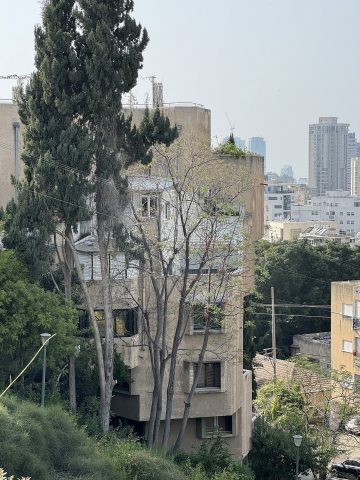
Fureidis Mosque sits quietly in a small Arab village of the same name, perched on the hills between Haifa and Tel Aviv. The landscape here shifts gradually from the Mediterranean coastline to drier inland terrain, and the mosque blends seamlessly into this unassuming setting. Unlike the grand mosques of major cities, it doesn’t demand attention with towering minarets or intricate designs. Instead, it exists as a natural part of daily life—a place where locals gather not for spectacle, but for reflection and community.
The history of the mosque is intertwined with that of Fureidis itself, a village that has long been home to a predominantly Muslim population. While the exact date of its construction remains unclear, it likely dates back to the Ottoman period, when religious buildings were often funded by local residents or benefactors. These structures were shaped not just by religious traditions, but by the materials at hand, the climate, and the skills of local craftsmen. For centuries, Fureidis lived at its own unhurried pace, and the mosque was a central part of that rhythm—a place for prayer, learning, and gathering.
Architecturally, the mosque is simple and practical. The single-story building is made of light-colored stone, a common material in the region, with a flat roof that suits the local climate. Inside, the mihrab—the niche indicating the direction of Mecca—is unadorned, and any minaret that may have once stood here has either been lost to time or altered in later renovations. The interior is divided into separate areas for men and women, as is customary, with carpets covering the floor and plain walls that adhere to the austere traditions of Sunni Islam. There are no elaborate decorations, just a space designed for quiet devotion.
Fureidis isn’t a tourist destination, and the mosque doesn’t appear on most travel itineraries. Those who do find their way here—whether by accident or by seeking out places off the beaten path—often discover a different side of Israel, one that exists beyond the usual landmarks. There are no souvenir shops or tourist cafes nearby, just narrow streets lined with modest houses, gardens of pomegranate and olive trees, and the occasional passing car. On Fridays, the village comes alive with the sounds of worshippers arriving for the weekly communal prayer, offering a glimpse into the everyday life of the Arab community in Israel, which often remains unseen in broader narratives about the country.
Beyond its religious role, the mosque serves as a social hub for the village. It’s a place where people not only pray but also catch up on news, discuss local matters, and celebrate together. During Ramadan, the mosque becomes especially vibrant—families gather after iftar, children play in the courtyard late into the night, and the space takes on a festive, communal atmosphere. It’s a place where generations connect, where elders share stories and younger residents listen, even if their attention sometimes wanders.
The surrounding area, while not packed with attractions, has its own quiet charm. Fureidis sits roughly halfway between Haifa and Caesarea, and most travelers pass through without a second glance. But those who take the time to leave the highway and explore the hills will find landscapes that have changed little over the centuries. Ancient agricultural terraces, remnants of Ottoman-era farming, still dot the slopes, and old wells and pathways hint at the village’s long history. The pace here feels slower, a contrast to the bustle of nearby cities.
This isn’t a place for dramatic photographs or guided tours. The mosque doesn’t claim to be a historical monument or an architectural masterpiece. Its value lies in its authenticity—it’s a living part of the culture, a reminder that even in a rapidly changing world, there are still corners where life moves at its own unhurried rhythm. For those who appreciate such places, it offers a small but meaningful discovery: a quiet testament to the beauty of simplicity.