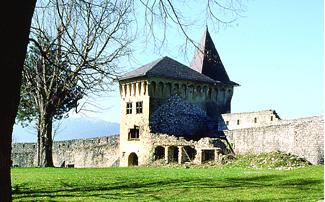
Fethija Mosque in Bihać is one of those rare places where history feels alive, not because of grand declarations or carefully preserved artifacts, but because it has simply endured. Built in the 16th century when this corner of Bosnia was under Ottoman rule, the mosque stands on the banks of the Una River, its stone walls bearing silent witness to centuries of change. Bihać was once a strategic stronghold, and the mosque was more than a place of worship—it was a statement of power, culture, and identity. Its name, Fethija, meaning "victorious," hints at the military triumphs that shaped the region, though today the building speaks more of resilience than conquest. The slender minaret rising against the sky is a familiar sight for generations who have passed through its doors, their voices echoing under its arches long after they’re gone.
The architecture is unmistakably Ottoman, yet there’s something distinctly local about it. The mosque was constructed from stone quarried nearby, its surface weathered into warm, golden hues over time. Inside, the space is modest but deliberate—high windows filter soft light onto the prayer hall, while the intricately carved mihrab points toward Mecca. What’s striking is how little it has changed despite everything. Wars, floods, and neglect have all threatened its existence, yet each time it was rebuilt, the original design was preserved with care. Walking through it now, you can almost imagine the hands that laid each stone, the craftsmen who shaped the woodwork, and the worshippers who have knelt here for centuries.
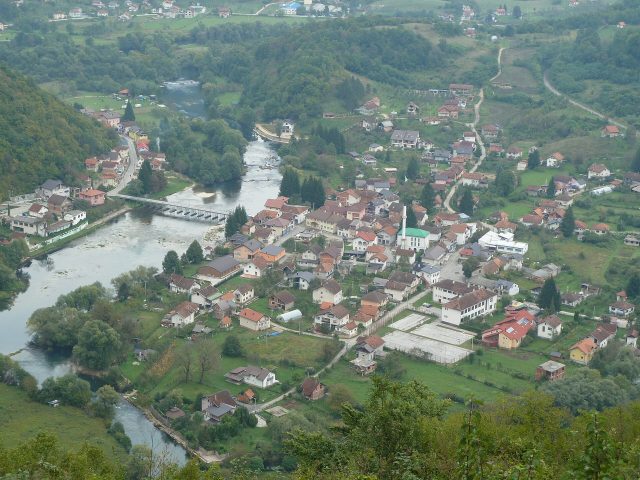
Bihać has always been a crossroads, and Fethija Mosque is where that diversity feels most tangible. The Una River curves gently around the old town, where Ottoman minarets stand alongside Austro-Hungarian facades, and the call to prayer mingles with the clink of coffee cups in nearby cafés. The mosque isn’t set apart from daily life—it’s woven into it. Locals gather at the riverside, sipping Bosnian coffee under the shade of trees, while vendors sell sweets and handmade trinkets just steps away. In summer, the area hums with quiet activity, a mix of tourists and residents drawn to the water’s edge, where the rhythm of the river sets the pace for everything else.
Time moves differently here. Mornings begin with the first light spilling over the Una, as the mosque welcomes early worshippers. By evening, the minaret glows under the soft light of streetlamps, and the city seems to exhale, shedding the weight of the day. For those who live in Bihać, the mosque is more than a monument—it’s a living part of their world. It’s where families celebrate weddings and births, where people come to find solace or catch up with neighbors. The rituals that unfold within its walls are the same ones that have shaped this place for generations, a thread connecting past and present.
The mosque’s story is inseparable from Bihać’s own. During Ottoman rule, it was the heart of the community, a place where social and religious life intersected. When the Austro-Hungarian Empire took control, it remained a vital symbol for the Muslim population, a reminder of their heritage in a changing world. The 20th century brought destruction, but like so much of Bosnia, the mosque was rebuilt through the efforts of locals and international support. Today, it stands as proof that even in the hardest times, culture and faith can anchor a community to its roots.
What makes Fethija Mosque worth visiting isn’t just its age or its architecture, but the way it feels. There are no crowds here, no scripted tours reciting facts. Instead, there’s the quiet murmur of the river, the occasional footsteps on stone, and the sense that you’ve stumbled upon something real. If you’re lucky, you might hear the call to prayer echoing across the rooftops, a sound that has carried over this city for centuries. It’s a moment that doesn’t need explanation—it simply is.
Bihać isn’t a place that tries to impress. It doesn’t have the polished sheen of a tourist hotspot, and that’s precisely what makes it special. Fethija Mosque is just one piece of its story, but it’s the kind of place that lingers in your memory long after you’ve left. There’s no grandeur here, no attempt to dazzle. Just stone, water, and time—elements that have shaped this city and the people who call it home. Perhaps that’s why the mosque still feels alive, not like a relic, but like a place where history and everyday life flow together, as naturally as the Una River itself.