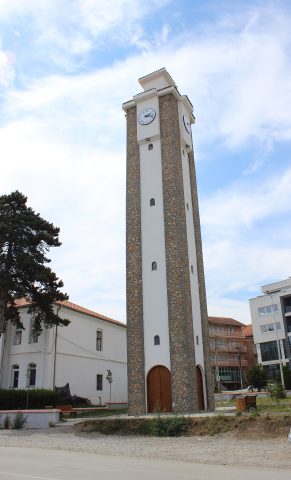
Nestled among the rolling hills of western Kosovo, the village of Budisallc feels like a place where time has slowed to a gentle rhythm. The narrow road winding through it passes stone and timber houses, orchards heavy with fruit, and patches of wildflowers that sway in the breeze. At the heart of the village, perched slightly above the rest, stands the Budisavci Mosque—a quiet sentinel over daily life, much as it has been for centuries.
Built in the 16th century during Ottoman rule, the mosque is less a grand monument than a living piece of history. Its walls have witnessed the ebb and flow of empires, wars, and the steady, unchanging routines of village life. Unlike the ornate mosques of Istanbul or Cairo, this one carries no gilded domes or intricate tilework. Instead, its beauty lies in its simplicity: the warm tones of local stone, the weathered wooden beams inside, and the way sunlight filters through small windows, casting shifting patterns on the floor. It was never meant to impress outsiders, only to serve those who call this place home.
The architecture reflects the practical needs of a rural community. The low, sturdy minaret rises just enough to be seen from the surrounding hills, its balcony once used by the muezzin to call the faithful to prayer. The roof, covered in dark, time-worn tiles, has endured decades of rain and wind. Inside, the prayer hall is spacious yet intimate, with carpets soft underfoot and wooden pillars supporting the ceiling. There are no elaborate decorations, just the quiet dignity of a space built for reflection and gathering.
For the people of Budisallc, the mosque remains the heart of the village. On Fridays, men arrive for communal prayers, their voices blending with the rustle of leaves outside. On other days, the courtyard hums with quieter activity—elderly men sitting on benches, sharing stories, or children darting between the rose bushes and the small fountain. Women tend to the garden, their presence felt in the careful upkeep of the space. There’s no rush here, no need to fill the silence. The mosque isn’t just a place of worship; it’s a backdrop to everyday life, where birthdays, weddings, and even moments of grief are marked within its walls.
The history of the mosque mirrors the resilience of the village itself. Over the centuries, this land has been claimed by different rulers, yet Budisallc has always remained a place apart, shaped by its own rhythms. During times of conflict, the mosque offered shelter, its thick stone walls a refuge from the chaos outside. Today, the scars of those years are visible in the worn doorframes and the faint cracks in the plaster, but the sense of continuity remains. The past isn’t erased; it’s woven into the fabric of the place.
Visitors from cities might find the mosque unassuming, even easy to overlook. There are no crowds, no souvenir stalls, no guided tours with rehearsed facts. Instead, there’s the scent of wild thyme carried on the wind, the distant clatter of a farmer’s cart, and the occasional chime of sheep bells from the hills. If you’re lucky, you might arrive at dusk, when the setting sun turns the minaret a soft gold, and the shadows stretch long across the courtyard. It’s a moment that feels both ordinary and extraordinary—a reminder that beauty often lies in the unadorned.
What makes the Budisavci Mosque special isn’t its size or its fame, but the way it embodies the quiet persistence of tradition. It doesn’t demand attention; it simply endures, much like the people who have cared for it over generations. For locals, it’s a place of solace, where the weight of the world feels lighter. For travelers who stumble upon it, it offers something rarer than a postcard-perfect landmark: a glimpse into a way of life that has changed little over centuries. Here, history isn’t something to be read about—it’s something you can touch, in the cool stone of the walls or the warmth of the wooden doors. And sometimes, that’s enough.