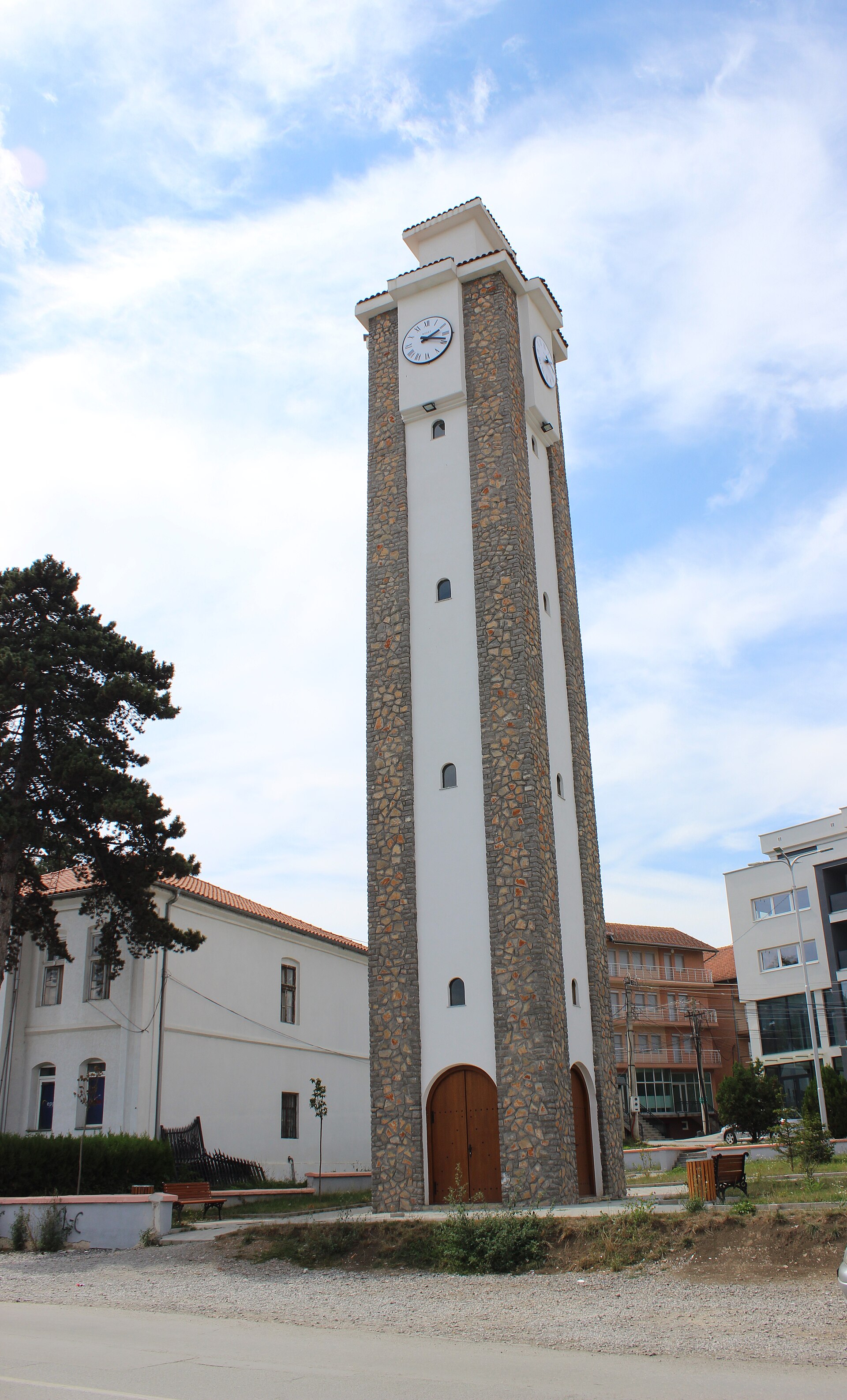
The clock tower in Budisallci is one of those quiet witnesses to history that seem frozen in time, a silent reminder of the layers beneath this small corner of Kosovo. Built during the Ottoman era, it once served as more than just a timekeeper—it was a symbol of order in daily life, a familiar landmark in a landscape where the rhythm of the day was marked not only by the hands of a clock but by the call to prayer echoing from nearby minarets. Across the Balkans, such towers were common, each carrying its own story, but this one stands out for its unassuming yet striking presence, blending seamlessly into the surroundings.
The tower itself is modest in height, but its proportions and form draw the eye immediately. A square stone base rises smoothly into an upper section with arched openings, where a bell once hung. The clock on one face still keeps time, though the mechanism inside is likely a modern replacement. In Ottoman times, these structures were often funded by local merchants or craftsmen who wanted to leave their mark on the town. Whether that was the case here remains unclear, but the tower’s enduring presence speaks to the care with which it was built.
Budisallci is a place where life moves slowly, and the clock tower has become its unofficial heart. Around it, old houses with tiled roofs line narrow streets that once bustled with traders and artisans. Today, the pace is quieter, but if you listen closely, the past lingers in the creak of wooden shutters, the rustle of wind through the trees, and the distant bark of a dog. The tower feels like a bridge between eras, a reminder that even in small towns, history is never truly still.
The architecture is simple, yet there’s a quiet elegance to it. The stone blocks, darkened by time, have taken on a weathered patina, while the upper section is adorned with subtle ornamentation that reveals itself only upon closer inspection. Ottoman builders favored durability over decoration, and this tower is a perfect example—it has survived wars, shifting borders, and neglect, yet it still stands as it did a century ago.
A small public space has formed around the tower, where locals sometimes gather in the evenings. There are no cafes or souvenir shops here, just a few benches where you can sit and watch the sun dip behind the hills, stretching shadows across the cobblestones. In moments like these, time seems to slow, as if the weight of history in the stones around you has its own rhythm.
For those interested in Kosovo’s past, the clock tower in Budisallci is a small but meaningful detail in a larger story. It’s a reminder of how Ottoman influence wove itself into the fabric of the Balkans, leaving behind not just mosques and bathhouses but these unassuming yet enduring structures. Few such towers remain in Kosovo, and each one is a testament to a history that often goes unrecorded but can still be felt if you take the time to look.
The tower no longer serves its original purpose—its bell no longer marks the hours—but it remains a focal point for anyone passing through. That might be why the locals treat it with such care, resisting the urge to modernize or repurpose it. It simply exists, as much a part of the landscape as the hills in the distance, a quiet reminder that even the smallest places have stories worth telling.
If you ever find yourself in this part of Kosovo, don’t rush past. Take a moment to look up at the clock, to listen to the silence. There will be no crowds, no hustle—just the old houses, the distant mountains, and this tower, which seems to hold all the secrets of Budisallci. Sometimes, it’s these unassuming places that make a journey truly memorable.